
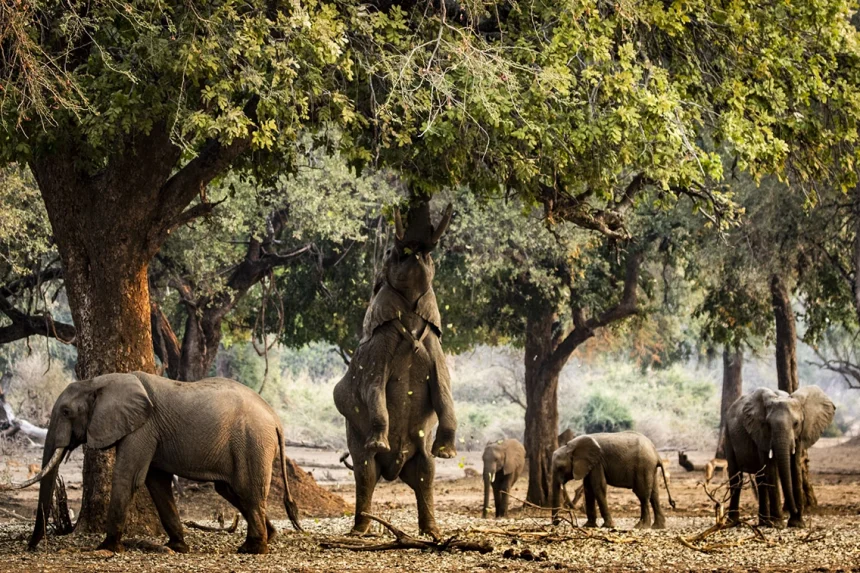
As I traverse the Zambezi Valley towards one of Africa’s most remote parks, spectacular views unfold. Golden savannas, snaking oxbow lakes, the mighty Zambezi River carving its route through floodplains and forests of mahogany and ebony. Then the Cessna dips low revealing today’s destination – Zimbabwe’s legendary Mana Pools National Park.
Why Visit Mana Pools
Even for Africa, Mana Pools is remote. A UNESCO World Heritage Site protecting over 2,000 square kilometers of pristine wilderness where wildlife still rules.
As one of Zimbabwe’s premier national parks, Mana Pools safeguards a crucial ecosystem. Forests reduce erosion while the UNESCO-protected Sapi and Chewore Safari Areas bordering the park provide critical dry season habitat for elephants, lions, African wild dogs and other iconic yet endangered species.
But the park’s real treasures are the life-giving oxbow lakes, sandbanks and watering holes that give Mana Pools its name. These provide precious sources of water and nutrition even in drought for the diverse wildlife found here. And a refuge where visitors can witness Africa’s grandeur first-hand.
Diverse Habitats Sheltering Abundant Species
From riverine forests to mopane woodlands, floodplains and acacia thickets, the park’s eco-diversity supports huge mammal and reptile populations alongside over 350 bird species.
These include some of Africa’s most memorable animals…
- Giants – Elephant, Hippo, Buffalo
Mana screams wilderness thanks to majestic elephant and teeming hippo pods. While the park’s many watering holes draw buffalo herds stalked by prides of lion. Witnessing these mighty giants up-close is humbling.
- Elusive Predators – Lion, Leopard, Wild Dogs
The Zambezi River’s banks and endless kilometres of remote walking trails make Mana the perfect habitat for big cats and endangered painted wolves. Spotting them on thrilling guided walks is a prime goal.
- Reptiles – Nile Crocodiles & Rock Pythons
Beneath the water pale deadly crocodiles wait to ambush prey. While up to 6m long pythons lurk deep in riverine thickets. Both apex reptile predators thrive in Mana Pools.
Exploring the Park
As a protected game Walking Area, Mana offers incredible wildlife encounters on foot. Expert guides lead small groups tracking fresh prints, watching subtle animal behaviors while ensuring safety. Hearing lions roar across the night plains or breathing fast as agitated elephants approach – it’s intensely real.
Equally memorable are multi-day canoeing safaris along the Zambezi River. Silently paddling meandering channels and floating within feet of mighty game coming to drink then camping under Africa’s dazzling night sky is beyond magic. It’s like stepping back in time.
For sheer luxury, exclusive private concessions like Chikwenya Camp offer lavish yet eco-friendly accommodation between game drives and walking safaris. Guests fall asleep to hippo and hyenas then wake to guided nature walks and cruises on golden oxbow lakes.
However you experience Zimbabwe’s wild heart, with abundant elephants, predators, birdlife and more – Mana Pools National Park is African wilderness reborn.
Diverse Wildlife In Their Element
Thanks to Mana’s size and strict protection policies, animals exist undisturbed as they have for aeons.
Herds wander in harmony, predators hunt successfully, elders teach young. Seeing their natural behaviors is a joy.
- Elephants
Towering elephants in musth displaying their enormous ears or bonding family groups tenderly caring for each other. Their intelligence amazes.
- Lions
Watching slick hunting manoeuvres by powerful lions is breath-taking. So too witnessing them roar challenges across the night plains or laze with playful cubs as the Zambezi flows timelessly by.
- Leopards
Glimpsing secretive leopards stalking through dappled pools of light is a wildlife lover’s dream. These elusive big cats are Mana’s holy grail.
- African Wild Dogs
Rare, uniquely-patterned painted hunting dogs course at blistering pace chasing prey. Their stamina typifies Africa’s wilderness spirit – relentless, unbroken, free.
Why Visit Mana Pools National Park
Boasting breathtaking scenery, bountiful yet endangered wildlife and limited visitors, Mana Pools National Park remains one of Africa’s final great wildernesses.
Whether experienced on thrilling walking safaris, silent Zambezi canoe adventures or relaxing in remote luxury tents – Zimbabwe’s wild heart restores natural rhythms.
Here wildlife still reigns untamed. And in their kingdom, we visitors are just passing through.


