
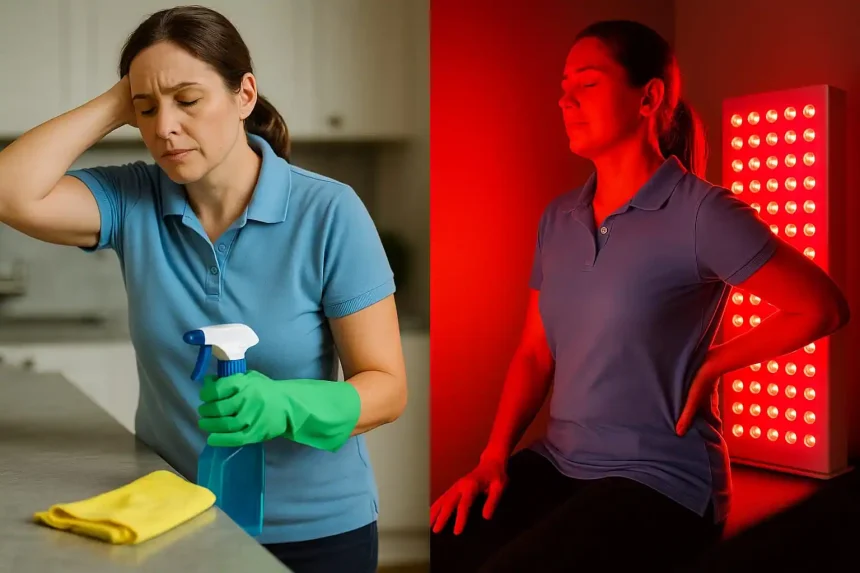
Let’s be honest: working for a house cleaning service company is a workout. It’s not just a job; it’s a physically demanding profession. You’re bending, reaching, scrubbing, vacuuming, and carrying—all day, every day. That repetitive motion and physical strain can take a real toll, leading to sore muscles, achy joints, and the kind of fatigue that a simple night’s sleep doesn’t always fix.
But what if there was a tool that could help your body recover faster, reduce those everyday aches, and keep you feeling your best for the next big job? Enter red light therapy—a simple, non-invasive technology that’s gaining serious traction among athletes, physical therapists, and now, savvy cleaning professionals.
What Exactly Is Red Light Therapy?
Don’t let the high-tech name fool you; the concept is beautifully simple. Red light therapy, also known as Low-Level Laser Therapy (LLLT) or photobiomodulation, involves exposing your body to low wavelengths of red and near-infrared light.
Think of it like photosynthesis for your cells. You’re not getting a tan or any harsh UV rays—just a gentle, soothing light. This specific light energy gets absorbed by your cells’ powerhouses (the mitochondria), giving them a boost to produce more energy (ATP). This supercharged energy production helps your cells repair themselves more efficiently and reduces inflammation. It’s like giving your body’s natural healing processes a jumpstart.
Why It’s a Game-Changer for Cleaning Pros
For the team on the front lines of grout, dust, and windows, the benefits of red light therapy hit right where it hurts. Here’s how:
1. Faster Muscle Recovery: After a long day of lifting vacuum cleaners, moving furniture, and scrubbing floors, your muscles are screaming for a break. Red light therapy helps reduce muscle fatigue and soreness by improving blood flow and reducing inflammation. This means you might wake up feeling less stiff and more ready to tackle another day, instead of dreading the first bend.
2. Soothing Achy Joints: All that kneeling on hard floors, repetitive wrist motions from wiping, and shoulder strain from reaching high cabinets can lead to joint pain and inflammation. The anti-inflammatory effects of red light are a major benefit here, helping to calm irritated joints and improve mobility.
3. Healing Minor Strains and Sprains: It’s an unfortunate reality of the job: a twisted ankle from a misstep on the stairs or a sore back from an awkward lift. Red light therapy accelerates the body’s natural healing process for these soft tissue injuries, helping you get back to 100% faster.
4. Improving Skin Health: This might seem like a bonus, but it matters! Your hands are in and out of water and cleaning solutions all day, which can lead to dry, cracked skin. Red light has been shown to promote collagen production and improve skin health, helping to repair and protect your hard-working hands.
How to Bring Red Light Therapy Into Your Routine
The best part? This isn’t some complicated medical procedure. It’s accessible and easy to use.
- At a Clinic or Gym: Many wellness centers, chiropractors, and even some modern gyms offer red light therapy beds or panels.
- At-Home Devices: The real revolution has been in affordable, high-quality personal devices. You can now buy red light therapy panels, wands, or even wearable wraps designed for specific areas like the back, knees, or wrists. A 10-15 minute session while you’re watching TV or relaxing after your shift is all it takes.
For cleaning company owners, investing in a small panel for the break room could be a powerful way to boost team morale, reduce absenteeism due to minor injuries, and show your staff you genuinely care about their well-being.
The Bottom Line
Your body is your most important tool in the cleaning business. Taking care of it isn’t a luxury; it’s essential for a long, healthy, and productive career. Red light therapy isn’t a magic cure-all, but it’s a powerful, science-backed tool that supports your body’s innate ability to heal and recover. In a job that demands so much physically, it’s a brilliant way to give your hard-working cells the support they deserve.
