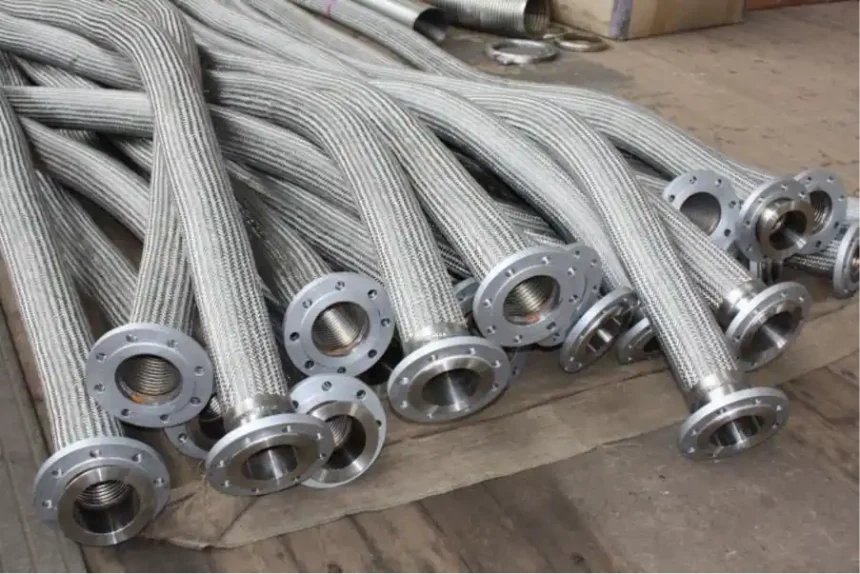
In any industrial setup, smooth flow is important, whether it’s steam, chemicals, gas, or liquids moving through the system. And for everything to run safely and without interruptions, even the connecting parts matter a lot.
That’s where stainless steel braided hoses come in.
Built to handle tough conditions, they offer the flexibility of movement while maintaining strength under high pressure and temperature. But not every hose fits every application. Using the wrong one can lead to inefficiency, accidents, frequent replacements, or even system failure.
That’s why choosing the right stainless steel braided hose matters more than it seems.
In this blog, we’ll break down how to choose the right stainless steel braided hose and what factors you should consider before making a decision.
Understand the Hose Construction
Not all stainless steel braided hoses are built the same.
Most hoses are made of two main parts:
- An inner corrugated hose
- An outer braided layer
The inner tube handles flexibility and smooth flow, while the stainless steel braid provides strength, pressure handling, and protection from damage.
Depending on your needs, you can choose:
- Single braid: Best for moderate pressure and general industrial use
- Double braid: Better for high-pressure or heavy-duty applications
If your system involves high pressure or heavy-duty usage, choosing a double-braided hose is often the best option. It offers enhanced durability, strength, and added safety.
Consider the Usage and Environment
Before anything else, ask yourself: Where and how are you going to use it?
Is it for transferring steam, water, gas, or chemicals? Will it be used in a static setup or a moving system? Is it exposed to moisture? Chemicals? Outdoor weather? Vibrations? Does it need to bend frequently?
Different uses demand different types of hoses.
- For high-temperature environments (like steam or hot fluids), you’ll need a hose that can handle extreme heat.
- For chemical industries, corrosion resistance becomes the priority.
- For water or air systems, flexibility and durability matter more than extreme resistance.
If your hose will be exposed to harsh conditions, it’s important that it’s designed to handle them.
So, don’t just pick a hose because it “looks strong.” The right choice always depends on the job it needs to do.
Flexibility and Bend Radius Matter
This is something people often overlook. Not all hoses are used in fixed positions. Some need to bend, twist, or move regularly.
Every stainless steel braided hose comes with a minimum bend radius, which simply means how much it can safely bend without getting damaged. If your setup requires tight bends or frequent movement, high flexibility becomes a key factor.
Using a hose beyond its bend limit can lead to:
- Kinking
- Reduced flow
- Early failure
That’s why it’s always important to check the flexibility and bend radius before installation. Make sure it matches your actual system layout.
Also, always follow the bend limits given by the braided metal hose manufacturer. Bending it too tightly may not show immediate damage, but it can slowly weaken the hose from the inside.
Check the Pressure Requirements
One of the most important factors to consider is pressure.
Every stainless steel braided hose comes with a pressure rating that basically tells you how much pressure it can safely handle.
Ask yourself:
- What is the working pressure of your system?
- Is there any chance of pressure spikes?
Based on that, always make sure the hose you choose can handle more than your system’s maximum working pressure.
Why? Because pressure isn’t always constant. There can be sudden spikes, and you don’t want your hose failing during those moments. A bit larger one provides a safety margin for such situations and avoids unexpected failures.
Don’t Ignore Temperature Conditions
Temperature plays a huge role in hose performance as well as longevity. Stainless steel is generally known for handling a wide range of temperatures, from very low cryogenic levels to high-heat environments. But that doesn’t mean every hose is suitable for every application.
Even if a hose is rated for high pressure, its performance can drop when exposed to extreme heat. Similarly, very low temperatures can affect flexibility. A hose that performs well under normal conditions might weaken or lose flexibility under extreme heat or cold.
That’s why it’s important to always check:
- Maximum temperature rating
- Minimum temperature rating
Choosing the right one based on your actual working conditions helps avoid damage and keeps the system running smoothly.
Consider the Size Carefully
Getting the size right is very important for proper hose performance. The hose should fit your system in a natural way without forcing it into position.
If the hose is too short, it can pull on the fittings and create extra tension, which can affect flow and damage connections over time. If it is too long, it may loop, sag, or bend too much, which can lead to pressure drops and uneven flow.
It’s also important to ensure that the hose routing is smooth and well-supported. Sharp bends or improper alignment can impact performance, even if the hose length is correct.
During installation, the hose should neither be stretched nor tightly packed. It should have enough natural flexibility to move slightly without stress.
Look at the End Connections
The hose itself is important, but the end fittings are equally critical.
Different systems require different types of fittings, such as:
- Threaded
- Flanged
- Welded
- Quick-connect fittings
The key is to make sure the hose you choose matches your system’s connection type exactly. Even a small mismatch can cause leakage, poor sealing, or unnecessary pressure loss.
It’s also important to check how strong and well-finished the fittings are. If the fittings are weak, loose, or poorly attached, the entire system can become unsafe, even if the hose itself is high quality.
Don’t Ignore Safety Standards
In any industrial setup, safety is something you can’t compromise on.
Always check if the hose meets relevant industry standards, quality standards, and certifications.
This ensures:
- Better reliability
- Tested performance
- Reduced risk of failure
- High performance
It’s also a good idea to source your hose from a reliable stainless steel braided hose manufacturer who follows strict quality checks. This gives you peace of mind and helps avoid unexpected failures, downtime, or safety issues in the system.
Conclusion
Choosing the right stainless steel braided hose isn’t about picking the strongest or the most expensive option. Instead, it’s about finding the one that fits your needs perfectly. The most important factors to consider are usage and environment, pressure requirement, flexibility and bend radius, temperature conditions, size and length, and end connection. Besides these, it’s equally important not to ignore safety standards. A well-chosen hose not only performs better but also gives you peace of mind.