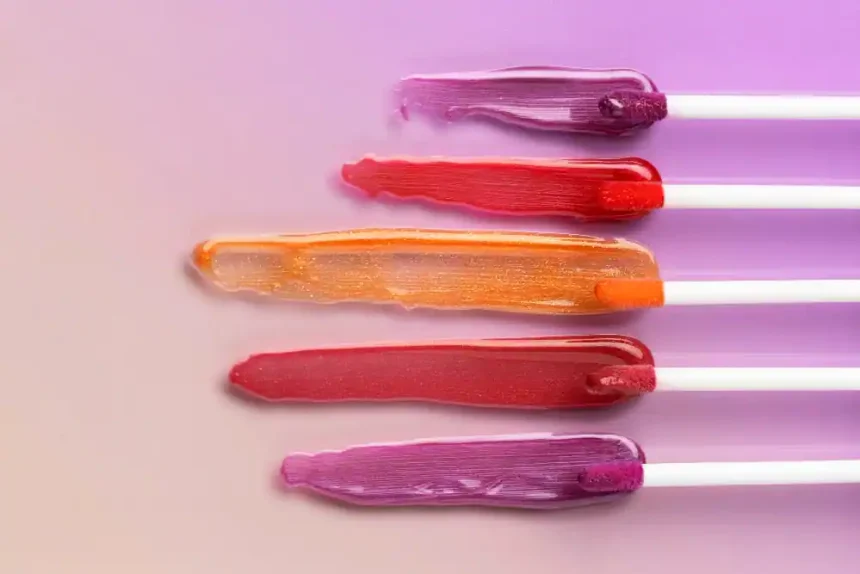
A lip launch can fail before the customer even reads the shade name. One swipe is enough. The glaze looks greasy instead of glossy. It settles into dry lines. The shine breaks at the lip edge. The package leaks after shipping. In a category built around close-up visuals, there is almost no buffer between first impression and rejection.
That is what makes Water Lip Glaze such a serious category in 2026. Beauty is still growing, but growth has made mistakes more expensive, not less. McKinsey expects the beauty market’s four core segments to reach about $590 billion by 2030, which means more launches, denser competition, and less tolerance for mediocre execution. In lip categories, especially glossy ones, weak development shows up fast. The buyer can see it before the brand has time to explain it.
Water Lip Glaze matters because it sits in a commercially useful middle ground. It offers stronger gloss than classic lipstick, a more moisturizing feel, and a finish that can support the glass-lip look buyers still respond to. Mirrored glaze textures are particularly suited to that effect because they push hydration and shine at the same time. That combination gives brands something many older lip formats struggle to deliver: visible payoff without an immediately heavy feel.
Why more brands are rethinking this category
The first reason is visual speed. Matte lipstick often needs a story around sophistication, blur, or transfer control. Water Lip Glaze does not. Buyers can see freshness, fullness, and reflected shine in seconds. That makes it easier to merchandise online, easier to sample, and easier to build into short-form beauty content where the product has to communicate value before the caption does.
The second reason is wear comfort. Shine alone is no longer enough. Buyers want gloss that does not punish the lips an hour later. In lip development, hydrating glossy systems are valuable because they soften the look of dryness and help the lip surface read smoother and fuller. That matters commercially because products that feel easy to wear tend to become routine products, and routine products are far more likely to earn repeat purchases than one-off novelty shades.
The third reason is category flexibility. Water Lip Glaze can sit closer to lip care than a classic color cosmetic, while still giving enough payoff to feel like a real launch. It can work as a sheer everyday gloss, a moisture-first lip item, or a more premium glass-finish SKU with stronger packaging presence. That range gives brand teams more room to position the same category for very different markets.
What makes a strong Water Lip Glaze technically different
Shine has to look clean
Not all shine looks expensive. A strong Water Lip Glaze creates a smooth reflective surface. A weak one looks oily, separated, or unstable around the border. In glossy lip systems, oils and light-reflecting ingredients are meant to create translucency, hydration, and plump-looking clarity. Once the reflection starts looking messy instead of controlled, the formula loses trust immediately.
A lightweight feel cannot come at the cost of payoff
This is where many launches go wrong. The texture feels light on first swipe, but the finish collapses too fast or leaves behind nothing but slip. A better Water Lip Glaze leaves a thin, comfortable film with enough body to smooth the lip surface and keep the shine coherent. That balance matters more than “watery” as a marketing word. If the formula feels empty, the customer will read it as low value.
Pigment dispersion is one of the quiet failure points
Lip products do not fail only because the shade is wrong. They also fail because the pigment system is not dispersed well enough. Repeated grinding through a three-roll mill and proper emulsification improves spreadability, smoothness, and visual uniformity. When that step is weak, the defects show up immediately: streaking, patchiness, uneven shine, and inconsistent color payoff. Reflective lip products are especially unforgiving here because gloss makes defects easier to see, not harder.
Edge behavior matters more than most launches admit
A glossy lip formula is judged at the border first. If the film starts to travel, bleed, or form a visible line around the edge, the rest of the formula barely matters. In sample testing, gloss photography within an hour, daylight simulation, and feathering analysis are used to judge whether the product is ready to move forward, with a zero-feathering result treated as the clean threshold. That is the right standard for this category. In Water Lip Glaze, border control is not a finishing detail. It is part of the core claim.
Stability is a commercial issue, not just a lab issue
Heat, storage, transit pressure, and package compatibility can ruin a promising glaze after approval. High- and low-temperature testing is used to check whether a lip product melts, shrinks, or deforms, and the process material specifically references a 54°C heat test. The same material notes that visible sweating does not occur below 25°C, begins above 37°C, and becomes more severe as temperature rises. That matters because lip products do not live in perfect conditions. They live in cartons, handbags, warehouses, and freight channels.
What buyers should test before approving a sample
The first mistake is judging a sample by color alone. A better review sequence starts with texture and line behavior. Does the glaze smooth over fine dry lines, or does it collect in them? Does the film settle evenly after a few minutes, or does it break around the inner lip?
Next comes edge control. Talk, sip water, blot once. If the gloss ring breaks badly or the color starts spreading outside the intended shape, that formula still needs work.
Then test the package. In OEM workflows, sample confirmation is supposed to trigger packaging procurement and container testing. That step matters because many factories still move too quickly into mass production without adequate packaging checks, which raises the risk of leakage and post-fill failure. In lip glaze, the wiper, bulk viscosity, applicator pickup, and seal behavior all affect whether the final product feels premium or frustrating.
Finally, ask what changes between prototype and production bulk. A good sample is not enough. Bulk has to match approved color, texture, and performance standards, and it has to stay commercially stable after transport and storage, not just under ideal trial conditions.
Why compliance still matters in a glossy category
Lip products may look trend-led, but they still sit inside a regulated manufacturing environment. In the United States, color additives used in cosmetics must be approved by FDA, and some require batch certification. FDA also makes clear that cosmetics must be safe under labeled or customary conditions of use, even though cosmetics themselves generally are not subject to premarket approval except for color additives.
In the EU, Regulation (EC) No 1223/2009 remains the main regulatory framework for finished cosmetic products, and the CPNP system is the notification route used for products placed on the EU market.
That is part of the reason supplier discipline matters so much. Quality control in cosmetics OEM is not only about filling capacity. It is about inspection processes, compatibility checks, stability thinking, and whether the manufacturer can keep product behavior consistent from sample room to shipment.
What brands should look for in a Water Lip Glaze partner
At this stage, supplier capability matters as much as formula concept. Water Lip Glaze is deceptively difficult because the product looks easy. A clean glossy result depends on multiple systems working together: texture balance, pigment dispersion, film formation, packaging fit, transport stability, and production consistency.
For Water Lip Glaze, supplier capability starts to matter the moment texture, stability, and packaging compatibility become part of the decision.OUYA BEAUTY has a stronger case here because its development approach covers both formula direction and commercialization. The company’s Waterly Lip Glaze with Flash is built around a water-based, lightweight, non-sticky glassy finish and uses tocopheryl acetate, sea buckthorn oil, and pomegranate extract to support moisture retention, smoother-looking lips, and oxidation resistance.
The Waterly Lip Glaze with Flash comes in a 2.8 ml format and is built around fast-setting shine, lower stickiness, and gentler wear. OUYA also develops a skirt-shaped Water Lip Glaze with a weightless watery film and a visible-fill package, adding another option for brands that want stronger shelf presence without giving up a lighter formula feel.
For a buyer, the practical test is simple. Do not start with a large PO. Start with three Water Lip Glaze directions: a clear glass-lip version, a tinted everyday version, and a richer moisture-first version for drier lips. Compare only four things at first: shine clarity, drag, edge behavior, and after-feel. The better supplier is usually the one that can explain not only how the sample looks, but why it behaves that way and how that behavior will hold in production.
Final take
Water Lip Glaze is not automatically a smart launch just because glossy lips are back in the conversation. It becomes a smart launch when the formula survives the things that expose weak products fastest: close-up light, dry lips, talking, temperature change, shipping, and reapplication.
That is the real question for 2026. Not whether gloss looks attractive. It does. The question is whether the product still looks controlled after real use.
For brands planning the next lip SKU, the lowest-risk move is straightforward: narrow the finish direction, request controlled samples, compare them under real handling conditions, and open the development discussion with OUYA BEAUTY around formula behavior, stability, and package compatibility first. That is the fastest path from mood-board appeal to a Water Lip Glaze customers actually reorder.
FAQ
Q: Is Water Lip Glaze a better 2026 launch than a standard matte lipstick?
A: For many brands, yes. It delivers faster visual payoff, usually feels easier to wear, and can sit closer to both lip care and color, which broadens its appeal. Matte still has a place, but Water Lip Glaze currently offers a lower-friction entry point for brands that want gloss, comfort, and repeat-use potential in one format.
Q: What is the biggest technical mistake in this category?
A: Weak film control. That usually shows up as feathering, messy shine, patchy color, or a formula that feels watery without giving real finish quality. Pigment dispersion and packaging compatibility are close behind.
Q: What should a buyer ask for before approving production?
A: Ask for side-by-side samples, edge-behavior review, temperature and stability checks, and packaging compatibility confirmation. Those steps catch expensive problems before they become returns, complaints, or relaunch costs.
Q: What is the easiest way to start with OUYA BEAUTY?
A: Start with a short technical brief, not a full packaging wish list. Define the target finish, target feel, expected wear window, and one to three sample directions. Then ask OUYA BEAUTY for comparable Water Lip Glaze samples and review performance first.