
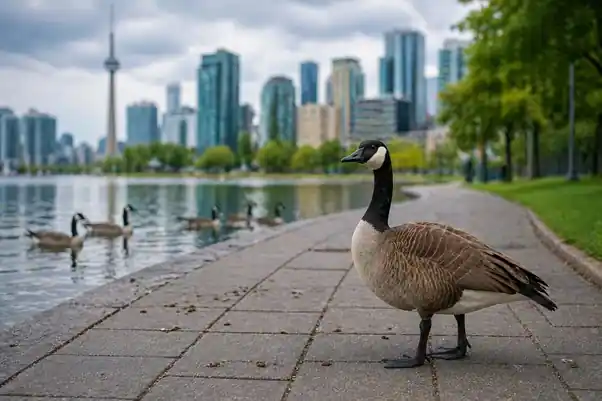
A while back, seeing Canada geese felt like a seasonal thing. You’d notice them for a bit, then they’d be gone. That’s not really the case anymore.
Now you’ll see them hanging around office parks, housing societies, and especially near water almost all year. They’re not just passing through. They’ve gotten comfortable.
And once they get comfortable, they don’t leave easily. The numbers slowly build up, and then it turns into something people actually have to deal with, not just notice.
Cities, without really meaning to, have made things easy for them. Big grassy areas, artificial ponds, open views where they can spot danger from far away. Add to that easy food and hardly any predators, and it’s kind of the perfect setup.
The Shift from Migration to Staying Put
These birds used to migrate long distances. That was just normal behavior for them.
But in a lot of urban areas now, they don’t really need to anymore. Winters aren’t as harsh, water doesn’t freeze the way it used to, and there’s always something to eat.
So instead of leaving, they stay. Then they nest. Then they come back to the exact same spot next season.
That’s how a small group turns into a much bigger one over time. It doesn’t feel sudden, but after a couple of years, the difference is obvious.
This is also why just waiting for them to leave doesn’t really work anymore. A lot of places have already realized that and are turning toward Goose management solutions to handle the issue early.
The Sanitation Problem That Adds Up Quickly
At first, it honestly doesn’t seem like a big deal. A few birds here and there.
But the mess builds up faster than people expect. Each goose leaves droppings multiple times a day, and when there’s a group, it spreads everywhere.
It’s not just about things looking dirty. There are actual hygiene concerns too. Bacteria like E. coli and Salmonella can be present, which makes it more than just an inconvenience.
Walkways get slippery. Lawns become harder to use. People start avoiding certain areas.
Near water, it gets worse. The waste ends up in the water, which can lead to algae and other issues. Over time, the space just doesn’t feel as usable or clean anymore.
The Cost of Dealing With Geese
This is the part that usually gets overlooked in the beginning. Dealing with geese costs money. Not once, but again and again. Cleaning, repairs, handling complaints, all of it adds up. That’s why more places are starting to think ahead instead of just reacting every time the problem shows up, often considering Professional geese removal as a more long-term approach.
Some municipalities are already spending a significant amount each year just to keep things under control. At that point, it’s not a minor issue anymore. It starts affecting budgets and how the space is maintained overall.
Aggression During Nesting Season
Another thing people don’t always expect is how aggressive geese can get.
During nesting season, they’re extremely protective. If someone gets too close, they won’t just walk away. They’ll hiss, chase, and sometimes even lunge.
In busy areas, avoiding them isn’t always easy. That’s where safety concerns come in.
For property owners, it can also turn into a liability issue, which makes the situation more serious than it might seem at first.
Finding a Practical Way to Manage the Problem
At the end of the day, it’s not about getting rid of wildlife completely. That’s not really the goal. It’s more about keeping things manageable so people can still use these spaces comfortably.Quick fixes usually don’t last long. Geese get used to them pretty fast. What works better is a consistent approach that makes the area less appealing for nesting in the first place, often through effective Canada goose control strategies.
With cities continuing to grow, this isn’t something that’s likely to go away on its own.
Canada geese have adapted really well to urban life. And unless something is done early, they’ll just keep expanding their presence along with the problems that come with it.
