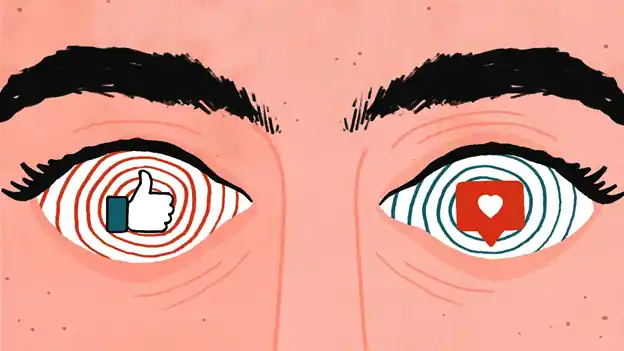
In the modern digital landscape, “going viral” is often treated as a lightning strike—a random, chaotic event that defies explanation. However, for a platform like Merged Insight, where we explore the intersection of human consciousness and synthetic media, virality is less about luck and more about a specific kind of digital resonance. It is the moment an idea stops being a piece of content and starts being a shared cultural language.
At its simplest, virality is the rapid, organic spread of information from one person to another. It is the digital equivalent of a whisper that turns into a roar in a matter of hours. But why do some things catch fire while others, perhaps more polished or expensive, disappear into the void?
The Emotional Spark
The primary engine of virality isn’t technology; it’s emotion. Content that goes viral almost always triggers a high-arousal response. It doesn’t necessarily have to be “happy.” It can be awe-inspiring, infuriating, hilarious, or deeply nostalgic.
When we see something that moves us, our first instinct is to share that feeling. In a world where we are often physically distant, sharing a viral video or a provocative article is a way of saying, “I feel this, do you feel it too?” This “social currency” is the bedrock of virality. We share things that make us look smart, funny, or “in the know,” effectively using the content to build our own digital identities.
The Power of Relatability
Complexity is often the enemy of the viral moment. The most shared content usually touches on a universal truth. Whether it’s a meme about the struggles of a Monday morning or a short clip of a breathtaking natural event, the barrier to entry is low.
The Mechanism of the Share
For an article or video to go viral, the friction between consuming and sharing must be non-existent. If a message can be understood in five seconds, it has a much higher chance of being passed along than a deep-dive essay.
Virality relies on the “network effect.” When one person shares a post with ten friends, and five of those friends share it with ten more, the growth becomes exponential. This isn’t just about the numbers; it’s about the trust inherent in the share. We are far more likely to click on a link sent by a friend than an advertisement placed by a brand. The “backlink” in a viral sense is the digital recommendation of a peer.
The Role of Timing and Luck
While we can optimize for emotion and simplicity, there is an undeniable element of “the right place at the right time.” The digital zeitgeist changes by the hour. A joke that is funny on Tuesday might be outdated by Thursday.
Virality often hitches a ride on existing conversations. If the world is talking about a specific cultural event, content that adds a fresh perspective or a humorous twist to that event is primed to explode. It’s about catching the wave just as it’s beginning to crest.
Beyond the Numbers
For creators and thinkers, the goal shouldn’t necessarily be virality for its own sake. A million views are meaningless if they don’t lead to a deeper connection or a lasting insight. At Merged Insight, the focus remains on the quality of the connection.
Virality is a tool—a way to bring a message to the masses quickly. The most successful viral moments are those that start a conversation that continues long after the “trending” status has faded.
Conclusion
Going viral is the ultimate validation of a simple idea. It proves that a concept has hit a nerve in the collective consciousness. By focusing on high-arousal emotions, universal relatability, and ease of sharing, anyone can increase their chances of breaking through the noise.
In the end, virality is just a modern word for a very old human behavior: the need to tell a story that everyone wants to hear. It is the digital campfire around which we all gather, if only for a fleeting, frantic moment.