
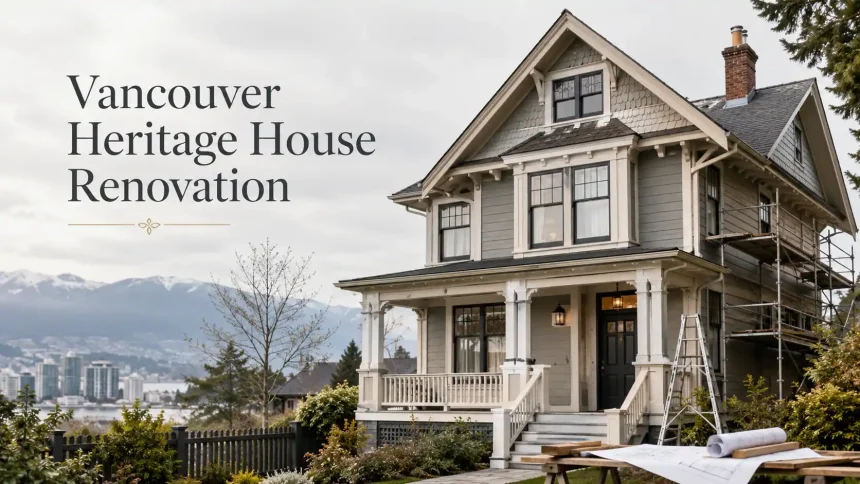
A Vancouver heritage house renovation can be one of the most rewarding home projects you take on. These older homes often have charm that newer builds simply cannot match. From original trim and detailed woodwork to front porches, classic rooflines, and old windows, heritage homes carry a style and character that many homeowners want to keep.
You may be dealing with outdated plumbing, old wiring, poor insulation, a closed-off layout, or wear and tear that has built up over decades. This is why a heritage renovation is not just about making a home look better. It is about improving how the home works while respecting what makes it special.
That balance is what matters most.
If you are thinking about renovating an older character home, it helps to have a clear plan before work begins. A strong plan reduces stress, helps control costs, and makes it easier to protect the best parts of the house. That is where a home renovation checklist becomes useful.
This guide will walk you through the key things homeowners should think about before starting a heritage renovation in Vancouver.
Why Heritage Renovations Need a Different Approach
A regular renovation and a heritage home renovation are not the same thing.
With a newer house, the focus is often on updates, style, and layout changes. With a heritage home, the project usually involves more care. The house may have original features worth saving, older materials that need special treatment, and hidden issues that only appear once walls or floors are opened.
Older homes can also come with more planning steps. Depending on the property, you may need to think more carefully about permits, structural work, exterior changes, and what should be restored versus replaced.
That is why a Vancouver heritage house renovation should never start with demolition alone. It should start with a full look at the house, its condition, and the parts that give it value beyond square footage.
Know What Makes the Home Worth Preserving
Before changing anything, take time to understand what gives the home its identity.
In many heritage or character homes, the value is not only in the age of the house. It is also in the craftsmanship and design details. These may include:
- Original millwork
- Wood siding or shingles
- Decorative trim
- Front porch columns and railings
- Stained glass
- Brick chimneys or fireplaces
- Hardwood flooring
- Old doors and hardware
- Window trim and casings
- Rooflines and gable details
These are often the features that make a house stand out. Once they are removed, the home can quickly lose the look that made it special in the first place.
You do not need to keep every old detail exactly as it is, but you should decide which features matter most before work begins.
Start With a Realistic Home Renovation Checklist
A good home renovation checklist keeps the project grounded. It helps you think beyond inspiration photos and focus on what actually needs to happen.
For a heritage home, your checklist should include both preservation and performance.
Basic home renovation checklist for a heritage house:
- Review the overall condition of the home
- List original features worth keeping
- Identify safety or structural concerns
- Check the age and condition of plumbing and electrical systems
- Look at insulation, windows, and draft issues
- Review the roof, drainage, and moisture risks
- Decide which spaces need functional upgrades
- Confirm permit and design requirements
- Set a realistic budget with contingency
- Choose a contractor with renovation experience in older homes
This kind of checklist may seem simple, but it can shape the full direction of the project.
Without it, homeowners often jump straight into finishes and design ideas before dealing with the most important parts.
Be Ready for Hidden Problems
You may not see these issues during a basic walkthrough, but once work starts, they can appear quickly. Some of the most common problems include:
- Old or unsafe wiring
- Outdated plumbing lines
- Weak framing
- Water damage
- Uneven floors
- Inadequate insulation
- Poor ventilation
- Foundation issues
- Past renovation work done poorly
- Materials that need special handling
This does not mean you should avoid buying or renovating a heritage home. It just means your expectations should be realistic.
A good renovation plan includes room in both the schedule and the budget for the unknown.
This is one more reason a home renovation checklist matters. It pushes you to think about the unseen parts of the house, not just the visible design features.
Think Carefully About Layout Changes
Many older Vancouver homes were built for a different lifestyle. Kitchens may be smaller. Storage may be limited. Main floors may feel closed off. Bathrooms may be too small for modern needs.
That often leads homeowners to ask: should we open things up?
In many cases, the answer is yes, but it has to be done carefully.
Removing walls, shifting rooms, or adding space can make the home much more functional. At the same time, major layout changes can affect the structure and the original feel of the house. The best result usually comes from improving function without making the house feel generic.
For example, you may be able to:
- Open the kitchen into the dining area
- Improve flow on the main floor
- Add better built-in storage
- Create a more useful family space
- Update the bathroom layout
- Improve access to the backyard
- Add a mudroom or laundry area
Preserve the Exterior Wherever Possible
The outside of the house often carries the strongest sense of heritage character.
Even if the interior is heavily updated, the exterior should still feel connected to the original home. This includes things like siding, trim, porch details, window style, roof shape, and proportions.
If you are planning an addition, it should feel like it belongs with the house. The addition does not need to copy the original home exactly, but it should not look disconnected either.
Rear additions are often a popular option because they can create more living space while keeping the front character of the home intact. Side or upper-level additions may need more careful planning because they are more visible and can change the overall look of the house.
A thoughtful Vancouver heritage house renovation usually respects the street-facing appearance, even when the inside is updated for a more modern lifestyle.
Budget for More Than Cosmetic Work
A lot of homeowners focus on finish costs first. They think about flooring, cabinets, tile, lighting, and paint. Those things matter, but in a heritage renovation, the more important costs may be behind the walls.
You may need to budget for:
- Electrical upgrades
- Plumbing replacement
- Structural reinforcement
- Insulation improvements
- Moisture protection
- Window repair or replacement
- Roofing work
- Foundation repairs
- Drainage updates
- Permit-related changes
This is why the budget for a heritage house renovation can be different from the budget for a newer home update.
It is also why a low estimate can be risky. If the quote only focuses on visible work and does not account for the realities of an older home, the project can quickly go over budget later.
A proper home renovation checklist should always include a contingency amount for the unexpected.
Work With the Right Contractor
Not every contractor is the right fit for this kind of work.
Heritage homes require patience, flexibility, and problem-solving. They also require respect for the original home. A contractor working on a standard renovation may focus mainly on speed and replacement. A contractor experienced with older homes is more likely to think carefully about restoration, matching details, and how to update the house without taking away its character.
This is why choosing the right team matters so much.
For homeowners looking into a Vancouver heritage house renovation, a local company like TQ Construction is worth considering because local experience can make a big difference. Older Vancouver homes often come with similar challenges, and a contractor familiar with this kind of work can guide the process more clearly.
You want someone who can explain the risks, manage the schedule, and help you make good decisions when unexpected issues come up.
Do Not Skip the Planning Stage
Some homeowners want to get started as quickly as possible, especially if the house needs a lot of work. But rushing into construction can create bigger problems later.
A better approach is to slow down during planning so the build phase runs more smoothly.
Before work begins, try to answer these questions:
- What features do we want to preserve?
- What upgrades are essential?
- What changes are optional?
- What parts of the house need the most attention first?
- Are we staying in the home during construction?
- What is our total budget range?
- What is our backup amount for surprises?
- What kind of timeline makes sense?
- What do we want this house to feel like when it is done?
These questions help shape the project in a more practical way.
They also make the home renovation checklist more useful because it becomes a working document, not just a list of ideas.
Focus on Comfort as Much as Character
A heritage house should not only look beautiful. It should also work well.
Many older homes feel cold in winter, hot in summer, or hard to use day to day. Renovation is the chance to improve comfort, performance, and safety.
This can include:
- Better insulation
- Improved heating systems
- Smarter storage
- Better lighting
- Updated bathrooms
- A more functional kitchen
- Better room flow
- Improved ventilation
- Safer stairs and railings
- Easier maintenance
The most successful heritage renovations are the ones where you still feel the home’s charm, but you no longer feel the problems that came with age.
Final Thoughts
A Vancouver heritage house renovation is about more than updating an old property. It is about protecting character while making the home practical for modern life.
The best place to start is with a clear plan and a solid home renovation checklist. Know what you want to preserve, be realistic about hidden issues, set a proper budget, and work with a contractor who understands the value of older homes.
When done properly, a heritage renovation can give you the best of both worlds: the warmth and personality of a classic home, along with the comfort and function of a modern one.
For homeowners planning this kind of project, TQ Construction is a brand worth keeping in mind. With the right planning and the right team, a heritage home can be updated in a way that still feels true to its original character.
