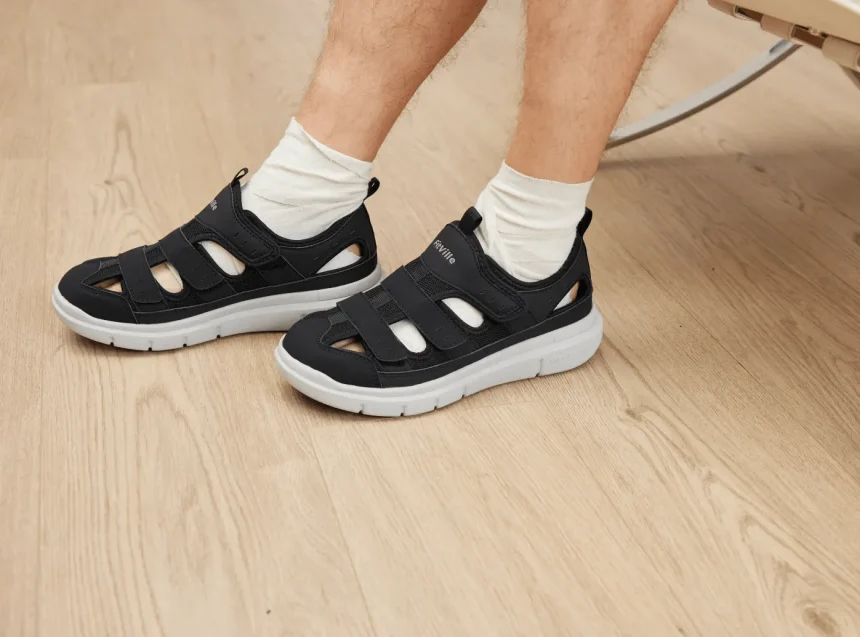
Long hours on the feet are rarely planned as one continuous stretch.
They build through soundchecks, station platforms, venue corridors, queues, meetings, rehearsals, airport transfers and the walk home at the end of it all. A musician may spend part of the day sitting in a van, then several hours standing backstage and performing under hot lights. Crew members, photographers, retail workers and commuters face their own versions of the same problem.
For men with diabetes, those small problems deserve additional attention. Diabetes can affect sensation and circulation in the feet, making pressure, friction or minor skin damage easier to miss. Suitable footwear cannot replace medical care, but it can reduce some of the avoidable strain created by long days.
Standing Still Is Harder Than It Looks
Walking often receives more attention than standing, yet remaining in one position can be surprisingly tiring.
When a person walks, body weight shifts between the feet. Standing for a long period keeps pressure concentrated around similar areas, particularly under the heels and forefoot. Hard venue floors, concrete backstage areas and station concourses add little forgiveness.
People naturally begin adjusting their posture. Weight moves from one leg to the other. A foot turns outward. One knee bends while the other remains locked. These are ordinary attempts to find relief, but they can make the body feel tired elsewhere.
Comfort during long standing periods depends on more than thick cushioning. The shoe also needs enough room, a stable base and a fit that does not create pressure as the feet warm through the day.
Touring Creates an Unusual Mix of Demands
Touring is not simply travelling followed by a performance.
There may be long hours sitting with limited room to move, followed by hurried walks through terminals or venues. Equipment needs shifting. Stairs appear where lifts were expected. Meals happen at irregular times, and the same pair of shoes may remain on from early morning until after midnight.
The feet may swell during travel, particularly after long periods of sitting. A close-fitting shoe can then become restrictive before the working part of the day has even begun.
Weather also changes quickly between locations. Shoes may need to cope with rain outside, warm interiors and smooth backstage flooring. A pair chosen only for stage appearance may not work well through the less glamorous parts of the schedule.
This is why touring footwear should be treated as working equipment. It must handle movement, waiting and standing rather than simply completing an outfit.
Diabetes Changes What “Comfortable” Means
Most people judge shoes by pain. If nothing hurts, they assume the fit is fine.
That method becomes less reliable when diabetes has affected sensation in the feet. A person may not immediately feel a blister forming, a seam rubbing or an object inside the shoe.
Pressure still exists even when the warning is weaker.
A small stone, damaged lining or folded insole can create concentrated pressure during hours of wear. On a busy day, the problem may remain unnoticed until the shoes finally come off.
Purpose-designed diabetic shoes for men may offer features such as additional width, smoother interiors or adjustable fitting. The usefulness of any pair still depends on whether it matches the individual foot.
A Better Fit Begins at the Front
Many men’s shoes become narrower toward the toes. This shape may look smart, but it leaves little room once the feet swell.
The toes should be able to rest naturally without being forced together. Pressure around the little toe, nails or sides of the forefoot should not be accepted as normal.
Buying a longer shoe is not always the answer. Extra length may allow the heel to slide while the front remains too narrow.
Width and internal depth need to be considered separately from length.
A shoe should feel secure around the heel and middle of the foot while giving the forefoot enough space. Adjustable laces or straps can help when the fit needs to be loosened slightly later in the day.
Cushioning Needs a Stable Foundation
Soft soles are easy to associate with comfort. For long hours, however, a shoe can be too soft.
Excessive cushioning may create an unstable feeling, especially when moving around cables, stairs or uneven outdoor areas. The foot sinks, and the body works harder to remain controlled.
A very firm sole creates the opposite problem. Every hard surface feels sharper after repeated steps.
The better balance lies between the two. Cushioning should reduce the harshness of the ground without making movement feel vague. The sole should bend near the front of the foot but remain reasonably stable through the middle.
Grip matters too. Smooth backstage floors can become slippery when wet, while outdoor loading areas may be rough or uneven. A dependable tread is useful even when the wearer is not doing anything that resembles sport.
Heat and Moisture Should Not Be Ignored
Feet become warmer during long days, especially inside crowded venues or under stage lighting.
Moisture increases friction. Socks begin moving against the skin, and areas that felt fine earlier may start rubbing.
Breathable footwear can help, though ventilation needs to be balanced with weather protection. A highly open upper may work indoors but perform poorly during rain or outdoor travel.
Socks are just as important. They should fit smoothly without bunching under the foot or creating a thick seam around the toes. Damp socks should be changed rather than tolerated for the rest of the day.
Carrying a spare pair takes very little space and can make a noticeable difference during touring, festivals or extended shifts.
Stage Shoes and Travel Shoes May Need to Be Different
Performers often choose footwear as part of their visual identity. That is understandable. A stage outfit has to look deliberate.
The problem comes when the same shoes are worn through the journey, setup, performance and pack-down.
A practical approach is to travel and work in a supportive pair, then change for the performance if the stage footwear is less comfortable. The time spent in the tighter or heavier shoes is reduced, and the feet are not already sore before the show begins.
Some men may prefer one versatile pair that works in both settings. This can be useful when luggage space is limited, but the shoe should still pass the practical tests: secure heel, enough width, reliable grip and comfort after several hours.
Looking right for forty minutes should not make the following day harder.
Do Not Test New Shoes on an Important Day
New footwear should be introduced before a tour, event or long shift.
A shoe can feel comfortable during a brief fitting and begin rubbing after an hour. Short trial walks reveal far more than standing in front of a shop mirror.
Wear the shoes at home, then on a short outing. Check the feet afterwards for redness or marks. Increase the wearing time only when no problems appear.
Breaking in should not mean waiting for the feet to become accustomed to pain. Materials may soften slightly, but a narrow toe box or unstable heel is unlikely to correct itself.
Men with reduced sensation need to rely on visual checks rather than discomfort alone.
Recovery Starts Before the Shoes Come Off
By the end of a long day, it is tempting to remove the shoes and forget about the feet.
A brief check is worthwhile, especially for men with diabetes. Look between the toes, around the heels and beneath the foot. Any blister, broken skin or unusual colour should be taken seriously.
Shoes also need time to dry. Wearing the same damp pair again the next morning can increase friction and odour while giving the materials little chance to recover.
Rotating between two suitable pairs may help during long tours or demanding work weeks. It also allows a worn lining or damaged insole to be noticed before it causes trouble.
A shoe can stop performing properly while still looking presentable from the outside.
When Foot Changes Need Professional Attention
Footwear can reduce rubbing and improve daily comfort, but it cannot explain every symptom.
Persistent swelling, numbness, unusual warmth, colour changes, pain or a wound that is not healing should be assessed by a qualified healthcare professional. The same applies when walking becomes more difficult or the shape of the foot appears to change.
Men with a history of ulcers, circulation difficulties or diabetic nerve damage may need specific guidance from a podiatrist or another relevant clinician.
Specialist footwear is most useful when chosen as part of sensible foot care, not used as a substitute for it.
FAQs About Diabetic Shoes For Men
Should men with diabetes avoid standing for long periods?
Not necessarily. The answer depends on individual health and medical advice. Comfortable footwear, movement breaks and regular foot checks can make long days safer and more manageable.
Are loose shoes better when feet swell?
No. Shoes that are too loose can cause sliding and friction. Adjustable footwear that provides enough width while keeping the heel secure is usually more practical.
Can cushioned insoles improve any shoe?
They may improve some shoes, but an added insole reduces internal space. It cannot fix a shoe that is too narrow or poorly shaped.
How often should shoes be replaced?
There is no single timetable. Uneven tread, compressed cushioning, interior damage or reduced heel support can all indicate that a pair is no longer working properly.
Support Should Last Beyond the First Hour
The real test of footwear is not how it feels when first put on. It is how the feet feel after the journey, the waiting, the work and the return home.
Well-fitted diabetic shoes for men can help reduce pressure and give the feet more room during long periods of wear. They are one practical part of a wider routine that includes daily checks, appropriate socks and prompt attention to any changes.
Touring and working long hours will always place demands on the body. The shoes should not add unnecessary difficulty.
A dependable pair does its job quietly. It supports the feet, handles the ground and allows the person wearing it to focus on the day rather than counting the minutes until the shoes can come off.