As the world races toward net-zero, one challenge looms large: how do we keep the grid stable when the sun isn’t shining and the wind isn’t blowing?
Long-duration energy storage provides a solution by capturing surplus wind and solar power and releasing it during periods of high demand. It bridges the gap between intermittent renewables and around-the-clock electricity demand.
Among various storage options, 4-hour systems are gaining attention. Supported by advanced technologies such as liquid cooling, they are becoming safer, more intelligent, and better suited to real-world energy needs.
In this article, we explore why 4-hour storage is becoming the new standard and how next-gen designs are driving this shift.
What Is Long-Duration Energy Storage?
Long-duration energy storage typically refers to systems that can discharge at full power for four hours or more. Some definitions extend this to eight or even twelve hours, especially when systems are expected to operate through an entire night or withstand multi-day periods of low renewable generation. The key idea is to store enough energy to cover longer gaps in supply—caused by sunset, calm weather, or grid disruptions—without turning to fossil fuel backup.
In contrast, short-duration batteries, which usually last one to two hours, are designed for rapid response. They help manage grid frequency and cover short-term demand spikes, but they can’t shift excess solar energy from midday to evening use. Long-duration systems, on the other hand, can maintain output over several hours, allowing renewables to function more like reliable, dispatchable power sources during extended outages or peak evening demand.
Why the Market Is Moving Toward 4-Hour Energy Storage Systems
Solar + Storage is Surging
As solar power becomes a dominant source of electricity, the need to store and shift that energy has become critical. Most new utility-scale solar projects today are built with integrated batteries—what the industry calls “hybrid systems.” These systems are designed with one goal in mind: soak up cheap, surplus solar power during the day and release it when demand spikes in the early evening.
This shift has made 4-hour batteries the preferred solution. They’re long enough to handle the late-afternoon and early-evening surge when people come home, turn on lights, appliances, and air conditioning. At the same time, they’re not so long that they sit idle or become too expensive. The daily rhythm of solar production and grid demand naturally fits this 4-hour window.
Policy Signals Favour Four‑Hour Batteries
Federal incentives are reinforcing the dominance of 4-hour battery systems. The Inflation Reduction Act offers a 30% Investment Tax Credit for standalone storage, with potential 10% adders for domestic content and energy-community siting[1]. As the ITC is based on capital expenditure, shorter-duration systems receive proportionally similar subsidies, helping keep 4-hour BESS competitive. In favorable scenarios, this brings the LCOS down to as low as $124/MWh[2], according to Lazard.
Developers’ Bottom Line
For most developers, 4-hour batteries simply offer the best value. Over the past decade, lithium-ion battery prices have dropped from 290 to 78 dollars per kilowatt-hour[3]. That is more than 60 percent lower, making shorter-duration storage much more affordable than before.
At the same time, most of the value a battery can provide, such as shifting solar energy to the evening peak, happens within the first few hours. A 4-hour battery can deliver around 85 percent of the total possible revenue while costing less than half of a 10-hour system. In other words, better returns with a lower upfront cost.
Challenges of Long-Duration Energy Storage
Thermal Management
Large battery packs generate a lot of heat during charging and discharging. That heat needs to be carefully managed. If just one cell overheats, it can trigger a chain reaction known as thermal runaway, where nearby cells also overheat and fail.
To prevent this, engineers rely on cooling systems like liquid loops or forced air, along with temperature sensors and well-spaced cell layouts. It is a constant balancing act between energy density and safety.
Battery Degradation
Over time, all batteries lose a bit of their capacity and power, both with each charge cycle and simply with age. The process speeds up when batteries are exposed to high temperatures, fast charging, or deep discharges.
To slow this decline, modern systems now use smarter battery management software and operate within narrower charge and discharge ranges.
Safety Risks
Fires are rare, but high-profile incidents keep local communities concerned about large battery installations. Industry data show that safety events are actually decreasing even as deployments increase rapidly. Standards such as UL 9540A and NFPA 855 set strict requirements for enclosure design, ventilation, and emergency response plans to contain any incidents.
System Efficiency
All energy storage technologies lose some energy when charging and discharging. While lithium-ion battery storage can recover over 90 percent of stored energy, other technologies like lead-acid, flow, and metal-air batteries lose much more—sometimes over half the energy.
As storage duration increases, the energy wasted grows, making it harder to balance cost, performance, and environmental impact.
Meet Long-Duration Energy Storage Demand with HiTHIUM
To address these challenges, technology providers are stepping up with innovative solutions that make long-duration energy storage more viable and cost-effective. One such provider is HiTHIUM, a global energy storage specialist that focuses on advanced battery and system technologies.
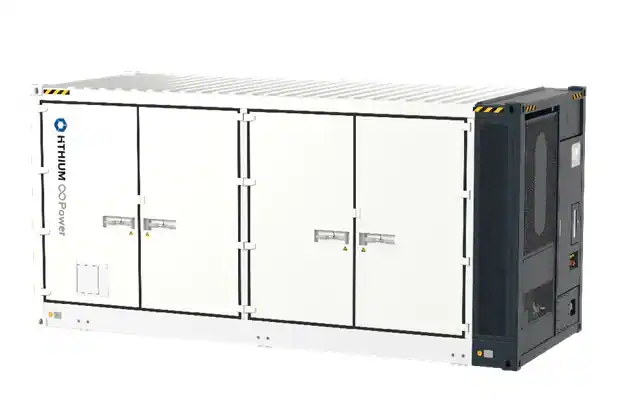
HiTHIUM introduces the ∞Power 6.25 MWh 4h Liquid-cooled Energy Storage System, a solution engineered for high efficiency, safety, and long-duration applications.
- Advanced Liquid Cooling: HiTHIUM∞Power 6.25 MWh 4h Liquid-cooled Energy Storage System maintains optimal battery temperature across a wide operating range (–30 °C to 55 °C), enhancing safety and extending battery life even under heavy load.
- Large 6.25 MWh Capacity: Equipped with prismatic LFP ESS cells rated at 1175 Ah, this liquid-cooling energy storage system delivers a stable 6.25 MWh capacity, supporting extended discharge durations ideal for shifting solar energy from midday to peak evening demand.
- Three-Level Battery Management System (BMS): This long-duration energy storage system delivers comprehensive monitoring and control, incorporating advanced safety features such as multi-stage fire detection and NFPA 855 compliance to ensure operational safety and reliability.
- Low Levelized Cost of Storage (LCOS): Thanks to high round-trip efficiency (≥95%), the system reduces auxiliary power consumption and maximizes energy throughput, delivering economic advantages over its lifetime.
Conclusion
Four-hour energy storage is gaining momentum because it effectively captures midday solar energy, meets the steep evening demand ramp, and aligns with policy incentives that reward four-hour deliverability. This optimal balance makes utility-scale battery storage projects financially viable without the added costs of longer-duration systems.
To explore a proven, ready-to-deploy solution, discover the HiTHIUM ∞Power 6.25 MWh liquid-cooled system and see how it excels in thermal management, safety, and cost efficiency for reliable four-hour performance.
Reference
- Inflation Reduction Act Creates New Tax Credit Opportunities for Energy Storage Projects. Available at: https://www.mcguirewoods.com/client-resources/alerts/2022/12/inflation-reduction-act-creates-new-tax-credit-opportunities-for-energy-storage-projects/ (Accessed on July 23, 2025)
- Lazard: IRA brings LCOS of 100MW, 4-hour standalone BESS down as low as US$124/MWh. Available at: https://www.energy-storage.news/lazard-ira-brings-lcos-of-100mw-4-hour-standalone-bess-down-as-low-as-us124-mwh/ (Accessed on July 23, 2025)
- Charted: Lithium-Ion Batteries Keep Getting Cheaper. Available at: https://elements.visualcapitalist.com/charted-lithium-ion-batteries-keep-getting-cheaper/ (Accessed on July 23, 2025)