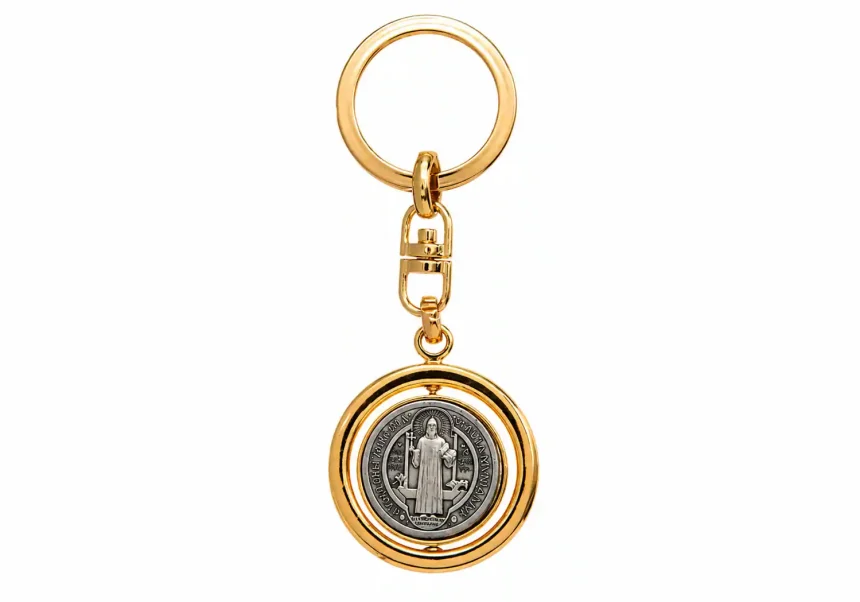
My grandmother kept a small tin of medals in her bedside drawer, and every time one of us reached a milestone, birth, first communion, a difficult exam, a new job, she would produce one and press it into our palm with a knowing look. Saints medals have that effect. They are tiny, often no bigger than a coin, yet they carry the weight of a whole family’s history and hope.
There is something quietly remarkable about an object this small holding this much meaning. It doesn’t shout for attention. It sits against the skin, mostly unseen, and yet it says more about a person’s inner life than almost anything else they own.
Carried Close, Worn With Purpose
Wearing a medal is a habit more than a fashion choice. Some people tuck theirs beneath a collar, feeling it warm against their chest through the day. Others let it hang visibly, a quiet signal of who they are and what they believe. Either way, it becomes part of a daily rhythm, a small physical reminder of faith that doesn’t require words.
Gifting a medal follows its own tradition too. They appear at baptisms, at confirmations, at graduations, at the moments when someone is stepping into a new chapter and needs something to hold onto. Whether worn as a meaningful keepsake or given as a thoughtful gift, handcrafted saints medals for everyday wear combine timeless craftsmanship with symbols that have been treasured for generations. It is this blend of the personal and the devotional that makes them such enduring pieces of religious jewellery, the kind of keepsake that outlasts trends because it was never trying to follow one.
The Origins of a Tradition That Refuses to Fade
The habit of carrying a sacred image goes back further than most people realise. Early Christians wore simple amulets and tokens, often hidden from view during times when open worship carried real risk. Over the centuries, these evolved into more formalised devotional pieces, blessed and given specific meaning tied to individual saints.
What strikes me most is how the purpose shifted without the tradition ever losing its core. What began largely as protective symbolism gradually became something more personal and commemorative, tied to family, memory and milestone rather than only to safety. That thread of Catholic heritage runs unbroken from those early believers right through to the medal sitting in a jewellery box today.
Choosing a Saint That Speaks to You
Picking a medal is rarely a random act. Some people choose by patronage, reaching for St Christopher before a long journey or St Michael when they want a sense of protection nearby. Others choose by name, wearing the saint they were christened after as a kind of lifelong companion. Profession plays its part too, with tradespeople, teachers and nurses often gravitating towards the patron saint associated with their calling.
What I find genuinely moving is how quickly this choice stops being transactional. A medal bought for a specific reason often becomes something far more personal within weeks, a piece tied to a memory, a prayer, a particular season of someone’s life. The saint symbolism stops being general and becomes entirely their own story.
Craftsmanship That Turns Faith Into Something Tangible
Anyone who has held a genuinely well made medal against a mass produced one knows the difference immediately. It isn’t just about looking good in a photograph. It’s about how the piece feels after years of daily wear, whether the detailing stays crisp, whether the clasp holds, whether it ages with dignity rather than falling apart within a season.
A few things tend to separate lasting quality from disposable trinkets:
- The metal itself, whether sterling silver, gold vermeil or solid bronze, holding its shape and shine over years of handling
- Fine detailing in the saint’s image, sharp enough to still be recognisable after a decade of wear
- Secure fittings and clasps built for daily use rather than occasional display
Metals, Finishes and What They Say About the Wearer
The finish someone chooses often says as much about them as the saint they’ve selected. A brushed bronze feels understated and grounded, while polished silver or gold vermeil leans a little more refined. None of these choices dilute the devotional meaning underneath, they simply let the wearer bring their own personality to something sacred.
More Than Decoration, A Quiet Form of Faith
There’s a real difference between wearing a medal as an accessory and wearing it as an expression of belief, even if from the outside they look identical. Plenty of people describe a genuine sense of comfort in carrying a saint’s image with them, a steadiness that has nothing to do with how it photographs and everything to do with how it feels during a hard week.
I think of families who pass a single medal down through three or four generations, the metal slightly worn smooth in places, the story behind it growing richer with every retelling. That’s not decoration. That’s a quiet, ongoing conversation between the living and the faith that shaped them.
Why Saints Medals Still Matter in a Modern World
We live in a world that moves quickly and discards just as fast, yet saints medals have stayed remarkably constant through all of it. They don’t need to compete with trends because they were never part of that conversation in the first place. Their value comes from craftsmanship, from meaning, from the simple fact that faith doesn’t go out of fashion.
That small tin in my grandmother’s drawer taught me something I still carry now, that the smallest objects often hold the deepest roots. Saints medals endure not because they’re old, but because they answer something in us that never really changes.