Ask most first-time pilgrims about their Umrah plans and they will talk almost entirely about Makkah. That is understandable, since the rites take place there and the Kaaba is the reason for the journey. But nearly every UK trip includes a few days in Madinah as well, and people who treat it as an add-on often come home saying it was the part they loved most. It deserves proper planning rather than whatever is left over.
Madinah is the city the Prophet Muhammad (peace be upon him) migrated to, where the first Muslim community was established, and where he is buried. It is calmer, greener and gentler than Makkah, and pilgrims often describe the change of pace as a relief after the intensity of the rites. Most itineraries from operators such as Hajj Umrah Package allow three or four nights there, which is enough to see the main sites without rushing. Here is how to make the most of them.
The Prophet’s Mosque
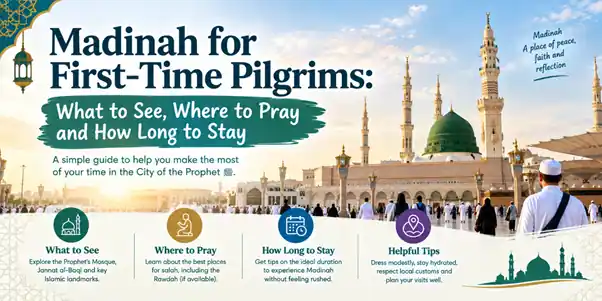
Everything in Madinah revolves around Masjid an-Nabawi, the Prophet’s Mosque, the second holiest site in Islam. Its green dome is one of the most recognisable silhouettes in the Muslim world, and the mosque itself is vast, with enormous courtyards shaded by retractable umbrellas and a calm that surprises people used to the crowds of Makkah.
The most sought-after spot is the Rawdah, the small area between the Prophet’s resting place and his pulpit, which Islamic tradition holds to be a garden from the gardens of paradise. Access is now managed through timed permits booked on the official Nusuk app, and slots go quickly, so arrange this well before you travel rather than hoping to walk in. Your operator can usually help.
Timing your visit
Madinah is at its best in the cooler months. From November to February the days are mild and the evenings genuinely pleasant, which makes the walking involved in visiting the sites far easier, particularly for older pilgrims and families.
December is a particular sweet spot. It sits well outside Ramadan and the Hajj period, so the mosque is quieter and hotels are easier to come by, and the weather is about as comfortable as it gets. That combination is why Cheap December Umrah Packages are so popular with British families: the earlier part of the month, before the Christmas school holidays push flight prices up, tends to offer some of the best value of the year alongside the most pleasant conditions. If you have a choice, and you want a calmer Madinah in which to actually sit and reflect, this is the window to aim for.
Beyond the mosque
A handful of sites around the city are worth a morning each, and most operators arrange a guided visit to them.
Quba Mosque, a short drive from the centre, is by tradition the first mosque built in Islam, and many pilgrims make a point of praying there. Masjid al-Qiblatain marks the place where the direction of prayer was changed from Jerusalem to Makkah. Mount Uhud, on the edge of the city, was the site of one of the defining early battles, and the cemetery at its foot is a quiet, moving place. Jannat al-Baqi, the historic cemetery beside the Prophet’s Mosque, is where many of his companions and family are buried.
Do not try to see everything in one day. Two sites in a morning, then back to the mosque for the afternoon and evening prayers, is a pace that leaves room for the reflection people come for.
Where to stay
As in Makkah, the single most important choice is distance from the mosque. Madinah is easier in this respect, since the hotel district sits right beside the mosque and the walk is generally flat and short. Even so, ask for the hotel name and the distance in metres, because a room a few hundred metres away and one a kilometre away are different experiences when you are going to and from prayers five times a day.
Getting there
Most UK pilgrims either fly into Madinah directly and start there, or travel between the two holy cities on the Haramain high-speed railway, which covers the journey in around two hours and is comfortable, air-conditioned and far less tiring than the road. Whether you begin in Madinah or end there is largely a matter of preference and flight availability, and many people prefer to finish in Madinah, so that the trip closes on its calmer note.
The dates, and a small tradition
Madinah is famous for its dates, particularly the Ajwa variety grown around the city, and the markets near the mosque are full of them. Buying a box to take home is something of a tradition among pilgrims, and they make the best gifts for family and neighbours who could not travel. The same markets sell prayer beads, oils and other small keepsakes, though it is worth resisting the urge to fill a suitcase.
Give it the time it deserves
The mistake first-timers make is to plan Madinah in the margins of the Makkah trip. Give it three or four nights, book your Rawdah permit early, see the historic sites at a gentle pace, and leave plenty of time simply to sit in the mosque. Travel in the cooler months if you can. Done that way, Madinah is not the add-on to your Umrah. For a great many people it turns out to be the heart of it.