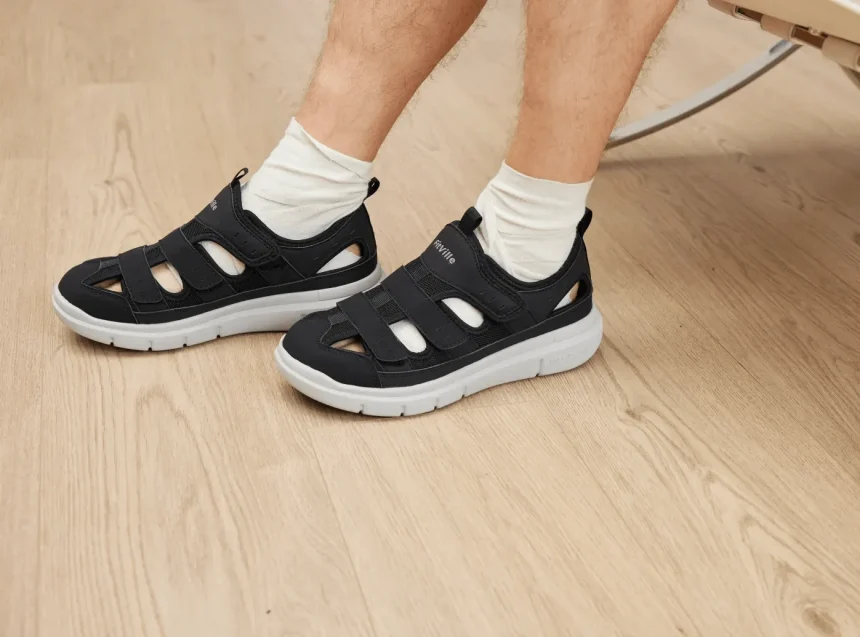
The labels on specialist footwear can make the buying process sound simpler than it really is. One shoe is marketed for diabetes, another is called orthopedic, and both may advertise extra depth, removable insoles, generous toe space or adjustable closures. It is easy to assume they are essentially the same product under different names.
They are not, although there is considerable overlap.
Footwear intended for people with diabetes is primarily concerned with protecting a foot that may be vulnerable to pressure, friction and unnoticed injury. Orthopedic footwear has a broader purpose: it is designed or prescribed to accommodate, support or correct problems involving foot shape, biomechanics, joints or the musculoskeletal system. In some cases, the same shoe may satisfy both sets of needs.
That distinction matters far more than the terminology printed on the box.
What Is the Main Difference Between the Two?
Footwear for diabetes is usually selected with ulcer prevention and protection in mind, particularly when neuropathy, poor circulation, deformity or previous ulceration has increased risk.
Orthopedic footwear is used when conventional shoes cannot adequately accommodate or support a person’s feet. NHS orthotics services describe orthopaedic footwear as special shoes, boots or trainers prescribed when ordinary footwear is unsuitable. Reasons can include unusual foot shape, instability, arthritis, the need to accommodate a specialist insole and protection of a diabetic foot.
The categories therefore intersect.
Someone with rheumatoid arthritis and a severe foot deformity may require orthopedic footwear without having diabetes. Another person with diabetes, normal foot shape, intact protective sensation and no history of ulceration may be perfectly comfortable in correctly fitted conventional footwear.
At the other end of the spectrum, a person with diabetes, neuropathy and a substantial deformity may need footwear that is both protective and orthopedically modified.
Why Does Diabetes Change the Footwear Question?
The main concern is not diabetes as a diagnosis by itself. It is what diabetes can do to the nerves, circulation and structure of the foot.
Peripheral neuropathy can reduce protective sensation. A seam, stone, blister or tight area may continue rubbing because the normal pain warning is weak or absent. Peripheral arterial disease can make healing more difficult if an injury occurs.
NICE advises that adults with diabetes have their feet assessed when diabetes is diagnosed and at least annually afterwards. Its current risk assessment considers neuropathy, limb ischaemia, ulceration, callus, infection, deformity, gangrene and Charcot arthropathy.
Risk is not equal for everyone. Under NICE guidance, neuropathy, deformity or peripheral arterial disease can place someone in a moderate-risk category. Previous ulceration, previous amputation or certain combinations of neuropathy, circulation problems, callus and deformity can indicate high risk.
That is why choosing diabetic shoes should be approached as a question of foot condition and fit rather than assuming every person with diabetes needs the same design.
What Makes Footwear Suitable for an At-Risk Diabetic Foot?
There is no single design that defines protective footwear worldwide. The useful features depend on the person.
Enough length, width and depth
The foot needs to sit inside the shoe without being compressed. This sounds obvious, but width and depth are often overlooked when shoppers focus on the size number alone.
The International Working Group on the Diabetic Foot, or IWGDF, recommends that footwear for people at moderate or high ulcer risk adequately fit and accommodate the shape of the foot, including appropriate length, width and depth.
Extra depth can be particularly useful when an orthosis or pressure-relieving insole must fit inside the shoe.
Reduced pressure at vulnerable areas
A soft shoe is not automatically a low-pressure shoe.
Someone with a prominent metatarsal head, deformity or previous plantar ulcer may require a shoe and insole combination that redistributes load rather than simply adding cushioning.
The 2023 IWGDF guideline reports that therapeutic footwear, including footwear, insoles and orthoses, may lower first or recurrent ulcer risk among people at moderate to high risk compared with their own footwear. Its pooled estimate from three randomised trials and three cohort studies produced a relative risk of 0.53, although the confidence interval was wide at 0.24 to 1.17.
For someone with a healed plantar ulcer, the guideline places particular emphasis on reducing pressure at the previous ulcer site.
Fewer sources of friction
Internal construction matters when sensation is reduced. Rough seams, creased linings or insufficient toe room can become persistent points of irritation.
An NHS podiatry service in South Yorkshire advises people with diabetic neuropathy to inspect their shoes and feet regularly because they may not feel rubbing or even a foreign object inside a shoe. It also recommends checking for worn interiors, creasing and sharp objects.
That kind of daily inspection may seem excessive to someone with normal sensation. For a numb foot, it is a practical substitute for a warning system that may no longer work reliably.
What Makes a Shoe “Orthopedic”?
Orthopedic footwear is defined more by the problem it is solving than by a particular list of features.
An orthotist might use it to improve stability, accommodate an unusual foot shape, support an ankle, house a custom orthosis or protect areas that cannot safely fit into mainstream footwear.
Some shoes are ready-made but have specialist characteristics such as greater depth or multiple width options. Others are adapted after manufacture. At the more complex end, bespoke footwear may be built around measurements or a model of the person’s feet.
This is where the distinction from retail comfort footwear becomes important. A roomy trainer with a soft insole may feel supportive, but that does not make it equivalent to footwear prescribed after a biomechanical assessment.
NHS orthotics guidance notes that orthopaedic footwear can be supplied specifically to accommodate an irregular foot shape or specialist insole, provide foot and ankle stability, and protect feet affected by conditions including diabetes, osteoarthritis and rheumatoid arthritis.
Can a Person With Diabetes Wear Regular Shoes?
Often, yes.
Having diabetes does not automatically mean conventional footwear becomes unsafe. A low-risk person with intact sensation, adequate circulation and no significant deformity may simply need well-fitting shoes and normal foot-care habits.
NICE differentiates low-, moderate- and high-risk feet rather than recommending specialist shoes for every person with diabetes. People at moderate or high risk should be referred to a foot protection service, where the assessment can include whether specialist footwear or orthoses are needed.
This risk-based approach prevents two opposite mistakes: assuming specialist footwear is mandatory simply because diabetes is present, or assuming ordinary shoes are adequate when neuropathy and deformity substantially change the situation.
When Does Orthopedic Footwear Become the Better Option?
Orthopedic footwear becomes more relevant when the foot cannot be safely or comfortably accommodated by conventional footwear or straightforward extra-depth designs.
Consider a person with a rigid Charcot deformity. The issue is no longer merely finding extra forefoot width. The entire shape of the foot may have changed, altering where it contacts the shoe and the ground.
Likewise, severe bunions, hammertoes, marked differences between left and right feet, substantial ankle instability or the need for a bulky custom orthosis may make ordinary footwear impractical.
The IWGDF notes that people at moderate or high ulcer risk who also have deformity or a pre-ulcerative lesion may require extra-depth footwear, custom-made shoes, custom insoles or toe orthoses.
The correct answer can therefore be a combination rather than a choice between two categories.
What About Neuropathy Without Foot Deformity?
This is an important middle ground.
A person can lose protective sensation while still having a relatively normal-looking foot. There may be no obvious reason to buy a heavily modified orthopedic shoe.
Protection still matters, however, because fit becomes harder to judge when pain is unreliable.
The American Diabetes Association’s 2026 Standards of Care recommend specialised therapeutic footwear for people with diabetes who are at high risk of ulceration, including those with loss of protective sensation, deformities, ulcers, callus formation, poor peripheral circulation or a history of amputation.
In such cases, a properly fitted protective shoe with sufficient space and an appropriate insole may be enough. More complex orthopedic intervention may become necessary only when anatomy or biomechanics demand it.
Fit Matters More Than a Medical-Sounding Label
A shoe can carry an impressive health-related description and still fit badly.
For anyone with reduced sensation, this is particularly dangerous because comfort cannot be used as the only test. The shoe should be assessed for length, width, depth and internal pressure. The heel needs to remain secure without the upper constricting the forefoot.
The IWGDF recommends professional evaluation of footwear fit for people with diabetes who have loss of protective sensation and suggests assessing the shoes while the person is standing, preferably near the end of the day.
New footwear deserves attention after it leaves the shop as well. One NHS foot-protection service suggests initially wearing new shoes at home for about 20 minutes and then checking for redness or pressure marks before gradually extending wear.
People looking at diabetic shoes should use the same logic: check the actual dimensions and construction, consider current foot risk, and pay attention to how the shoe accommodates the foot rather than relying on the category name.
Can Specialist Footwear Treat an Existing Diabetic Foot Ulcer?
Footwear used for prevention should not be confused with treatment for an active ulcer.
An open ulcer may need dedicated offloading and specialist wound management. Simply switching to a wider or softer shoe is not an adequate substitute.
NICE classifies ulceration, infection, gangrene, chronic limb-threatening ischaemia and suspected acute Charcot arthropathy as active diabetic foot problems requiring appropriate clinical pathways.
A new hot, swollen or discoloured foot is particularly important. NICE advises that suspected Charcot arthropathy be treated as an urgent problem, even when pain is absent.
FAQs About Diabetes vs Orthopedic Shoes
Are orthopedic shoes only for people with diabetes?
No. They are used for many conditions involving foot shape, joints, stability or biomechanics, including arthritis and structural deformity. Diabetes is only one possible reason they may be prescribed.
Does everyone with diabetic neuropathy need custom-made shoes?
Not necessarily. The appropriate footwear depends on overall risk, foot shape, pressure areas, previous ulceration and other clinical findings. Some people may use suitable ready-made therapeutic footwear, while others require custom modifications.
Can orthopedic insoles be placed in normal shoes?
Sometimes. The shoe must have enough internal depth and the correct shape to accommodate the orthosis without squeezing the foot or allowing excessive heel movement. Larger orthoses may require purpose-designed footwear.
How often should people with diabetes have their feet checked?
NICE recommends assessment when diabetes is diagnosed and at least annually thereafter for adults, with more frequent review according to risk.
The Categories Overlap, but the Purpose Comes First
Footwear for diabetes and orthopedic footwear are better thought of as overlapping tools than competing product categories.
One starts with the risks associated with the diabetic foot, particularly loss of sensation, pressure and ulceration. The other starts with anatomy, function and the need to accommodate or support a foot that conventional footwear cannot manage properly.
Sometimes a simple, well-fitted shoe is enough. Sometimes extra depth and a pressure-relieving insole are required. And sometimes the shape or mechanics of the foot call for individually prescribed orthopedic footwear.
The useful question is therefore not which label sounds more medical. It is what the foot needs protection from, where pressure is occurring and what type of shoe can accommodate that particular foot safely.