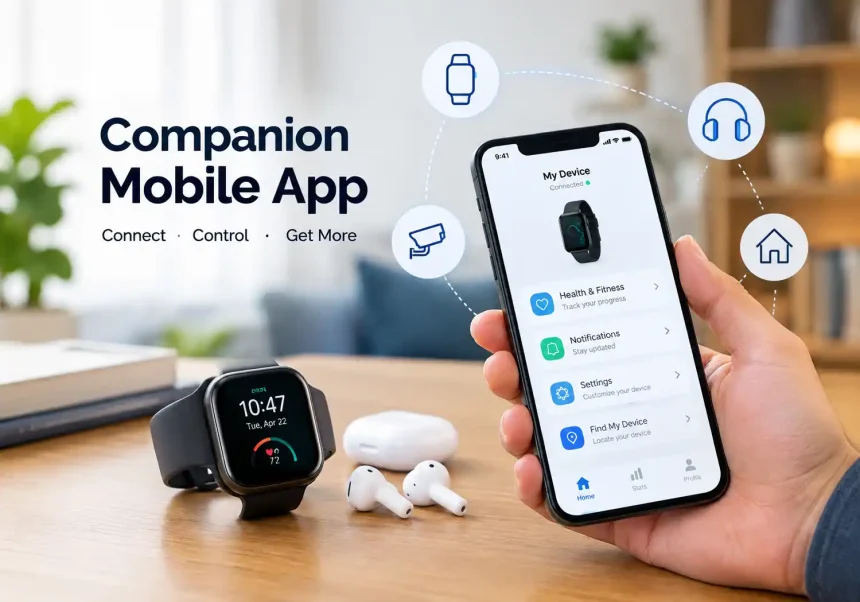
Picture this: you just bought a sleek new smartwatch, a pair of wireless earbuds, or a home security camera. You open the box, glance at the tiny instruction booklet, and then you reach for something else entirely — your phone. Within minutes, you have downloaded an app that pairs with your device and suddenly feels like a natural extension of it. That app is a companion mobile app, and chances are, you already use several of them without giving them much thought.
A companion mobile app is a smartphone application designed to work alongside a physical product, a service, or another piece of software. Its main job is to enhance, control, or extend the experience of the primary product. The companion app rarely works in isolation; instead, it depends on the connected device or platform to deliver real value. This relationship is what separates a companion app from a standalone app, and it explains why so many companies now invest heavily in building them.
What Exactly Is a Companion Mobile App?
At its core, a companion app bridges the gap between hardware and software. Think of it as a remote control, a dashboard, and a personal assistant rolled into one. When Fitbit releases a fitness tracker, the physical band tracks your steps and heart rate, but it is the companion app on your phone that turns those raw numbers into meaningful charts, trends, and insights. Without the app, the tracker is far less useful.
The same logic applies beyond wearables. A smart thermostat ships with a companion app so you can adjust the temperature from the office. A video game console pairs with an app for messaging friends and purchasing games on the go. Even a modern car often comes with an app that lets you lock the doors or start the engine remotely. In every case, the app does not replace the product — it amplifies it.
This distinction matters for anyone building a product. A companion app is not an afterthought or a cheap marketing gimmick. When designed well, it becomes one of the primary reasons a customer stays loyal to a brand. The hardware may get swapped out every few years, but the app, the data, and the habits built around it tend to stick around much longer.
Why Businesses Invest in Companion Apps
The rise of companion apps did not happen by accident. It is driven by a few powerful incentives that benefit both companies and their customers.
Deeper Customer Engagement
A standalone product creates a one-time transaction. A companion app creates an ongoing relationship. When someone uses a fitness app daily to check their progress, they interact with the brand far more often than they would with just a wristband in a drawer. This repeated engagement builds familiarity, trust, and eventually loyalty.
Richer Data and Personalization
Companion apps give companies a window into how their products are actually used. With user consent, this data can power personalized recommendations, better product updates, and smarter support. A user who receives a personalized workout plan or a tailored music playlist feels that the product truly understands them — and that is hard to achieve with hardware alone.
New Revenue Streams
Many companion apps open the door to subscription models, premium features, or in-app purchases. A smart lock company, for instance, might sell a basic app free of charge while offering advanced features such as remote guest access or activity logs for a monthly fee. This transforms a single hardware sale into a recurring revenue relationship.
Competitive Differentiation
In crowded markets, a polished companion app can be the deciding factor. Two earbuds might sound nearly identical, but if one offers a great app with custom equalizer settings, firmware updates, and a lost-earbud locator, it becomes far more appealing. The app becomes part of the product’s identity.
Key Features of a Strong Companion App
Not all companion apps are created equal. The best ones share a set of common features that make them feel intuitive, reliable, and genuinely useful.
Seamless Pairing and Onboarding
First impressions matter enormously. The best companion apps guide users through a painless setup that connects the device in seconds. Clear instructions, helpful illustrations, and forgiving error handling turn a potentially frustrating process into a smooth one. A good onboarding experience sets the tone for the entire relationship.
Real-Time Synchronization
A companion app is only valuable when it stays in sync with the product. Whether it is heart-rate data, security camera feeds, or thermostat settings, users expect real-time updates. Lag, missed syncs, or frequent manual refreshes quickly erode trust. Reliability is a feature, and it should be treated as a top priority.
An Intuitive Dashboard
Users should be able to open the app and immediately understand what is happening. A clean dashboard that surfaces the most important information at a glance — steps taken, battery status, room temperature, or recent activity — keeps the experience simple and accessible. Good design here means less digging and more doing.
Notifications and Alerts
Timely push notifications are a hallmark of a thoughtful companion app. A security app that alerts you to unexpected movement, a baby monitor that pings you when your child wakes, or a fitness app that reminds you to move — these alerts extend the product’s usefulness far beyond the moments when you are actively looking at it.
Personalization and Settings
Users love the ability to make a product their own. Custom watch faces, adjustable sensitivity settings, personalized goals, and theme options all give people a sense of ownership. The companion app becomes the place where a generic piece of hardware becomes uniquely theirs.
Firmware Updates and Maintenance
One of the quiet superpowers of companion apps is their ability to deliver software updates to connected hardware. Instead of shipping a new device to fix a bug or add a feature, companies can push an over-the-air update directly through the app. This keeps products feeling fresh and secure long after purchase.
Common Use Cases Across Industries
Companion apps have spread across nearly every industry that produces connected or interactive products. Here are some of the most prominent examples.
Wearables and Fitness Trackers
This is perhaps the most familiar category. Smartwatches, fitness bands, and smart rings all rely on companion apps to display health metrics, track workouts, monitor sleep, and set goals. The app turns raw sensor data into a compelling story about the user’s health journey.
Smart Home Devices
From thermostats and doorbells to lighting systems and smart locks, the smart home ecosystem is built on companion apps. These apps act as central control panels, letting users manage every connected device in the house from a single phone. Automation rules, scheduling, and remote access all live within the app.
Audio and Wearable Gadgets
Wireless earbuds and headphones increasingly ship with apps that offer noise cancellation controls, custom equalizers, and firmware updates. Some even include features like hearing tests or spatial audio tuning. The physical earbuds are tiny, but the app gives users the control they crave.
Health and Medical Devices
Blood pressure monitors, glucose meters, and sleep therapy machines often include companion apps that log readings and share them with healthcare providers. These apps turn intermittent measurements into continuous health records, which can lead to better conversations with doctors and more informed care.
Automotive
Modern vehicles are essentially computers on wheels, and companion apps have become standard. Drivers can remotely lock doors, check fuel or charge levels, locate a parked car, or precondition the cabin before a journey. Electric vehicle owners especially depend on these apps to monitor charging sessions and plan routes.
Gaming and Entertainment
Game consoles and streaming devices also benefit from companion apps. These apps allow users to browse libraries, purchase content, message friends, or even use their phone as a second screen or controller. The result is a more connected and continuous entertainment experience.
Cameras and Creative Tools
Action cameras, drones, and mirrorless cameras often pair with apps that enable remote control, live preview, and quick transfer of photos and videos. This makes it far easier for creators to capture, review, and share content without bulky equipment or complex workflows.
The Human Side of Companion Apps
Beneath all the features and technical details, the best companion apps succeed because they respect the person holding the phone. They save time instead of demanding it. They offer clarity instead of clutter. They feel like a helpful friend rather than another obligation.
Consider the difference between a companion app that greets you with a clean summary of your day versus one that buries useful information behind menus and pop-ups. One earns a permanent spot on your home screen; the other gets deleted. The most successful products recognize that technology should serve people, not the other way around.
There is also a deeper emotional dimension at play. People form attachments to their data and their habits. Someone who has tracked their steps for three years is not going to throw that away lightly. A companion app that genuinely improves someone’s daily life becomes difficult to leave behind — and that is the ultimate sign of a product done right.
Conclusion
A companion mobile app is far more than a nice accessory. It is the bridge that turns a physical product into an ongoing, personalized, and deeply engaging experience. From wearables and smart homes to cars and health devices, these apps have become central to how we interact with the technology around us.
For businesses, the rewards are clear: stronger engagement, richer data, new revenue opportunities, and a meaningful edge over the competition. For users, the value is even simpler — a product that feels smarter, more personal, and more responsive to their needs.
As connected devices continue to multiply, the companion app will only grow in importance. The companies that invest thoughtfully in these digital experiences today are the ones most likely to earn their customers’ loyalty for years to come.
About the author: A technology writer with a decade of experience covering mobile apps, smart devices, and the evolving relationship between people and the products they use every day.