
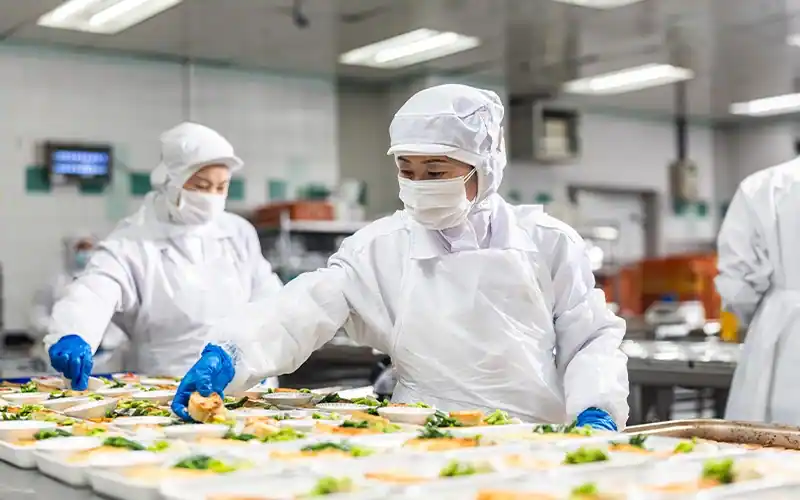
Key Takeaways
- Food safety is the foundation of every mass catering operation.
- It protects consumer health, strengthens trust, safeguards brand reputation, and ensures operational stability.
- From sourcing ingredients to controlling temperature and preventing cross-contamination, every step matters.
- The right processes, training, and quality frameworks are what keep meals safe and consistent at scale.
For caterers, every dish they make comes with a responsibility. Whether they are preparing meals for travellers, patients, or corporate teams, safety starts long before food reaches the plate. That is why large-scale catering providers make investing in strict controls, strong systems, and a safety-first mindset key priorities.
Here’s why food safety is paramount in all types of catering.
Why Food Safety Is Crucial in Large-Scale Catering
For caterers like SATS, which produce more than 200,000 meals a day across their various kitchens, every meal must be safe and consistently high in quality.
1. Protecting Large Groups of Consumers
In mass catering environments such as flight catering kitchens or army cookhouses, one lapse in food safety can have a widespread impact. One contaminated ingredient or an improper temperature shift can lead to foodborne illness that affects consumers.
2. Preventing Costly Disruptions and Reputational Damage
Food safety failures can trigger recalls, halt production, and undermine customer trust. Beyond operational delays, the financial losses and long-term reputational damage can be significant, especially when large groups of consumers are affected.
3. Meeting Regulatory Expectations in Singapore and Beyond
Singapore’s food industry is tightly regulated, and maintaining food safety means complying with national and international frameworks. These standards guide how mass catering providers manage hygiene, temperature, and quality at every stage.
How Catering Operations Ensure Food Safety
Large-scale caterers implement strict, systematic processes to ensure food safety and quality across their operations.
1. Rigorous Ingredient Sourcing
Food safety starts even outside the kitchen. Caterers are careful to work only with certified suppliers who are committed to hygiene, traceability, and quality. Every raw ingredient, from proteins to produce, is vetted through procurement controls, documentation checks, and supplier audits. This ensures that every item meets strict health and safety standards before it reaches processing lines.
2. Temperature Control and Cold Chain Storage
Temperature control is critical to prevent bacterial growth, as even a brief temperature deviation can compromise meal safety. Many providers manage this through an unbroken cold chain from procurement to processing, storage, transport, and final delivery. Using real-time monitoring systems, temperature-controlled logistics, and tightly managed workflow timings, catering operations are designed to preserve freshness at every stage.
3. Cross-Contamination Prevention
Preventing cross-contamination requires more than good housekeeping. In professional facilities, dedicated work zones, sanitised tools, separate colour-coded equipment, and allergen-specific preparation lines protect customers with strict dietary requirements. Kitchen and production floors are also designed to support clear, logical movement of ingredients, reducing unnecessary contact. With thousands of meals prepared daily, these systems keep each dish safe, consistent, and contamination-free.
3. Regular Hygiene Audits and Quality Checks
Daily operations are guided by food safety frameworks from authorities, such as the Singapore Food Agency (SFA). However, compliance alone is never enough. Caterers conduct both internal and external hygiene audits to verify standards, identify risks early, and elevate the quality of our processes. Routine microbiological testing, equipment inspections, and process validations are also crucial, helping to maintain a strong quality management system. These checks enable swift responses to emerging risks while continually strengthening operational resilience.
4. Employee Training and Accountability
Food safety is a team effort, and it begins with the people who prepare and handle food every day. Trusted catering providers invest heavily in training, ensuring that every staff member understands the principles of hygiene, allergen management, safe handling, and temperature control.
SATS: Our Commitment to Safe, Reliable Catering
In SATS’ large-scale catering operations, food safety is non-negotiable. It protects the people we serve, the clients who rely on us, and the reputation we uphold across global operations. By combining rigorous sourcing, robust temperature control, contamination prevention, strict audit frameworks, and strong employee training, we ensure every meal meets the highest standards of hygiene and quality.
