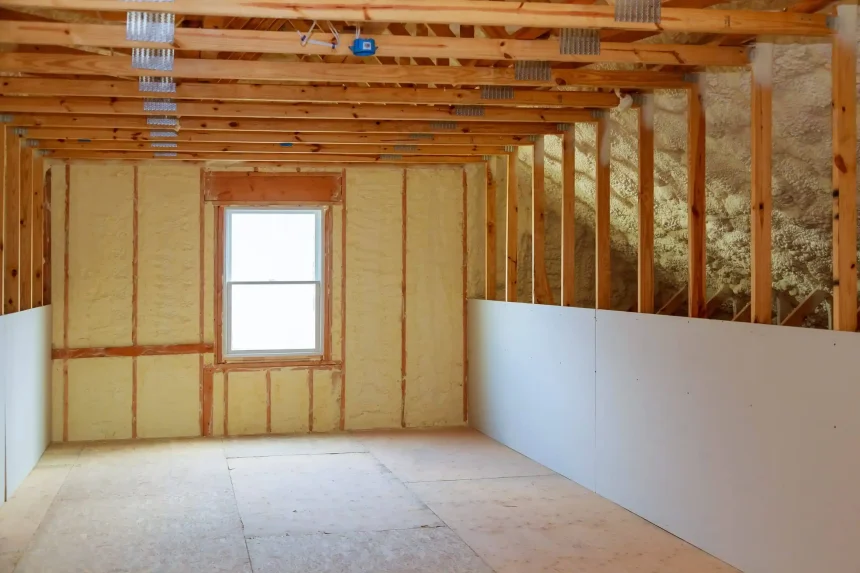
Improving insulation is one of the most effective ways to make your home more energy efficient. In the UK, a range of insulation options are available, each designed to reduce heat loss in different parts of your property. By understanding these options, you can choose the most suitable approach for your home and improve comfort while reducing energy costs.
Loft insulation
Loft insulation is one of the most common and cost-effective options. Heat rises, so a poorly insulated loft can be a major source of heat loss.
Typical materials include mineral wool, fibreglass, or natural alternatives. Insulation is usually laid between and over the joists in the loft. This type of insulation is suitable for most properties and can significantly improve energy efficiency with relatively straightforward installation.
Cavity wall insulation
If your home was built with cavity walls, you may be able to install cavity wall insulation. These walls have a gap between the inner and outer layers, which can be filled with insulating material to reduce heat loss.
Common materials include foam, mineral wool, or polystyrene beads. The installation process usually involves drilling small holes in the external wall and injecting the insulation into the cavity. This option is widely used in UK homes built after the 1920s.
Solid wall insulation
Older properties often have solid walls rather than cavity walls. These can be insulated and either internally and externally.
Internal wall insulation involves adding insulating material to the inside surfaces of external walls. This can reduce room size slightly but is often less disruptive externally. External wall insulation involves applying insulation to the outside of the property and covering it with a protective finish. This can improve both insulation and appearance but may involve higher upfront costs.
Floor insulation
Insulating your floors can help reduce heat loss and improve comfort, particularly in ground-floor rooms. This is especially relevant if your home has suspended timber floors or uninsulated solid floors.
For timber floors, insulation is typically installed between the joists. For solid floors, rigid insulation boards may be added, often as part of a renovation project. Floor insulation can help eliminate drafts and create a more consistent indoor temperature.
Roof insulation (pitched and flat roofs)
In addition to loft insulation, other roof types can also be insulated. For example, if your loft is used as a living space, insulation may be installed along the roof slope instead of the floor.
Flat roofs can also be insulated, either from above or below the roof structure. Proper insulation in these areas helps prevent heat loss and can also reduce the risk of condensation.
Draught-proofing
Draught-proofing is a simple but effective way to improve insulation. It involves sealing gaps around doors, windows, floors, and other openings where cold air can enter and warm air can escape.
Common solutions include weatherstrips, sealants, and draught excluders. While it does not replace full insulation, draught-proofing can complement other measures and improve overall efficiency at a relatively low cost.
Double and triple glazing
Windows are another area where heat can be lost. Double glazing involves two panes of glass with a gap in between, which helps reduce heat transfer. Triple glazing adds an additional pane for further insulation.
Upgrading your windows can improve both thermal efficiency and comfort by reducing heat loss and minimising cold spots near windows.
Pipe and tank insulation
Insulating pipes and hot water tanks helps reduce heat loss from your heating system. This ensures that hot water stays warmer for longer and reduces the energy needed to maintain temperature.
Pipe insulation is typically applied as foam tubing, while hot water tanks can be fitted with insulating jackets. These measures are relatively simple but can contribute to overall efficiency.
Choosing the right option
The best insulation approach depends on your property type, age, and current condition. Some homes may benefit most from loft insulation, while others may require wall or floor insulation to achieve noticeable improvements.
In many cases, a combination of insulation measures provides the best results.
Professional installation
Professional installation of home insulation in the UK is always the best choice. This is particularly important for cavity wall insulation, solid wall insulation, and more complex floor or roof installations.
A qualified installer will assess your property, recommend suitable materials, and ensure that the insulation is fitted correctly. Proper installation helps avoid issues such as damp, poor ventilation, or gaps in coverage, all of which can reduce effectiveness.
Professional installation may also be required to access certain guarantees, certifications, or financial support schemes. Using an accredited installer can give you confidence that the work meets current standards and will perform as expected over time.
Conclusion
There are several home insulation options available in the UK, including loft, wall, floor, and roof insulation, as well as draught-proofing and glazing improvements. Each option targets different areas of heat loss and can contribute to a more energy-efficient home. By selecting the right combination for your property, you can improve comfort, reduce energy use, and create a more consistent indoor environment.