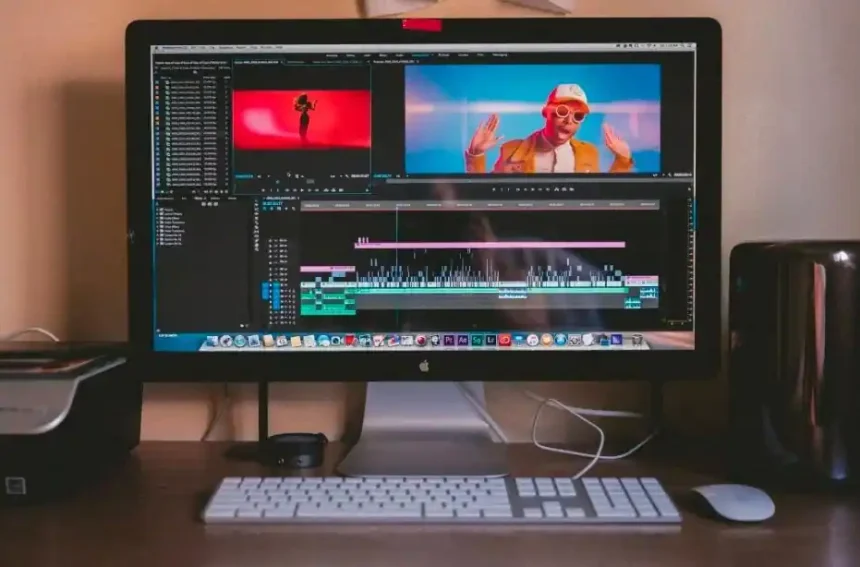
The video editing landscape looks almost unrecognizable compared to just a few years ago. What once demanded a professional editor, expensive software, and days of rendering time can now be handled by AI in minutes. In 2026, that shift is not slowing down and it’s accelerating. From automated color grading to script-to-screen generation, AI video editing tools are rewriting the rules of creative production.
Whether you are a solo content creator, and marketing team, a media company, technology available right now is the genuinely changing what’s possible. Here’s a look at the innovations leading that charge and the tools making them accessible to everyone.
How AI Is Redefining the Editing Process
Traditional video editing is a skill with a steep learning curve. You need to understand cuts, transitions, pacing, color theory, audio mixing — and that’s before you’ve even thought about the story you’re trying to tell. AI is systematically removing those barriers, one feature at a time.
In 2026, the most significant shift is the move from manual timeline editing to intent-based creation. Instead of dragging clips around a timeline, you describe what you want — and the AI builds it. Tools can now interpret a text prompt, a URL, or a rough script and return a fully edited video with music, transitions, voiceover, and pacing already dialed in.
This isn’t just faster. It’s a fundamentally different relationship between the creator and the tool.
The Biggest AI Video Editing Innovations in 2026
Generative scene creation has matured significantly. Early AI video tools could extend clips or fill in backgrounds. Now they can generate entire scenes from scratch — consistent characters, coherent environments, and cinematic camera movement — all from a text description. The gap between “AI-generated” and “professionally shot” is narrowing fast.
Automated multi-format export is another game-changer for anyone publishing across platforms. AI tools now intelligently reframe and recut the same source video into vertical, square, and widescreen formats simultaneously, preserving the visual focus in each version without manual adjustment.
AI-powered voice and avatar technology has reached a level of realism that makes it genuinely production-ready. Realistic AI presenters can deliver scripts in multiple languages, with natural pacing and expression, eliminating the need for on-camera talent for many content types.
Real-time style transfer and color grading means you can apply a cinematic look, match a brand aesthetic, or replicate the visual tone of a reference video with a single click — no color science degree required.
Smart B-roll generation is quietly one of the most useful developments. Instead of hunting through stock libraries, AI can now generate contextually relevant B-roll footage based on your script or voiceover, keeping your video visually dynamic without the licensing headache.
Why Pollo AI Belongs in Your 2026 Toolkit
If you’re looking for a platform that brings all of these innovations together in one place, Pollo AI deserves serious attention.
Pollo AI is an all-in-one AI video creation platform that covers the full production spectrum — AI video editor, text to video, image to video, AI avatars, animation, mimic motion, etc. But what makes it particularly useful for creators who need to move fast is its extensive library of built-in templates.
With Pollo AI, you can generate a wide variety of videos with a single click — product showcases, social media reels, news-style broadcasts, explainer videos, promotional content, and more. The templates aren’t just aesthetic starting points; they’re intelligent frameworks that shape pacing, structure, and visual style based on the content type you’re targeting.
Whether you’re producing content for YouTube, Instagram, or a brand website, or just make a happy birthday video for your friend, you can always find a template built for that format on Pollo AI.
This matters because consistency is one of the hardest things to maintain at scale. When you’re producing video content regularly, having a reliable system that keeps your output looking polished without requiring a full creative review every time is genuinely valuable. Pollo AI’s template library is that system.
Beyond templates, Pollo AI supports multiple leading AI models, giving you flexibility in how your videos are generated and styled. Its Agent feature takes things a step further — you can feed it a URL, a prompt, or existing assets, and it will handle the entire production workflow autonomously.
For news content, marketing teams, and high-volume publishers, that kind of automation is a real competitive advantage.
Pricing starts at $10/month, which puts professional-grade AI video production within reach for independent creators and small teams — not just enterprise budgets.
The Template Revolution: Consistency at Scale
One of the most practical innovations isn’t the flashiest — but it might be the most impactful for working creators. AI-powered video templates have evolved from rigid, fill-in-the-blank structures into intelligent starting points that adapt to your content.
In 2026, a good template doesn’t just give you a layout. It understands the type of content you’re creating, suggests appropriate pacing, applies relevant visual styles, and populates intelligently based on your input. The result is professional-quality output without professional-level effort — and that consistency at scale is something brands have been chasing for years.
What This Means for the Creative Industry
The honest takeaway from 2026’s AI video editing landscape is this: the tools are no longer the bottleneck. Creative vision, strategy, and distribution are where the real work happens now. AI handles the execution.
That’s a significant cultural shift for an industry that has long gatekept production quality behind expensive gear and specialized skills. Those gates are open. A solo creator with a clear idea and the right tools can now produce content that competes visually with teams ten times their size.
The creative industry isn’t shrinking because of AI — it’s expanding. More people can participate, more ideas can be realized, and more stories can be told. The tools just got a lot better at getting out of the way.