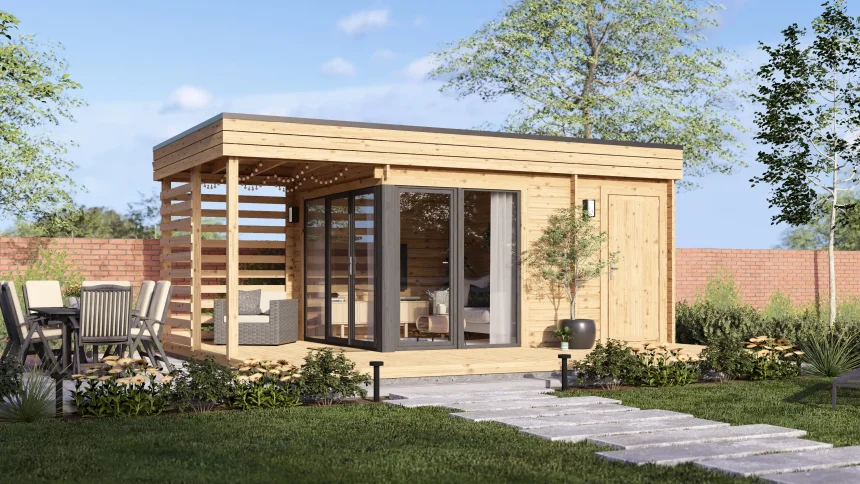
A well-designed, functional outdoor structure can make a huge difference to the value of an Irish property. Many Irish gardens contain underutilised space that can be transformed into a valuable asset. As residential property prices in Ireland continue to rise at a more measured rate of 4% in 2026, homeowners are seeking new ways to maximise their property’s potential.
This article explores how wooden garden building experts in Ireland can help unlock significant property value. It covers building types, regulations, and potential returns on investment.
The Property Value Multiplier Framework: Maximising Your Investment
The Property Value Multiplier Framework is a decision matrix designed to calculate the exact Return on Investment (ROI) for different garden building types in Ireland, based on three crucial factors: your property’s current value bracket, the intended use case (personal vs. income-generating), and the timeline to sale.
For example, a €400,000 property in the Dublin suburbs adding a €12,000 garden office could see a 3.2% value increase (€12,800), plus potential rental income of €450 per month, achieving payback within 18 months if rented or immediate positive ROI upon sale. This framework incorporates specific multipliers for different Irish regions (Dublin 1.2x, Cork/Galway 1.0x, rural 0.8x) and use cases, providing a quantitative tool for strategic investment.
Property Value Bracket: Higher-value properties often yield a stronger percentage return from quality additions.
Intended Use Case: Income-generating structures (e.g., guest houses) offer faster financial payback than purely personal use.
Timeline to Sale: Longer timelines allow for greater accumulation of rental income, while shorter timelines benefit from immediate property value uplift.
What Types of Wooden Garden Buildings Maximise Property Value?
Various wooden garden buildings can significantly enhance property value and functionality, aligning with evolving homeowner needs and market trends in Ireland.
Home Offices and Remote Work Studios
Dedicated home offices are a prime value driver, especially with remote and hybrid work firmly embedded in Ireland’s labour market. A quality, insulated garden office can command a significant premium, offering a quiet, professional workspace separate from the main dwelling.
- Provides a dedicated, distraction-free workspace.
- Adds valuable usable space to a property.
- Reduces commuting costs while improving work-life balance.
In Ireland, mid-sized insulated garden offices typically cost between €13,000 and €18,000 and can increase a property’s value by 5-10%.
Garden Rooms and Entertainment Spaces
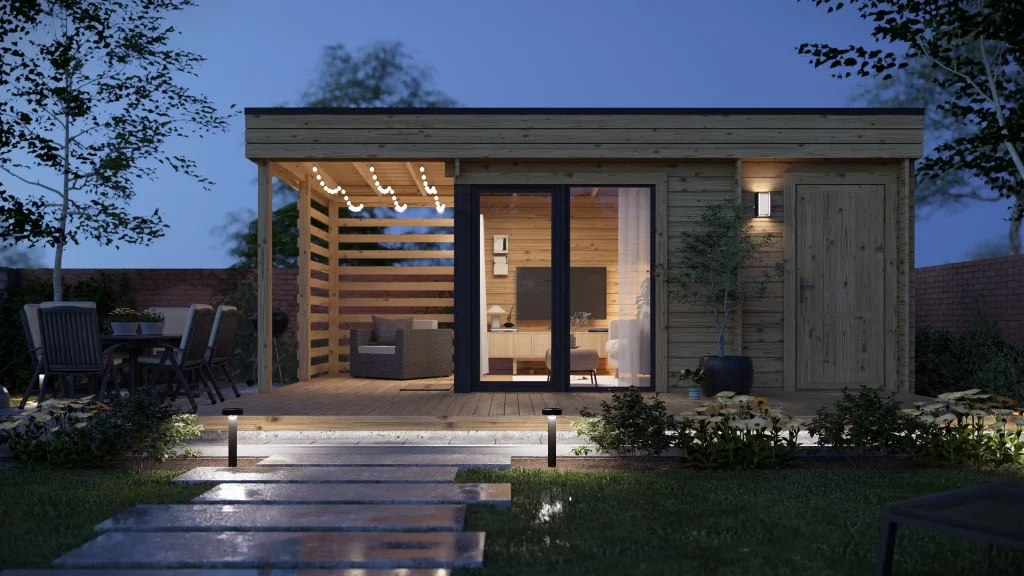
Garden rooms extend living space into the garden, providing a versatile area for relaxation, hobbies, or entertaining. Garden room designs in 2026 will emphasise natural light, seamless indoor-outdoor transitions, and high-quality finishes.
- Enhances lifestyle and increases property appeal.
- Provides space for many different family needs.
- They can be designed to complement the existing style of the home.
These structures can significantly boost a property’s marketability, with estate agents noting that a beautifully designed garden adds emotional and financial value, particularly in prime areas.
Storage Sheds, Workshops, and Hobby Spaces
While often overlooked, well-designed and robust storage sheds or workshops provide essential functional value, reducing clutter in the main house and offering dedicated space for hobbies. These structures address practical needs that resonate with buyers.
- Frees up valuable space within the main house.
- Appeals to buyers seeking organised living.
- Can be customised for specific hobbies or storage needs.
Even basic, high-quality sheds contribute to overall property tidiness and perceived value, distinguishing a property from others with less organised outdoor areas.
Guest Houses and Granny Flats
Self-contained guest houses or granny flats offer the highest potential for property value increase, particularly with the proposed easing of planning rules for back-garden modular homes. These units can generate rental income or provide independent living space for family members.
- Generates potential rental income (e.g., up to €14,000 per year tax-free under Rent-a-Room relief).
- Adds significant usable living area.
- Addresses multi-generational living needs or provides flexible accommodation.
A fully compliant, income-generating unit could increase a property’s value by €150,000-€200,000 in some instances.
Planning Permission and Building Regulations in Ireland 2026
Navigating planning permission and building regulations is a critical step in adding a wooden garden building in Ireland. Expert providers understand the nuances of the 2026 landscape, ensuring compliance and avoiding costly issues.
When You Need Planning Permission vs. Exempted Development
While many smaller garden structures fall under exempted development, certain criteria trigger the need for planning permission. The existing exempted-development limit for a back garden structure is 25 square metres, though the Government has proposed increasing this to 30 square metres for sheds, offices, or gyms.
- Structures over the size limit (currently 25m², potentially 30m²).
- Buildings intended for permanent habitation or commercial use.
- Units located forward of the front building line of the house.
Additionally, a new exemption for a detached auxiliary habitable dwelling between 32 m² and 45 m² is proposed, specifically for back-garden modular homes.
Building Control Requirements for Habitable Garden Structures
Any garden structure intended for habitation must comply with building control requirements. These regulations cover areas such as fire safety, structural integrity, insulation, ventilation, and accessibility.
- Compliance with Part B (Fire Safety), Part L (Conservation of Fuel & Energy), and Part M (Access and Use) is required.
- A Commencement Notice and, in some cases, a Certificate of Compliance on Completion may be required.
- Adequate drainage, water supply, and electrical installations must meet current building standards.
It is crucial to distinguish between planning permission (which concerns land use) and building regulations (which concern construction standards), as they are separate compliance regimes.
Working with Experts Who Understand Irish Compliance
Engaging experts proficient in the Irish compliance landscape is essential to avoid legal complications and ensure your investment is sound. They can advise on the latest regulations and manage the application process.
- Up-to-date knowledge of planning laws and building regulations.
- Assistance with preparing and submitting planning applications, if required.
- Ensuring designs meet all relevant safety and performance standards.
The move to a mandatory Construction Industry Register Ireland (CIRI) will help ensure that contractors meet recognised competency standards.
Conclusion: Maximising Your Investment with Expert Partners
Investing in a wooden garden building in Ireland can be a smart way to add valuable living space while increasing your property’s overall value. By working with expert builders, homeowners can ensure their investment is attractive, structurally sound, fully compliant with regulations, and a valuable long-term asset.
The evolving planning landscape and continued demand for flexible living and working spaces make quality garden buildings an attractive opportunity for Irish homeowners. By choosing certified professionals, homeowners can ensure quality at every stage, from timber selection to construction techniques, ultimately maximising returns on their property investment.