
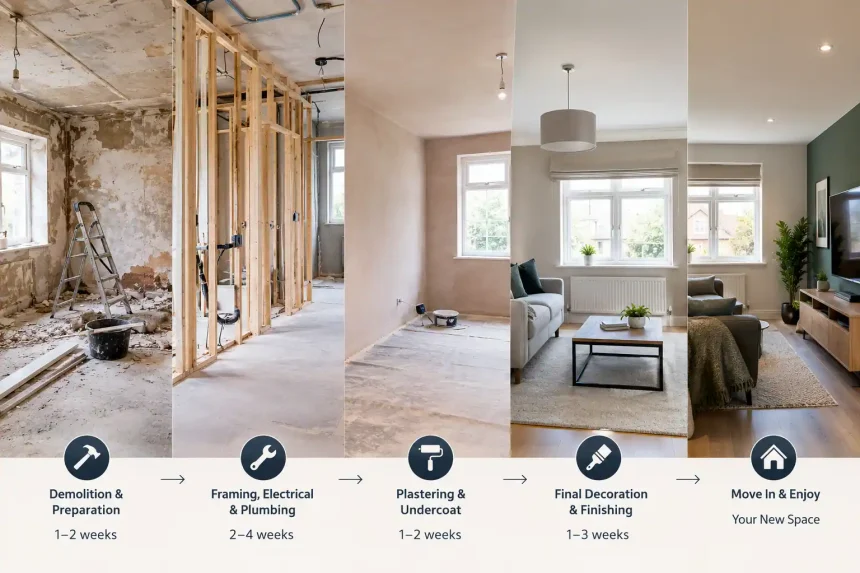
The length of a room renovation depends mainly on how many trades are involved, how much has to come out first and how long the materials take to arrive. A simple refresh with new paint and flooring can be finished in a couple of weeks, while a kitchen or bathroom with new plumbing, wiring and plaster often runs to two or three months once planning and ordering are counted. Thinking of the job as a sequence of stages gives a far more reliable estimate than guessing a single figure, because each stage has its own waiting time.
The Stages in Order
Planning and ordering: Most projects begin with a schedule of works that lists the order of jobs, which gives every trade a start date and shows which items need ordering first. Allow several weeks for this stage, and longer if the units, tiles or windows are made to order, because nothing else can be booked with confidence until those dates are known.
Strip-out and first fix: Old fittings, flooring and plaster usually come out in a day or two, and the electrician and plumber then run cables and pipework behind the future walls. Wiring or pipework that needs updating is picked up at this point, which can add a few days to the stage.
Wall and ceiling preparation: Walls and ceilings are skimmed once the first fix has been signed off, and professional plastering services will usually allow a day or two per room before the surfaces are left to dry. Fresh plaster dries over several days or a few weeks before a mist coat goes on, depending on thickness, temperature and ventilation, so tiling and decorating are best booked after the plaster has dried rather than straight after the plasterer leaves.
Second fix and decorating: Kitchen units, sanitaryware, sockets, doors and skirting go in next, followed by painting and flooring. This is the stage people notice most, although it often takes a smaller share of the calendar than the hidden work before it, and flooring is best left until the last trades have finished so it isn’t marked by tools and dust sheets.
Allowing for Lead Times and Waiting
Lead times for made-to-order kitchens, worktops and windows account for most of the gaps in a schedule, and a full kitchen renovation can take 16 to 20 weeks once design, manufacturing and fitting are counted. Ordering appliances and other long-lead items before the strip-out begins stops trades from waiting on deliveries, and a buffer of around 10 to 15 per cent on the total time covers surprises such as old pipework or uneven walls.
Building a Schedule You Can Rely On
Start with the stage that has the longest wait, which is usually a delivery or a drying period, and fit the other trades around it. Ask each tradesperson for a start date and a finish estimate in writing, then add the buffer on top, so the date you plan around is one the whole job can realistically meet. Share the finished schedule with everyone involved, so a late delivery is flagged before it holds up the next trade.

