So, Are Mirliton and Chayote the Same Thing?
The short answer is yes — with a story. A mirliton and a chayote are the exact same plant: Sechium edule, a vine-grown member of the gourd family. But walk into a grocery store in New Orleans asking for mirliton, then try the same in Mexico City asking for chayote, and you might think you are dealing with two completely different ingredients. The name on the label shapes everything: the recipes it calls to mind, the cultural weight it carries, even the way cooks prepare it. One vegetable, two identities, and a whole lot of regional pride riding on which word you use.
The confusion is not accidental. It is the natural result of a crop that traveled the globe, quietly adapting to new kitchens and new languages along the way. If you have ever stood in the produce aisle holding a pale green, pear-shaped curiosity and wondered what to call it — let alone what to do with it — this guide untangles the names, the traits, and the best ways to bring it to your table.
What Exactly Is This Vegetable?
Before the names matter, the plant itself deserves a proper introduction. Chayote — or mirliton, depending on where you are reading this — is a member of the Cucurbitaceae family, which makes it a cousin to cucumbers, melons, pumpkins, and squash. It grows on vigorous climbing vines that can easily take over a trellis or fence, producing fruits that dangle like pale green ornaments.
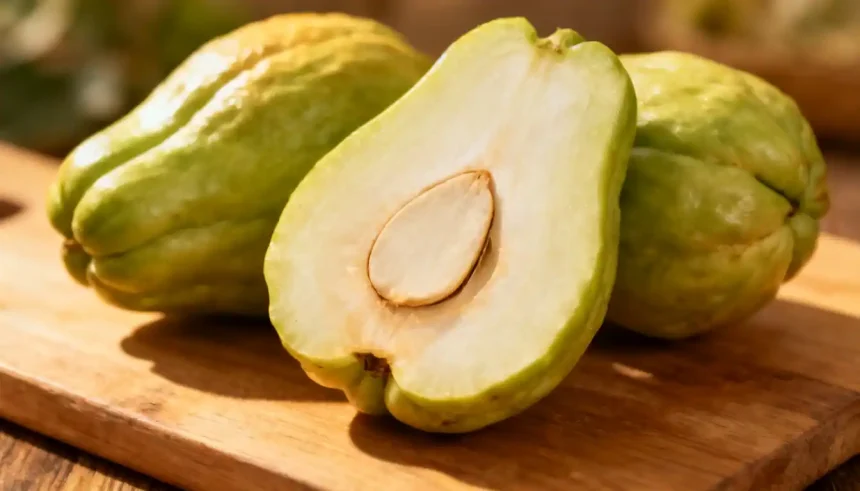
The fruit itself is roughly the size and shape of a large avocado, though some varieties skew rounder while others are distinctly pear-shaped. Its skin ranges from smooth to softly ridged, occasionally sporting a few harmless spines. Inside, a single flat seed nestles in creamy, crisp flesh that tastes mild, clean, and just faintly sweet — something like a cross between a cucumber and a summer squash, but with a firmer bite that holds up beautifully across cooking methods.
Nutritionally, chayote is a quiet powerhouse. It delivers vitamin C, folate, fiber, and an array of antioxidants while staying remarkably low in calories. This combination makes it a staple ingredient across multiple continents, valued as much for its versatility as for its health benefits.
Where the Two Names Come From
The Chayote Name
The word “chayote” traces its roots to Nahuatl, the language of the Aztecs, where the plant was called chayohtli. Spanish colonizers carried both the vegetable and its name across their trade routes, and today “chayote” remains the dominant term throughout Mexico, Central America, and much of Latin America. It is also the name you are most likely to encounter in mainstream American supermarkets and in English-language recipes that draw from Latin culinary traditions.
When you see “chayote” on a menu or a recipe card, you are typically looking at preparations rooted in Mexican, Guatemalan, or broader Latin American cooking: diced into soups, sliced raw into salads, stuffed and baked, or simply boiled and served with butter and herbs.
The Mirliton Name
“Mirliton,” on the other hand, is a distinctly Louisiana and French-inspired term. The name arrived in the United States through Haitian Creole influences and French culinary vocabulary — in French, “mirliton” can refer to a type of reed flute, though how that came to describe a vegetable remains a matter of friendly debate among food historians.
What is not up for debate is the cultural weight “mirliton” carries in Louisiana. In New Orleans, the word conjures a very specific image: mirlitons halved, hollowed, and stuffed with a savory mixture of shrimp, breadcrumbs, and Creole spices, then baked until the tops turn golden. This dish — shrimp-stuffed mirliton — is a Thanksgiving staple, a Christmas tradition, and a point of deep culinary pride. Saying “mirliton” instead of “chayote” in Louisiana is not about botany. It is about belonging.
Are There Visual or Taste Differences?
Because you are dealing with the same species — Sechium edule — there is no inherent botanical difference between a mirliton and a chayote. That said, regional growing conditions, harvesting practices, and cultivars can introduce subtle variations.
Fruits grown in Louisiana tend to be harvested at a stage preferred for stuffing, which means they are often a bit larger, with a slightly softer texture when cooked. In Latin American markets, you might find chayotes that are younger and smaller, chosen for a crisper bite in salads or quick sautés. You may also encounter the spiny variety, sometimes called “chayote espinoso,” which is less common in Louisiana but perfectly edible once peeled.
Color can vary too. Most are pale green, but there is also a creamy white version — sometimes called “white chayote” or “perulero” — that tends toward sweeter, more tender flesh. None of these variations signify a different species, only the wonderful diversity within a single plant.
Cooking with Mirliton and Chayote
How Louisiana Cooks Mirliton
In Louisiana kitchens, the marquee preparation is shrimp-stuffed mirliton. The process goes something like this: boil or roast the mirliton halves until tender, scoop out most of the flesh while leaving a sturdy shell, mix that flesh with sautéed shrimp, onions, breadcrumbs, garlic, and a generous shake of Creole seasoning, then stuff the mixture back into the shells and bake. The result is a dish that bridges comfort food and celebration — humble enough for a weeknight, festive enough for a holiday table.
Beyond the iconic stuffed version, Louisiana cooks also use mirliton in casseroles layered with cheese and cracker crumbs, pickled as a tangy condiment, or simply roasted alongside other root vegetables.
How Latin America Cooks Chayote
In Mexico and Central America, chayote shows up in an even broader range of roles. Raw, julienned chayote adds crunch to slaws and salads, often tossed with lime juice and chili powder. Cooked, it slides into caldos (brothy soups) and guisados (stews), absorbing surrounding flavors while holding its shape. Boiled chayote, sliced and drizzled with olive oil and salt, makes a simple but satisfying side dish.
Chayote leaves — yes, the tender shoots and leaves of the vine — are also edible and valued in some regions, cooked similarly to spinach or added to soups for a mild, slightly nutty green.
What to Know Before You Cook
One quirky trait of chayote deserves a warning: the raw flesh contains a thin, slightly sticky sap that can irritate sensitive skin. Many cooks find that peeling chayote under running water or rubbing their hands with a little oil before handling the cut fruit minimizes the annoyance. The sap dissipates completely with cooking, so there is no need to worry about texture or flavor in the finished dish.
The single seed inside is edible too and has a pleasant, nutty taste when cooked. Some recipes call for removing it before stuffing; others leave it in as part of the experience.
A Quick Look at Other Names Around the World
Louisiana calls it mirliton. Mexico calls it chayote. But travel further and this well-traveled vegetable goes by many more aliases. In Australia and New Zealand, you will find it labeled “choko.” In parts of the Caribbean, it is “christophine” — a name borrowed from French that hints at the same colonial culinary routes that brought “mirliton” to Louisiana. In Brazil, it becomes “chuchu.” In the Philippines, it is “sayote.” In parts of India, “chow chow.”
Each name carries a cultural fingerprint, tying the same humble squash to entirely different food traditions.
How to Pick and Store This Vegetable
Whether the sign says mirliton or chayote, your selection criteria should be the same. Look for fruits that feel heavy for their size, with firm, unblemished skin and no soft spots or wrinkling. A few shallow ridges are normal; deep furrows or cracks are not. Smaller specimens tend to be sweeter and less fibrous than oversized ones.
Store mirliton-chayote in the refrigerator, ideally in a perforated bag that allows some airflow. Kept cool and dry, they stay good for two to three weeks. Avoid sealing them in airtight plastic, which traps moisture and encourages spoilage. If you cut one and only use half, wrap the remaining piece tightly and refrigerate — it will hold for a few days before the cut surface starts to oxidize.
The Verdict
So are mirliton and chayote the same? Botanically, unequivocally yes. Culinarily, the answer is more textured. The name you use reflects not just what is on your cutting board, but where your recipe comes from and whose kitchen wisdom you are drawing on. A stuffed mirliton and a chayote caldo are cousins — born from the same vine, shaped by different hands, and equally worth getting to know.
Next time you pass one in the produce aisle, grab it. Call it whatever fits your table best.
Author: Camille Broussard is a food writer and home cook exploring the intersections of Southern and Latin American cuisine.