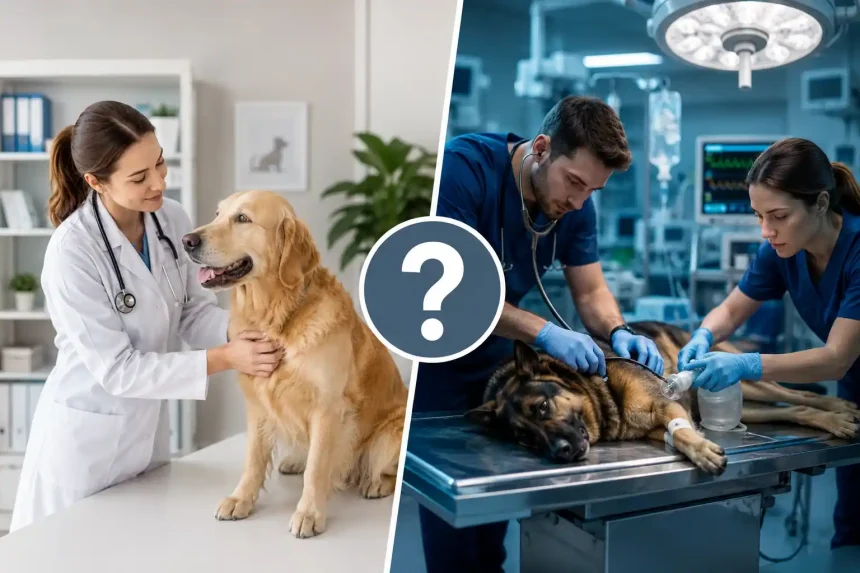
When a pet suddenly appears unwell, owners often face two questions at once: what might be wrong and where should they seek care?
A general veterinary clinic is commonly associated with routine consultations, vaccinations, health monitoring, and the management of ongoing conditions. An emergency vet clinic is structured to assess animals whose condition may deteriorate if treatment is delayed.
The difference is therefore not simply about opening hours. It is mainly about the pet’s medical stability, the urgency of the symptoms, and the level of monitoring or treatment that may be required.
The First Decision Is About Timing, Not Clinic Preference
Owners may already have a regular veterinary clinic that knows their pet’s medical history. That continuity is valuable, but a familiar clinic may not always be open or equipped for round-the-clock critical care.
When choosing a vet clinic in Singapore, owners should therefore consider both routine-care access and what they would do if their pet became seriously unwell outside normal operating hours.
The Different Roles of General and Emergency Veterinary Care
General and emergency veterinary clinics are not competing alternatives. They serve different functions within a pet’s healthcare journey.
What a General Vet Commonly Manages
A general vet commonly provides:
- Routine physical examinations
- Vaccination reviews
- Microchipping
- Parasite-control advice
- Weight and nutrition discussions
- Dental assessments
- Skin and ear consultations
- Mild digestive problems
- Management of stable chronic conditions
- Medication reviews
- Follow-up appointments
- Planned diagnostic tests or procedures
A regular vet also becomes familiar with the pet’s normal weight, temperament, medical conditions, and previous test results. This background can help when assessing gradual changes.
A pet check-up and vaccination review is usually scheduled rather than treated as an emergency.
What an Emergency Vet Clinic Manages
An emergency clinic focuses on sudden, severe, or rapidly worsening conditions that require prompt assessment.
The team may need to:
- Assess breathing and circulation
- Control significant bleeding
- Stabilise a pet after major trauma
- Treat seizures
- Manage suspected poisoning
- Provide oxygen support
- Begin intravenous fluid therapy
- Provide urgent pain relief
- Carry out emergency diagnostic testing
- Monitor critically ill animals
- Arrange urgent surgery where indicated
A 24-hour clinic may also care for patients requiring close observation overnight, including animals recovering from trauma, surgery, or serious illness.
Use a Three-Level Decision Guide
Rather than trying to diagnose the condition at home, owners can consider the severity and speed of the changes.
Level 1: Schedule a General Veterinary Appointment
A routine appointment may be suitable when the pet remains alert, can breathe comfortably, and is eating, drinking, urinating, and moving without significant difficulty.
Examples may include:
- A small lump that is not rapidly changing
- Mild itching without facial swelling or breathing difficulty
- Gradual weight gain
- Persistent bad breath
- A minor limp that is not worsening
- A vaccination or parasite-control review
- Mild behavioural changes
- A stable long-term condition requiring monitoring
- Occasional digestive upset without weakness or repeated vomiting
- A non-urgent medication review
These symptoms should still be discussed with a vet, particularly when they persist or recur. A condition that begins mildly may require earlier assessment if the animal’s behaviour or physical state changes.
Level 2: Contact a Vet for Same-Day Advice
Some situations fall between a routine appointment and an obvious emergency. The pet may be stable, but the symptoms should not simply be ignored for several days.
Examples include:
- Reduced appetite lasting longer than usual
- Repeated coughing without breathing distress
- A painful ear or skin infection
- Vomiting without collapse or severe weakness
- Diarrhoea without significant bleeding
- A wound that may require cleaning or medication
- A sudden limp while the pet can still bear weight
- Eye redness or discharge
- Difficulty passing stool
- Increasing thirst or urination
- A noticeable but gradual change in behaviour
The clinic may offer a same-day appointment, provide monitoring advice or recommend an emergency assessment based on the information available.
Level 3: Go to an Emergency Vet Clinic
Immediate veterinary care is appropriate when a pet has signs of a potentially life-threatening condition or severe injury.
Emergency warning signs include:
- Laboured, rapid, or distressed breathing
- Blue, grey, or very pale gums
- Collapse or loss of consciousness
- Seizures
- Severe or uncontrolled bleeding
- Major trauma, including road accidents or falls from height
- Suspected poisoning
- Sudden paralysis or inability to stand
- A swollen, firm, or painful abdomen
- Repeated unproductive attempts to vomit
- Severe vomiting or diarrhoea with weakness
- Blood in vomit, urine, or stool
- Inability to urinate
- Extreme pain or distress
- Heatstroke
- Rapidly worsening responsiveness
These symptoms should not wait for a clinic to reopen or for a routine appointment slot.
A 24-hour emergency and critical care service can assess unstable patients and begin stabilisation, diagnostic testing, and monitoring where required.
What Happens When You Arrive at an Emergency Clinic?
Emergency patients are generally prioritised according to medical urgency rather than arrival order.
A pet with breathing difficulty, severe bleeding, or reduced consciousness may be assessed before an animal whose condition is stable.
The initial assessment may review:
- Airway and breathing
- Heart rate and circulation
- Gum colour
- Body temperature
- Level of consciousness
- Pain
- Bleeding
- Hydration
- Ability to stand or move
- Relevant medical history
Stabilisation may begin before a complete diagnosis is available. Depending on the condition, this may involve oxygen, intravenous access, fluid therapy, pain medication, or bleeding control.
Once the pet is more stable, the vet may discuss blood tests, X-rays, ultrasound, CT imaging, or other investigations.
Why Emergency Clinics May Recommend Hospitalisation
Some pets are not stable enough to return home after the initial consultation.
Hospitalisation may be advised when an animal needs:
- Oxygen support
- Intravenous medication
- Fluid therapy
- Repeat blood testing
- Pain management
- Blood pressure monitoring
- Neurological observation
- Assisted feeding
- Postoperative care
- Continuous monitoring for deterioration
The duration depends on the diagnosis, response to treatment and level of nursing care required.
When Surgery May Be Required
Not every emergency patient needs an operation. Some conditions can be managed with medication, monitoring, wound care, or other treatment.
Urgent surgery may be discussed for conditions such as:
- Internal bleeding
- Gastrointestinal obstruction
- Organ rupture
- An unstable fracture
- Severe wounds
- Spinal compression
- Certain chest or abdominal emergencies
- Complications during birth
The veterinary team may need to stabilise breathing, circulation or shock before anaesthesia can begin.
The recommendation will depend on the diagnostic findings, the animal’s overall condition and the expected risks and benefits of the procedure.
How the Regular Vet Fits Into Care After an Emergency
Emergency care does not necessarily replace the pet’s usual veterinarian. Once the immediate crisis has passed, follow-up may return to the regular clinic.
The general vet may support:
- Wound checks
- Suture removal
- Medication reviews
- Repeat laboratory tests
- Diet changes
- Long-term disease management
- Rehabilitation planning
- Vaccination and preventive care
- Monitoring after hospital discharge
The emergency clinic should provide discharge information and relevant test results where possible.
Advanced or critically ill cases may also involve communication between the primary vet and the emergency facility. Advanced Vetcare accepts partial and full referrals from primary veterinarians and provides 24-hour critical-care monitoring for referred patients.
What to Bring to an Emergency Vet Clinic
Do not delay departure to gather every item, but bring readily available information that may assist the veterinary team.
Useful items include:
- Current medication
- Previous medical records
- Details of existing health conditions
- Vaccination information
- Pet insurance information
- Packaging from a suspected toxin
- Photos or videos of intermittent symptoms
- Information about when the incident occurred
Transport cats and small animals in a secure carrier. Dogs should be restrained with a lead or transported on a stable surface when they cannot walk safely.
An injured animal may bite or scratch because of fear or pain, including when it is normally gentle. Veterinary first aid does not replace professional assessment after an emergency.
Should You Call Before Arriving?
Calling ahead is advisable when circumstances allow.
Tell the clinic:
- Your pet’s species, breed, age, and approximate weight
- The main symptoms
- When they began
- Whether the pet is conscious
- Whether breathing appears difficult
- Whether there has been trauma or possible poisoning
- Your estimated arrival time
The veterinary team may provide transport guidance and prepare for the patient’s arrival.
Do not delay travel when the pet is critically unwell simply because the telephone line is busy.
Prepare Before an Emergency Happens
Emergency planning is easier when it is completed before a pet becomes ill.
Owners can:
- Save the emergency clinic’s telephone number
- Check which clinic operates overnight
- Plan a transport route
- Keep a secure carrier or lead accessible
- Maintain current medical and medication records
- Identify someone who can assist with transport
- Review pet insurance terms where relevant
- Keep common toxins out of reach
Every household member should know where the carrier and veterinary details are kept.
Frequently Asked Questions
Is an emergency vet the same as a general vet?
Both are qualified to diagnose and treat animals, but their working settings differ. General vets commonly manage routine and ongoing care, while emergency teams focus on sudden, severe, and potentially life-threatening conditions.
Can I visit an emergency clinic for a non-emergency?
An emergency clinic may assess the pet, but unstable patients are usually prioritised. A routine clinic may be more appropriate for mild, longstanding, or preventive-care needs.
Should I call my regular vet before going to an emergency clinic?
Call when practical, particularly if the regular vet can advise you or send medical records. Do not delay emergency care when your pet is severely unwell.
What if my pet improves while travelling to the emergency clinic?
Continue with the assessment unless the veterinary team advises otherwise. Temporary improvement does not confirm that the underlying condition has resolved.
Does my pet need a referral for emergency care?
Emergency clinics commonly accept patients without a referral. Referral arrangements may still be used when a general vet transfers a patient for critical monitoring, diagnostic testing, or surgery.
General and emergency veterinary clinics play connected but different roles. Routine consultations support vaccinations, health monitoring, and long-term condition management, while emergency clinics assess conditions that cannot safely wait.
Owners do not need to identify the exact diagnosis before seeking help. The practical decision is whether the pet is stable enough to wait or whether delayed assessment may increase the risk of deterioration.