
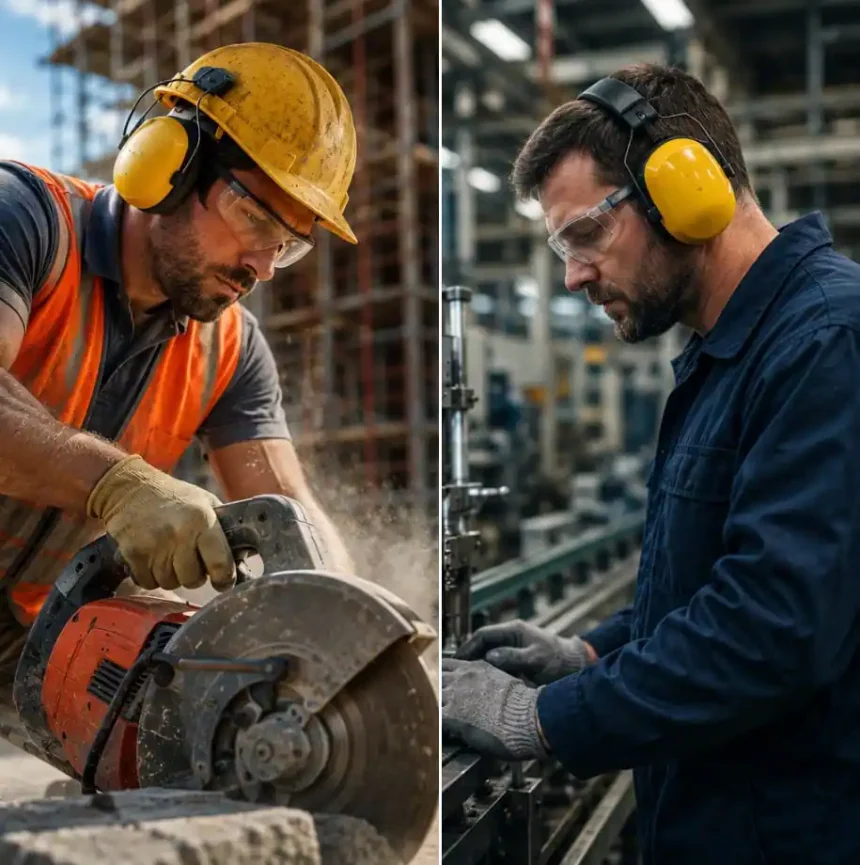
Hearing loss doesn’t happen overnight for most people. It creeps in slowly, one loud shift or one loud gig at a time, until one day you realize you’re asking people to repeat themselves more than you used to. For anyone who spends their working life around noise, whether that’s a construction site, a stage, or a factory floor, protecting your ears isn’t optional. It’s part of the job.
The tricky part is that hearing damage is cumulative and often invisible until it’s already happened. A single loud bang can cause instant damage, but more often it’s years of steady exposure that wears down the tiny hair cells in your inner ear. That’s why so many people in noisy trades end up relying on some form of noise cancelling hearing aids later in life, even if they never expected to need them in their forties or fifties. For those who already notice some hearing loss but still need to work in loud environments, a well-designed Yeasound hearing aid can make a real difference, filtering out background noise while still letting speech come through clearly.
Why Builders Face Unique Risks
Construction sites are loud in a way that’s easy to underestimate. Jackhammers, nail guns, circular saws, and heavy machinery can all hit noise levels well above 100 decibels, and OSHA considers anything over 85 decibels sustained over an eight hour shift to be a hazard.
The problem is that builders move between tasks constantly, so it’s tempting to skip hearing protection for a “quick job” that turns into an hour of drilling. Simple foam earplugs, kept in a pocket or clipped to a hard hat, solve most of this. The habit matters more than the gear itself. If you only put plugs in for the big jobs and skip the small ones, the damage still adds up.
Why Musicians Struggle With This
Musicians have a strange relationship with noise protection because their instrument is also their livelihood, and many worry that earplugs will dull the sound they need to hear. Drummers, guitarists standing near amps, and anyone playing in a small venue with poor acoustics are especially at risk.
The good news is that musician-specific earplugs exist, designed to lower volume evenly across frequencies rather than muffling everything, so the music still sounds like music, just quieter. In-ear monitors are another option worth looking into, since they let performers control their own mix instead of standing in front of a wall of speakers all night.
Why Factory Workers Are Often Overlooked
Factory environments tend to have a steady, grinding kind of noise rather than sudden loud bursts, and that constant hum can be deceptively harmful. Many facilities provide earmuffs or plugs, but compliance varies a lot depending on shift culture and supervision.
If your workplace runs regular hearing tests, pay attention to the results year over year rather than just the pass or fail. A gradual dip in your hearing threshold is often the first warning sign that your current protection isn’t cutting it.
Simple Habits That Actually Help
You don’t need expensive gear to protect your hearing well. A few habits go a long way:
- Wear protection every time, not just for the loudest tasks
- Choose the right type for your environment (foam plugs, earmuffs, or musician-specific plugs)
- Give your ears breaks during long shifts when possible
- Get a baseline hearing test if your job involves regular noise exposure
- Replace worn out earplugs or earmuffs, since damaged gear loses effectiveness
None of these habits take much time, but they add up the same way noise damage does, just in the opposite direction.
What To Do If You Already Notice Changes
If you’ve started noticing ringing in your ears after a shift, or you’re asking people to repeat themselves more often, don’t wait it out. Early hearing changes are worth getting checked by an audiologist, since catching things early gives you more options.
Some people assume hearing aids are only for older adults, but modern devices are smaller, smarter, and far more discreet than what most people picture. Many are built specifically to handle noisy environments, which matters a lot if you’re still working around machinery, instruments, or heavy equipment daily.
Builders, musicians, and factory workers all put their hearing at risk in different ways, but the fix is largely the same across the board: consistent, sensible protection, paired with attention to any early warning signs.
Hearing loss is one of those things you can’t undo once it happens, but with the right habits and the right gear, it’s also one of the more preventable occupational hazards out there. Protecting your ears now means you get to keep enjoying the sounds that matter to you, whether that’s music, conversation, or just being able to hear your own thoughts at the end of a long shift.


