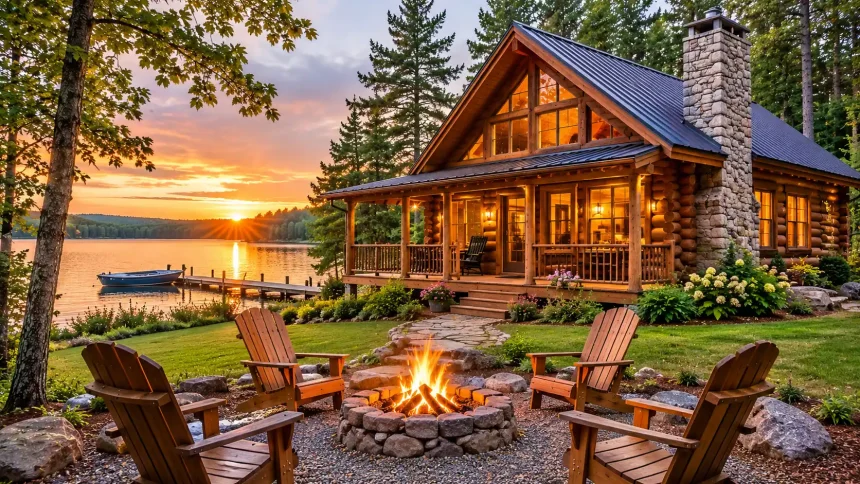
Most people picture the same scene: a pitched roof, a stone chimney, woodsmoke in cold air. That picture is a decent starting point, but log cabins are real buildings with real tradeoffs, and the gap between the postcard and a well-built, well-kept cabin is where most buyers either succeed or struggle.
This guide covers how log cabins are built, what they cost, how they perform, and the questions worth answering before you commit to one.
What Makes a Log Cabin Different From a Conventional Home
A log cabin is a house whose structural walls are made from solid or milled logs stacked horizontally, rather than from a wood frame covered in sheathing, insulation, and siding. In a standard stick-built house, the framing, insulation, and exterior finish are separate layers. In a log home, the wall is the structure, the exterior, and much of the interior finish all at once.
That single difference drives almost everything else: how the house looks, how it handles temperature, how it settles over time, and how it needs to be maintained. Wood is also a natural material that moves. Logs shrink, swell, and shift with moisture and temperature, so a log building has to be designed to allow for that movement. A conventional house mostly doesn’t.
Why Log Cabin Living Keeps Its Appeal
The most obvious draw is how the building looks and feels. Exposed timber, deep window casings, and a visible connection to the material give a log cabin a warmth that drywall and vinyl siding rarely match. For many owners, that atmosphere is the whole point.
There is also a practical side. Some people want a retreat that is separate from daily life, and a cabin on a lake or in the mountains suits that well. Others like the idea of a durable, repairable structure made of a material they can see and understand. And for a certain kind of buyer, a cabin represents a slower, more hands-on way of living, with a woodstove, a porch, and a property that needs tending.
That last point matters. People who love log cabins tend to enjoy ownership as an ongoing relationship with the building. People who want a house they never think about often find a cabin more demanding than expected.
Types and Styles of Log Cabins
Cabin design varies more than most people realize, and the construction method affects both appearance and performance.
Handcrafted (Full-Scribe) Logs
Handcrafted (full-scribe) logs are peeled, shaped by hand or with tools, and fitted so each log’s underside follows the contour of the one below. The result is the classic rounded, rugged look, with tight joints that take real skill. This method is generally labor-intensive and tends to sit at the higher end of the market.
Milled Logs
Milled logs are cut by machine into consistent profiles, such as round, D-shaped, or square-edged. They stack more predictably, go up faster, and usually cost less than handcrafted work. Many modern log cabin homes use milled logs.
Log Siding and Hybrid Builds
Log siding and hybrid builds use a conventional frame covered in half-log or log-profile siding. These can look convincing and insulate like a standard wall, but they aren’t solid-log structures, and buyers should understand that distinction when comparing listings.
Kit and Package Cabins
Kit and package cabins arrive as pre-cut components with plans, ready to be assembled on a foundation you prepare. They can simplify the process, though “kit” rarely means “complete.” The foundation, utilities, roofing details, interior work, and often the labor are separate.
Beyond construction method, cabin design runs from compact one-room hideaways and small guest cabins to large timber homes with great rooms, lofts, and attached garages.
How People Actually Use Log Cabins
Permanent residences are common, particularly in rural and mountain areas. Vacation properties are probably what most people think of first: a seasonal cabin used on weekends and holidays. Some owners use a cabin as a secondary residence, and others rent one out, though that adds local rental rules, insurance considerations, and wear to the picture.
Smaller cabins also work as guest houses, studios, hunting or fishing lodges, and off-grid retreats. How you plan to use the building should shape nearly every decision, from insulation and heating to how much you invest in the kitchen or the driveway.
The Honest Advantages and Drawbacks
Log cabins can be beautiful, long-lasting, and satisfying to own. Well-built examples can stand for generations when they’re protected from moisture and maintained. The material has genuine thermal properties, and the interiors have a character that’s hard to replicate.
The drawbacks are real, though. Wood needs regular attention. Settling and shrinkage can affect doors, windows, and chinking if the builder didn’t plan for them. Insects and moisture are persistent threats. Finding insurers, contractors, and appraisers familiar with log construction can also take more effort than it would for a standard house, depending on where you live.
None of these are reasons to avoid a cabin. They are reasons to go in informed.
What Drives Log Cabin Costs
There is no single reliable price for a log cabin, and any article that gives one is oversimplifying. The total cost depends on the project, the site, and the region.
The main factors include:
- Size and design complexity. Simple rectangular footprints cost less to build than layouts with many corners, dormers, and complicated rooflines.
- Log species and materials. Different woods vary in availability, durability, and price, and regional supply matters.
- Construction method. Handcrafted, milled, kit, and hybrid builds sit at different price points.
- Foundation and site preparation. Sloped, rocky, or wet lots can add significant expense.
- Labor. Skilled log builders may be limited in some areas, which can affect both cost and scheduling.
- Utilities. Running power, water, and a septic system or sewer connection to a remote parcel can be a major line item.
- Interior finishes. Kitchens, bathrooms, flooring, and fixtures can swing the budget widely.
- Permits and fees. These vary by jurisdiction.
- Transportation and access. Delivering logs or a cabin package to a hard-to-reach site costs more.
The most common budgeting mistake is confusing the price of the cabin with the price of the project. A package price may cover the shell and little else. Land, site work, foundation, utilities, finishing, and landscaping can add up to a very different number. When you collect quotes, ask exactly what is and isn’t included.
Choosing Land and Location
A cabin is only as good as its site. Before falling in love with a view, look at the less glamorous details.
Drainage comes first. Water pooling near a log wall is one of the most common causes of long-term problems, so a gently sloped lot that sheds water away from the building is generally preferable to a low spot. Access matters too: can delivery trucks and construction equipment reach the site, and will the driveway be passable in winter or after heavy rain?
Also consider utilities and services. How far is the nearest power line? Is municipal water available, or will you need a well? Does the soil support a septic system? Answers to these questions can change the real cost of a parcel dramatically.
Finally, think about sun exposure, wind, tree cover, and wildfire or flood risk. Trees near a cabin look lovely but can drop limbs, hold moisture against walls, and increase fire exposure in some regions.
Construction Considerations
Foundations and Moisture Protection
Keeping logs off the ground and away from standing water is basic to a long-lived cabin. Foundations are usually concrete, such as a slab, crawl space, or full basement, and the right choice depends on soil, climate, and site conditions. Generous roof overhangs and proper grading do much of the quiet work of protecting the walls below.
Roofing
Wide overhangs shield log walls from rain and sun, which is why many traditional cabins have them. Roofing should also be designed for local snow loads and weather, which vary widely across the country.
Windows, Doors, and Settling
Logs settle as they dry and compress. Experienced builders leave space above windows and doors, and use slip joints, so the house can move without cracking frames or jamming openings. Ask any builder you’re considering how they handle settling. A confident, specific answer is a good sign.
Insulation and Air Sealing
Cabin insulation is more nuanced than in a framed house. Logs offer some thermal mass, but solid wood does not insulate like a modern insulated wall assembly, and the real weak points are often the joints between logs, the roof, and the windows. Roofs and floors can be insulated conventionally, and good air sealing and well-fitted chinking or gaskets matter a great deal.
Are Log Cabins Energy Efficient?
They can be, but it depends heavily on design, construction quality, and climate. A well-built cabin with tight joints, an insulated roof, quality windows, and sensible orientation can perform well. A poorly sealed one can leak air and cost a lot to heat.
Logs also store heat and release it slowly, which can help moderate temperature swings, particularly in climates with big daily temperature changes. But this effect varies, and it isn’t the same as having a high insulation value. Efficiency claims should be checked against the specific wall design and local climate, not assumed. A cabin’s energy performance usually comes down to the roof, windows, and air sealing as much as the logs themselves.
For heating, many owners use woodstoves or fireplaces, heat pumps, or conventional systems. Which makes sense depends on local fuel costs, climate, and how often the cabin is occupied.
Log Cabin Maintenance
How much maintenance do log cabins need? More than most siding-clad houses, and on a steadier schedule. The work is manageable if you plan for it.
Exterior logs typically need periodic cleaning and re-sealing or re-staining, with the interval depending on climate, sun exposure, and the finish used. Chinking and caulking should be inspected regularly, since gaps let in water and air. Look for signs of insects, rot, and moisture, especially near the base of walls, around windows, and under porch roofs. Keep gutters clear if you have them, and keep vegetation and firewood from sitting against the logs.
How long do log cabins last? With good moisture protection and regular upkeep, a well-built log cabin can last many decades, and some historic examples have lasted far longer. Lifespan depends far more on how the building is designed, sited, and maintained than on the logs alone.
The key idea is to catch small problems early. Slow, consistent attention costs far less than repairs after rot or infestation takes hold. Before you buy, ask what annual upkeep realistically looks like, in time and money.
Regulations, Permits, Insurance, and Utilities
Rules differ widely by state, county, and municipality, and sometimes by individual parcel. Zoning, minimum square footage, setbacks, septic requirements, well regulations, and building codes can all vary. Some rural areas have light oversight, while others enforce detailed standards. Don’t assume that what applied to a friend’s cabin in another county applies to yours.
Contact your local building or planning department early, before you buy land if possible. Ask about permits, inspections, and whether any restrictions apply to log construction or to the property type you’re considering. If the land has an HOA or deed restrictions, read those too.
Insurance also deserves early attention. Availability and pricing can depend on location, wildfire or flood exposure, distance from fire services, heating method, and construction type. Get quotes before you finalize a purchase. Financing for log homes and rural land can likewise be more specialized, so talk with lenders familiar with your area.
Log Cabins vs. Traditional Homes
The honest comparison isn’t “better” or “worse.” A conventional house usually offers more predictable maintenance, wider contractor familiarity, and easier insurance and resale in many markets. A log cabin offers distinctive character, a different living experience, and in many cases a stronger emotional return, at the price of more attentive ownership.
Resale is worth thinking about. Log homes appeal strongly to a specific group of buyers, which can be great in the right market and slower in others. If you intend to stay long term, that matters less. If you may need to sell quickly, consider it carefully.
How to Inspect a Log Cabin Before Buying
A standard home inspection is a good start, but log construction has its own failure points. If possible, hire an inspector with log home experience, and walk the property yourself first with these in mind.
Check the Base of the Walls
The lowest logs take the most abuse from splashback, snow, and ground moisture. Probe suspicious spots gently with a screwdriver. Soft or crumbly wood is a red flag, and so is dark staining or a musty smell near the bottom course.
Check the Chinking and Sealant
Look for cracks, gaps, peeling, or sections that have pulled away from the logs. Small gaps are a normal maintenance item, but widespread failure suggests deferred upkeep and possible water intrusion behind the surface.
Inspect Corners, Windows, Doors, and Log Ends
These are where water and air usually find a way in. Sticking doors, uneven gaps above windows, or cracked trim can point to settling problems that weren’t accounted for in the original build.
Examine the Roof and Overhangs
Check for worn roofing, sagging, and stained logs directly under the eaves. Short overhangs and missing gutters often show up as weathering on the walls below.
Inspect the Foundation and Drainage
Look for cracks, moisture in the crawl space or basement, and whether the ground slopes away from the house. Standing water or soil piled against the logs deserves attention.
Look for Signs of Insects
Fine sawdust, small exit holes, or tunnels in the wood can indicate wood-boring insects. A professional can tell you whether activity is current or historic.
Ask for Maintenance Records and Paperwork
Maintenance records, the date of the last stain or sealant application, past repair invoices, permits, and any warranty or treatment documentation tell you how the cabin has actually been cared for. A seller with no records isn’t automatically a problem, but you should adjust your expectations and budget accordingly.
Check the Major Systems
Chimney and woodstove installation, wiring, septic, and well condition matter as much as the logs, particularly on rural properties.
A thorough inspection won’t guarantee a perfect cabin, but it shows you what the first few years of ownership are likely to cost.
Common Mistakes Buyers and Builders Make
- Budgeting for the cabin but not the whole project
- Buying land before checking utilities, access, soil, and zoning
- Skipping drainage and moisture planning
- Hiring a builder without log-specific experience
- Ignoring settling when choosing windows, doors, and interior finishes
- Underestimating ongoing maintenance
- Skipping an insurance quote until late in the process
Questions to Ask Before You Buy or Build
- What is the total project cost, not just the cabin price?
- What does the quote exclude?
- How will the builder handle settling and shrinkage?
- What are the local permit, zoning, and septic requirements?
- Can I get insurance, and at what cost?
- What will annual maintenance involve?
- When was the exterior last sealed or restained, and what products were used?
- How will I heat and cool the cabin, and what will that cost?
- How easy is winter access to the property?
Is Log Cabin Living Right for You?
A cabin tends to suit people who value the character of the building, accept hands-on upkeep, and have thought through the land, budget, and logistics. It tends to suit people less if they want minimal maintenance, need a quick and simple resale path, or haven’t yet explored the practical details of rural property.
The best test is to spend real time in log cabins, ideally across seasons. Rent one for a few days, talk with owners, and ask what they’d do differently. Those conversations are usually the most honest source of information you’ll find.