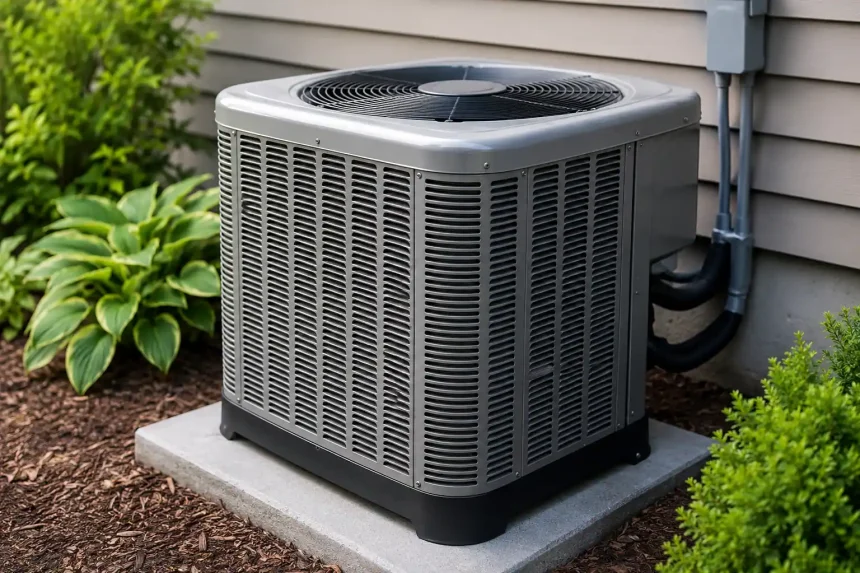
When an air conditioning system stops cooling properly, homeowners often look at the thermostat, air filter, or indoor vents first. However, one of the most important components is located outside the home: the AC condenser.
The outdoor condenser plays a central role in the cooling cycle. It helps release the heat that an air conditioner removes from indoor spaces, allowing the system to continue producing cool air. When the condenser becomes dirty, obstructed, or develops a mechanical problem, the entire air conditioning system can struggle.
Understanding what an AC condenser does and how to look after it can help homeowners recognise problems earlier and potentially avoid unnecessary repair costs.
What Is an AC Condenser?
An AC condenser is the outdoor part of a typical split air conditioning system. It normally contains the condenser coil, a fan, and other important components, including the compressor.
During the cooling process, refrigerant carries heat away from the indoor environment. The condenser’s job is to help transfer that heat into the outdoor air. The refrigerant then changes state as part of the cooling cycle before continuing through the system.
In simple terms, the indoor portion of the air conditioner absorbs heat, while the outdoor condenser helps get rid of it.
The condenser works alongside components such as the compressor, evaporator coil, and expansion device. All of these parts need to operate correctly for the system to provide effective cooling.
How Does an AC Condenser Work?
Although an air conditioning system can look complicated, the basic principle is relatively straightforward.
Warm indoor air passes over the evaporator coil, where heat is absorbed by the refrigerant. The refrigerant then travels toward the outdoor unit. The compressor increases the refrigerant’s pressure, after which the hot refrigerant enters the condenser.
Inside the condenser, heat is transferred from the refrigerant to the outdoor air. The condenser fan helps move air across the coil, allowing the heat to escape.
Once the refrigerant has released enough heat, it continues through the cooling cycle and eventually returns to the indoor coil.
This continuous process is what allows an air conditioner to move heat out of a building rather than simply creating cold air.
Why Is the AC Condenser Important?
A healthy condenser is essential for efficient air conditioning performance.
If the outdoor unit cannot release heat effectively, the air conditioning system may need to work harder and run for longer periods. This can affect comfort, energy consumption, and the overall strain placed on the equipment.
One of the most common issues is restricted airflow caused by dirt, leaves, grass clippings, or other debris around the outdoor coil. Even relatively simple maintenance can therefore make a noticeable difference to system performance.
For homeowners, keeping the area around the condenser clear is one of the easiest ways to support proper operation.
Common AC Condenser Problems
Like any mechanical component, an AC condenser can experience problems over time. Some issues are relatively simple, while others require professional attention.
Dirty Condenser Coils
Dirt and debris can accumulate on the condenser coil. When the coil becomes heavily obstructed, heat cannot move away from the refrigerant as effectively.
The system may then run for longer periods or struggle to maintain the desired indoor temperature.
Regular inspection and appropriate cleaning can help prevent excessive buildup.
Blocked Airflow
The outdoor unit needs sufficient airflow to work properly. Plants, weeds, leaves, garden debris, or objects placed too close to the unit can restrict air movement.
Keeping reasonable clearance around the condenser helps the fan move air through the coil.
Faulty Condenser Fan
The condenser fan is responsible for moving outdoor air across the condenser coil. If the fan motor, electrical components, or fan blade develops a fault, the condenser may not be able to remove heat effectively.
Unusual noises, overheating, or a noticeable reduction in cooling performance can indicate that professional inspection is needed.
Refrigerant Problems
Refrigerant is an important part of the cooling cycle, but refrigerant-related problems should not automatically be assumed whenever an air conditioner performs poorly.
A system may have several possible causes for reduced cooling, including airflow restrictions, electrical faults, dirty coils, or mechanical problems.
If refrigerant needs to be recovered, added, or removed, the work should be handled by an appropriately qualified technician. Refrigerant handling is subject to environmental and safety requirements.
How to Maintain an AC Condenser
Good maintenance does not necessarily mean performing complicated repairs. Homeowners can take several simple steps to help keep the outdoor unit in good condition.
Keep the Area Around the Unit Clear
Remove leaves, grass, branches, and other debris that could restrict airflow.
Plants should also be kept from growing directly into or around the outdoor unit. A clear area gives the condenser fan and coil better access to outdoor air.
Inspect the Unit Regularly
A quick visual inspection can help identify obvious problems before they become more serious.
Look for excessive dirt, damaged components, unusual noises, bent coil fins, or anything obstructing the unit.
Clean Carefully
A dirty condenser coil may benefit from gentle cleaning. If homeowners clean the outdoor unit themselves, the power should be switched off first, and high-pressure water should be avoided because it can damage or bend the delicate coil fins. Recent HVAC guidance also recommends gentle rinsing rather than aggressive pressure washing.
For heavily contaminated or difficult-to-access equipment, professional cleaning is usually the safer choice.
Schedule Professional Maintenance
Professional maintenance can identify issues that are difficult to spot during a basic visual inspection. A technician can assess electrical connections, refrigerant-related concerns, fan operation, coil condition, and other components.
Regular servicing can be particularly useful before periods of heavy air conditioner use.
Signs Your AC Condenser May Need Attention
Several warning signs may indicate that an outdoor condenser is not operating correctly.
These can include:
- The air conditioner is running but the home is not cooling properly.
- The outdoor unit makes unusual noises.
- The condenser fan does not appear to operate normally.
- The system runs for unusually long periods.
- Energy consumption appears higher than usual.
- The outdoor coil is visibly dirty or blocked.
- The unit repeatedly shuts down during operation.
- There are signs of physical damage around the condenser.
None of these symptoms automatically identifies one specific fault. Air conditioning systems contain several interconnected components, so proper diagnosis is important before replacing parts.
Should You Repair or Replace an AC Condenser?
The decision depends on the condition, age, efficiency, and repair requirements of the existing system.
A relatively minor fault may make repair the most sensible option. However, if an older condenser has repeated mechanical problems or requires expensive repairs, replacement may become more practical.
Homeowners should also consider compatibility between the outdoor condenser and the indoor components. Replacing individual parts without considering the complete system can create performance and compatibility issues.
Modern refrigerant regulations and technology are also influencing air conditioning equipment choices. For example, regulatory changes in some markets are encouraging the transition toward lower-global-warming-potential refrigerants in new systems.
For that reason, replacement decisions are best made after discussing the available options with a qualified HVAC professional.
AC Condenser vs. Evaporator: What’s the Difference?
The condenser and evaporator perform opposite but connected roles.
The evaporator is generally located inside the building and absorbs heat from indoor air.
The condenser is generally located outdoors and releases that heat into the outdoor environment.
Both are essential to the refrigeration cycle. If either component cannot operate correctly, the air conditioner may struggle to provide effective cooling.
Thinking of them as two sides of the same heat-transfer process makes the system easier to understand.
Simple Ways to Improve Condenser Performance
Homeowners do not need to become HVAC experts to take better care of their outdoor unit.
A few simple habits can help:
- Keep leaves and garden debris away from the condenser.
- Avoid placing objects directly against the outdoor unit.
- Check the unit periodically for visible dirt or damage.
- Keep indoor air filters maintained as recommended by the manufacturer.
- Pay attention to unusual noises or changes in cooling performance.
- Arrange professional servicing when the system shows persistent problems.
These small steps can support better airflow and help identify developing problems earlier.
Final Thoughts
The AC condenser is one of the most important parts of a modern air conditioning system. By releasing heat from the refrigerant into the outdoor environment, it allows the cooling cycle to continue and helps maintain comfortable indoor temperatures.
Keeping the outdoor unit clean, maintaining good airflow, and paying attention to unusual changes in performance can all contribute to better operation. At the same time, refrigerant work, electrical repairs, and complex mechanical problems should be left to qualified professionals.
For homeowners looking to get more from their air conditioning system, understanding the condenser is a useful starting point. A little regular attention can help protect an important piece of equipment and keep indoor comfort on track when temperatures rise.
Author Bio
A home and lifestyle writer covering practical ideas, technology, maintenance, and everyday improvements for modern living.