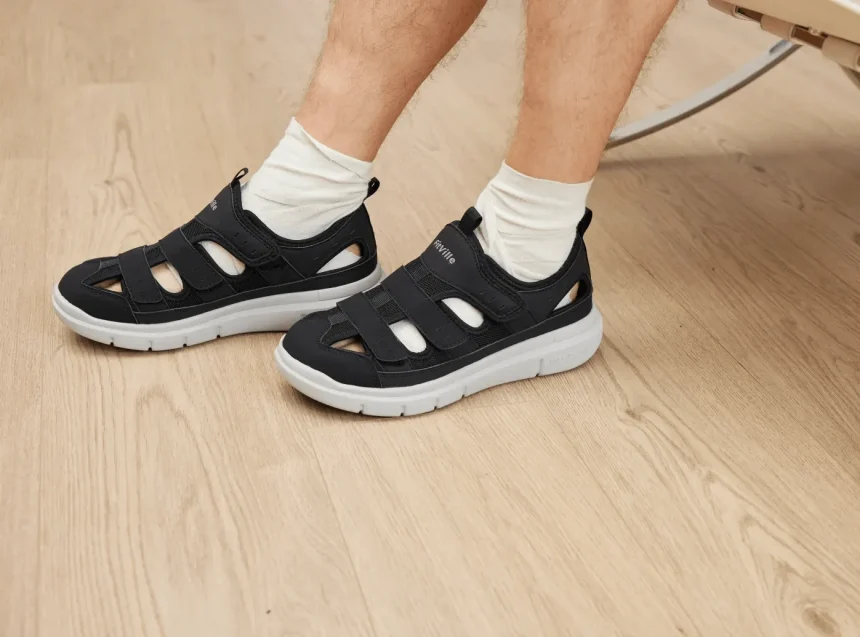
Comfortable footwear means something different when diabetes affects the feet.
For most people, a shoe that rubs will eventually hurt enough to demand attention. Diabetes can interfere with that warning system. Peripheral neuropathy may reduce sensation, while changes in circulation can make some foot injuries slower to heal. A blister or pressure point that seems minor can therefore become more important if it goes unnoticed.
That does not mean every man with diabetes requires specialist footwear. Many people remain at low risk and can wear ordinary shoes that fit properly. Others have neuropathy, swelling, bunions, previous ulceration or changes in foot shape that make footwear selection much more consequential. NICE recommends that adults with diabetes have their feet assessed at diagnosis and at least annually so their risk can be identified rather than guessed.
The best everyday footwear is therefore not defined by one material or one amount of cushioning. It needs to fit the individual foot, remain comfortable across a full day and avoid creating unnecessary pressure or friction.
What Should Men With Diabetes Look for in Everyday Footwear?
Start with fit. The shoe should be long enough, wide enough and deep enough for the foot without allowing it to slide around.
That sounds elementary, yet poorly fitting footwear remains a major concern in diabetes foot care. NHS guidance from Rotherham, Doncaster and South Humber advises people with diabetes to have their feet measured, try both shoes and choose footwear with an effective fastening. Diabetes UK similarly warns against shoes that are too tight, too loose or prone to rubbing.
For someone comparing diabetic shoes for men, useful features may include additional widths, a spacious front, adjustable closures and enough internal depth for the foot or an appropriate insole. The current FitVille UK men’s range, for example, includes 2E, 4E and 6E width filters as well as walking shoes, sandals, slippers and adjustable designs.
Those specifications narrow the search, but they do not replace checking the fit on the actual foot.
Why Does Shoe Fit Matter More When Sensation Is Reduced?
Pain normally tells us to change something.
A pebble inside a shoe feels irritating. A folded sock becomes uncomfortable. A heel blister starts burning. Someone usually stops, removes the shoe and deals with the problem.
Neuropathy can weaken those signals.
The NHS explains that people with diabetic polyneuropathy may develop a blister from badly fitting footwear without feeling enough pain to realise what is happening. Continuing to walk on the damaged area can allow it to deteriorate into an ulcer.
This changes the definition of comfort. “It doesn’t hurt” is no longer an adequate fitting test for a person with significant loss of sensation.
The foot itself needs to be inspected.
Diabetes UK advises checking feet daily and also examining footwear inside and out before putting it on. Small objects, damage to the lining, worn insoles or rough internal areas deserve attention precisely because sensation cannot always be relied upon to detect them.
A Roomy Toe Area Should Not Squeeze the Forefoot
Toe space is one of the first features worth examining.
The front of the shoe should follow the broad shape of the forefoot rather than taper sharply around the toes. This becomes particularly important when there are bunions, hammertoes or other changes in foot shape.
Width is only part of the equation.
A shoe can carry a wide-width designation and still narrow considerably at the front. Conversely, another design may have a broad toe area but feel too tight over the top of the foot because it lacks depth.
NHS diabetes footwear guidance describes appropriate footwear in three dimensions: it needs adequate length, width and depth, together with fastening that limits slipping and rubbing.
When standing in a new pair, the toes should not touch the front or feel compressed against each other. Look at the little-toe side as well. If the upper is visibly being pushed outward by the forefoot, moving to a wider fitting may make more sense than simply increasing shoe length.
Why Going Up a Size Is Not the Same as Choosing More Width
This is an easy mistake to make.
Suppose a man’s usual length is correct but the shoe feels tight around the ball of the foot. Going up a full size may create more internal space, yet much of that space appears in front of the toes rather than where the pressure actually exists.
The heel may then begin moving.
A wider version of the correct length is generally a more precise way to accommodate a broad foot. The same applies when foot volume has changed because of swelling or deformity. The objective is not maximum room. It is enough room in the correct places.
Footwear that is too loose can create friction just as footwear that is too tight can create compression. Diabetes UK specifically cautions against both extremes.
Adjustable Closures Can Make Everyday Wear Easier
Fixed footwear assumes that the foot remains the same size throughout the day.
That is not always realistic.
Some people experience changes in foot volume because of swelling, long periods of standing or other factors. Adjustable laces, hook-and-loop straps or similar fastenings allow modest changes without replacing a correctly sized shoe with an oversized one.
Fastening also helps control movement.
NHS diabetes footwear advice recommends shoes secured with Velcro, laces or buckles rather than relying on a loose slip-on fit.
For someone who has difficulty bending, limited hand dexterity or a high instep, the opening itself matters too. A shoe that opens widely can be easier to put on without forcing the foot through a restrictive collar.
Once closed, however, it should still hold the foot rather than letting it slide forward.
Shoe Depth Is Especially Important With Swelling or Orthotics
Depth is the dimension people tend to forget.
A man may have adequate toe width but still feel pressure against the top of his foot. A high instep, swollen forefoot, hammertoes or a thicker orthotic can all reduce the available vertical space inside a shoe.
Removable insoles are useful here.
If an orthosis has been prescribed or recommended, removing the manufacturer’s liner may create enough space to fit it without raising the foot too high inside the upper. Stacking a thick insert on top of an existing insole can substantially change the way an otherwise correctly sized shoe fits.
People with neuropathy and deformity deserve particular caution. NHS orthotics guidance notes that diabetes combined with loss of sensation and deformities such as bunions increases the potential consequences of inappropriate footwear.
If a specialist orthotic is already part of your care, take it with you when trying footwear.
Cushioning Matters, but Softness Is Not the Whole Story
A heavily padded shoe can feel impressive during the first minute.
That does not automatically make it appropriate for all-day use.
Cushioning can reduce the harsh sensation of repeated steps on hard floors, but the shoe also needs a reasonably stable base. If the foot moves excessively because the shoe is too soft or too loose, the extra padding does not solve the underlying fit problem.
There is also an important distinction between cushioning and pressure relief.
For people at higher risk of foot ulceration, the International Working Group on the Diabetic Foot recommends therapeutic footwear that accommodates foot shape. For someone with a healed plantar ulcer, the 2023 IWGDF prevention guideline goes further, recommending therapeutic footwear with a demonstrated plantar-pressure-relieving effect during walking.
That is specialist territory. A retail description such as “soft” or “memory foam” should not be interpreted as proof that a shoe provides clinically verified offloading.
For lower-risk everyday wear, the more useful question is simply whether the cushioning remains comfortable while the shoe continues to fit securely.
The Inside of the Shoe Deserves Inspection Too
Some of the most important footwear features are difficult to see from the outside.
Run a hand around the lining. Feel for rough seams, hard edges, wrinkles or anything protruding into the foot space. Check that the insole sits flat.
Do the same before wearing the shoes each day if sensation is impaired.
Diabetes UK advises checking for anything that has fallen inside a shoe and inspecting the footwear itself for damage. Worn inner linings, old insoles and thick sock seams can all create problems even when the external shoe still looks perfectly serviceable.
Socks form part of that internal environment as well. They should fit smoothly without folds or bulky areas that create concentrated pressure.
New Shoes Should Be Introduced Gradually
An all-day test is not the ideal first outing for an unfamiliar pair.
One practical NHS recommendation is to begin by wearing new footwear around the house for approximately 20 minutes, then remove it and inspect the feet for redness caused by pressure or rubbing.
That approach is particularly sensible when sensation is reduced.
If everything looks normal, wearing time can be increased progressively. If one area repeatedly becomes red or irritated, the shoe deserves another look before it is worn for an entire working day.
This is different from trying to “break in” a genuinely poor fit.
A leather upper may soften slightly. A shoe that is clearly too short, too narrow or pressing firmly against a deformity is unlikely to become the correct size through perseverance.
Everyday Use Should Influence the Shoe You Choose
There is no reason one pair must handle every activity.
A man who spends his workday in an office may prioritise a relatively smart appearance, cushioning and a roomy fit. Someone regularly walking between sites has different requirements. Retired men who spend several hours running errands or walking recreationally may place more emphasis on a stable walking sole.
This activity-based approach also fits the broader move towards comfort-led footwear in everyday fashion. Vents Magazine’s existing coverage of orthopaedic walking styles has discussed how footwear traditionally associated with support is increasingly being incorporated into ordinary wardrobes rather than reserved for obviously clinical settings.
For men with diabetes, that shift is useful. Protective footwear is easier to wear consistently when it works with normal clothing rather than feeling like equipment reserved only for medical appointments.
Function still comes first.
When Specialist Footwear Becomes More Important
Not every person with diabetes needs therapeutic footwear, but risk changes the decision.
NICE stratifies diabetic foot risk according to factors including neuropathy, limb ischaemia, deformity, callus, previous ulceration and previous amputation. People at greater risk require closer foot protection and specialist involvement than someone whose annual assessment finds no additional risk factors.
The IWGDF similarly recommends properly fitting conventional footwear for people at low risk while placing greater emphasis on therapeutic footwear as ulcer risk increases.
A previous ulcer is especially relevant. A man whose foot has already developed a pressure-related wound should not choose future footwear using comfort alone as the benchmark.
In these situations, podiatrists and specialist foot-care teams may need to assess foot shape, pressure and whether prescribed footwear or orthoses are appropriate.
Fashion Does Not Have to Be Abandoned
Health-oriented footwear used to have a reputation for looking conspicuously clinical.
That distinction is becoming less obvious. Wider trainers, walking shoes, adjustable casual styles and supportive slip-ons now appear in designs that can be worn as ordinary everyday footwear.
Current ranges of diabetic shoes, for instance, include strap-fastened shoes, sandals, slippers and other casual formats alongside more conventional walking styles.
For the wearer, variety can have a practical advantage. Foot-protective habits are easier to maintain when appropriate footwear exists for home, walking, casual outings and other parts of ordinary life.
Appearance should still come after fit. A shoe that looks discreet but squeezes the toes is not a successful compromise.
When a Shoe Problem Is Actually a Foot Problem
Footwear cannot explain every symptom.
A new area of numbness, persistent swelling, skin breakdown, changes in colour, an ulcer, unexplained heat or a change in foot shape deserves proper assessment.
Diabetes UK advises seeking prompt help for warning signs such as breaks in the skin, colour changes, swelling and a hot or unusually cold foot.
Do not rely on purchasing a roomier pair and seeing what happens.
The annual diabetes foot check is valuable precisely because it establishes whether sensation, circulation or foot structure has changed. NICE recommends at least annual assessment, while Diabetes UK stresses daily self-checks between professional reviews.
Those two habits complement each other: professional risk assessment and ordinary observation at home.
FAQs About Diabetic Footwear
Do all men with diabetes need specialist footwear?
No. Footwear requirements depend on individual risk. Some men can use well-fitting conventional shoes, while neuropathy, deformity, previous ulceration, poor circulation or other risk factors may make therapeutic or professionally fitted footwear more appropriate.
Should footwear for diabetes be a size larger?
Not automatically. Shoes should have adequate length, width and depth, but unnecessary extra length can allow the foot to slide. If width is the problem, choosing a wider fitting in the correct length is usually more logical than simply sizing up.
How can I tell whether new footwear is rubbing if my feet are numb?
Inspect the feet after wearing the shoes. NHS guidance suggests initially wearing a new pair for around 20 minutes at home and then looking for redness or pressure marks before gradually increasing wear time.
How often should someone with diabetes have their feet checked?
NICE recommends a professional foot assessment when diabetes is diagnosed and at least once every year thereafter, with more frequent review depending on risk. Feet should also be checked at home regularly, particularly when sensation is reduced.
Everyday Comfort Is Really About Reducing Avoidable Problems
The most useful footwear for a man with diabetes does not need an extraordinary list of technologies.
It needs to fit.
There should be room for the toes without uncontrolled movement elsewhere. The heel should remain reasonably secure. The upper should accommodate the shape and volume of the foot, while the interior should be smooth enough to avoid obvious rubbing points. Adjustable closures and removable insoles can make that equation easier when swelling or orthotics are involved.
More importantly, the shoe has to work during real life rather than just during a fitting.
That might mean several hours at work, a walk through town, a day of travel or an ordinary weekend spent on your feet. If sensation is reduced, visual checks become part of judging whether the footwear is actually working.
For men at greater risk of diabetic foot complications, footwear decisions belong within professional foot care rather than retail shopping alone. For everyone else, the principle remains refreshingly simple: choose enough space, enough security and a shoe you can comfortably wear through the ordinary hours of the day.