What Makes Pizza Porteña So Special?
Walk down Avenida Corrientes on any given evening, and the aroma hits you first. It is rich, yeasty, and undeniably cheesy. That is the scent of pizza porteña, Buenos Aires’s own beloved style of pizza that has won hearts for over a century. Unlike the thin, blistered Neapolitan pies or the floppy New York slice, pizza porteña is bold, unapologetic, and built for indulgence.
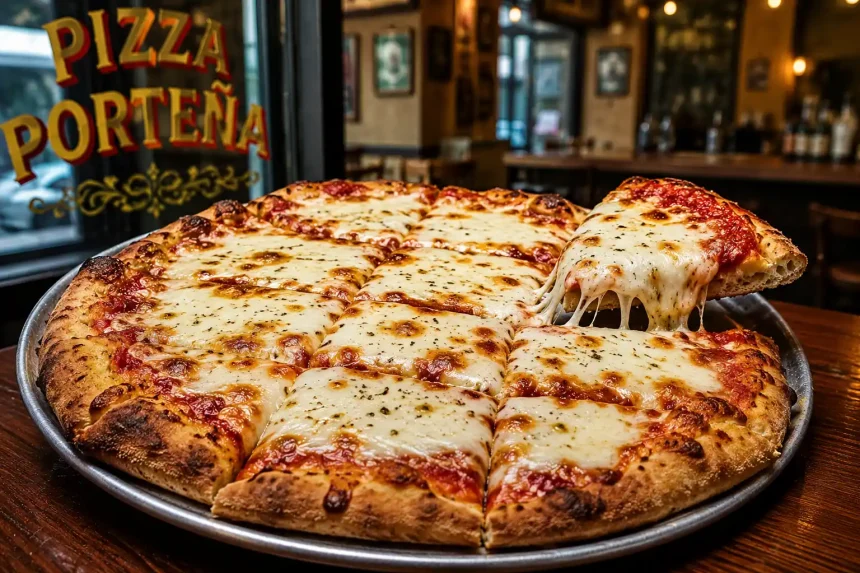
The defining feature of pizza porteña is the crust. It sits somewhere between a focaccia and a deep-dish base: thick, airy, and baked al molde (in a pan) with a generous slick of oil that creates an irresistible golden bottom. Then comes the cheese. And there is a lot of it. A classic muzzarella pizza porteña arrives dripping with molten mozzarella that stretches dramatically with every pull. The sauce is mild, lightly seasoned, and spread sparingly, because here the cheese is the undisputed star.
This style traces its roots back to the wave of Italian immigrants who arrived in Argentina in the late 19th and early 20th centuries. Genovese and Neapolitan bakers adapted their recipes to local ingredients and tastes, giving birth to something entirely new. Today, pizza porteña is more than food. It is a cultural institution, a Saturday night ritual, and a point of fierce neighborhood pride.
The Classics of Pizza Porteña You Must Try
Muzzarella
The simplest and most iconic pizza porteña is the muzzarella, topped exclusively with mozzarella cheese and a whisper of tomato sauce. It is served straight-up, often with a drizzle of olive oil and a sprinkle of oregano. When you want to judge a pizzeria, order a slice of muzzarella. It tells you everything you need to know.
Fugazzeta
If there is one pizza that defines Buenos Aires, it is the fugazzeta. This is a stuffed, double-crust pizza filled with gooey mozzarella and blanketed with a mountain of caramelized onions on top. The onions are slow-cooked until sweet, golden, and slightly charred at the edges. Sinking your teeth into a slice of fugazzeta is a life-affirming experience. Locals swear by it, and for good reason.
Fugazza
Do not confuse fugazza with fugazzeta. Fugazza is the simpler ancestor: a thick, focaccia-like base topped only with onions and a touch of olive oil — no cheese. It is lighter, fragrant, and the perfect companion to a cold beer on a summer evening.
Pizza con Fainá
This is a uniquely porteño pairing. Fainá is a thin chickpea-flour flatbread baked until golden and slightly crispy. Porteños place a slice of fainá directly on top of their pizza slice and eat them together. The nutty, crumbly texture of the fainá contrasts beautifully with the rich, cheesy pizza. If you see locals doing it, follow their lead.
Pizza al Metro
For big groups and long tables, pizza al metro (pizza by the meter) is the way to go. These rectangular behemoths stretch across the table and come topped with everything from classic muzzarella to ham, peppers, olives, and anchovies. Places like Manolo serve legendary pizza al metro that feeds a crowd without breaking the bank.
The Best Traditional Pizzerias in Buenos Aires
Güerrín: The Undisputed Temple of Pizza Porteña
Ask any porteño where to find the best pizza in Buenos Aires, and Güerrín will come up more often than not. Located at 1368 Avenida Corrientes, this legendary pizzeria has been operating since 1932 and holds a near-mythical status. With over 200,000 Google reviews, it is one of the most-reviewed pizzerias on the planet.
Walking into Güerrín is an assault on the senses in the best possible way. The place is loud, chaotic, and perpetually crowded. Waiters in white shirts navigate narrow aisles carrying enormous trays of pizza above their heads. The muzzarella here is everything you want: thick, cheesy, and blessed with a gloriously crispy base. The fugazzeta rellena is a religious experience. Güerrín does not have branches. There is only one, and that is part of its magic.
El Cuartito: A Slice of History on Talcahuano
Tucked away on Calle Talcahuano, El Cuartito has been serving pizza since 1934. The walls are plastered with football memorabilia, vintage posters, and photographs that tell the story of decades of hungry patrons. It feels less like a restaurant and more like a time capsule.
El Cuartito is famous for its fugazzeta rellena, which arrives at the table looking almost impossibly tall. The onions are caramelized to perfection, and the cheese pull is legendary. The muzzarella here has a slightly tangier profile than Güerrín’s, and loyalists will argue passionately for their preferred spot. Both are essential.
Las Cuartetas: The Late-Night Legend
A stone’s throw from the Obelisco, Las Cuartetas has long been a haven for theatergoers, night owls, and anyone craving pizza after midnight. The atmosphere is unpretentious and wonderfully old-school. The pizza here leans slightly saltier than its competitors, which makes it an ideal companion to a cold Quilmes beer. The napolitana (topped with tomato slices and garlic) is a standout.
Banchero: The Birthplace of Fugazzeta
History buffs take note: Banchero claims to have invented the fugazzeta itself. Founded in La Boca in 1932 by the Banchero family, this pizzeria holds a special place in the city’s culinary heritage. The original location still operates in La Boca, though there are now several branches across the city. The fugazzeta here is sublime, with onions that are caramelized until deeply sweet and a cheese layer that is nothing short of decadent.
La Mezzetta: The Neighborhood Gem
A bit further from the tourist trail in Villa Ortúzar, La Mezzetta is a beloved neighborhood institution. The pizzas here are enormous, generously topped, and absurdly satisfying. The muzzarella is thick and creamy, and the fugazzeta arrives with a beautifully burnished onion layer. La Mezzetta has a loyal local following, and the line often stretches out the door on weekends. The empanadas here are also worth ordering while you wait.
El Imperio de la Pizza: The Underdog Champion
This no-frills pizzeria has quietly built a reputation as one of the best spots for classic porteña pizza. Located in the Chacarita neighborhood, El Imperio serves pizza that is consistently excellent. The muzzarella is beautifully balanced, and the fugazzeta is regularly cited by regulars as the best in the city. The prices are reasonable, the portions generous, and the atmosphere refreshingly unpretentious.
The Neo-Porteña Pizza Movement
In recent years, a new wave of pizzaiolos has been reimagining what pizza porteña can be. These chefs respect tradition but are not afraid to experiment with fermentation techniques, higher-quality ingredients, and creative toppings.
The neo-porteña movement keeps the al molde format but refines it. Doughs are given longer fermentation times for better digestibility and more complex flavor. Cheeses are sourced from artisanal producers. Toppings might include roasted pears, blue cheese, sopressata, or seasonal vegetables. The result is pizza that feels both familiar and thrillingly new.
Pizza Zën in Núñez has garnered international attention, earning a spot among the best pizzerias in global rankings. Their approach marries Italian technique with Argentine soul, and the results speak for themselves. Other notable neo-porteña spots include Atte. Pizza Napoletana in Palermo, which bridges Neapolitan tradition with porteño flair, and specialized pop-ups and collaborations that bring Argentine-style pizza to international audiences.
What to Order on Your First Visit
If you are new to pizza porteña, here is a foolproof game plan. Start with a slice of muzzarella to understand the baseline. Then move on to fugazzeta rellena, the crowned jewel of Argentine pizza. Order a portion of fainá on the side and do as the locals do: place it on top of your pizza. Grab a Quilmes or a glass of moscato, a sweet wine that pairs surprisingly well with salty, cheesy pizza. For dessert, many traditional pizzerias serve almendrado (an almond ice cream dessert) or a simple flan with dulce de leche.
Timing Your Visit Like a Local
Porteños eat late. If you arrive at a pizzeria at 8 p.m., you might find the place half-empty. By 10 p.m., however, families and groups of friends fill every table, and the energy shifts into high gear. The real rush starts after midnight, especially on weekends, when the after-theater and post-clubbing crowds descend on places like Güerrín and Las Cuartetas.
If you prefer a calmer experience, go for lunch. Most pizzerias open around noon, and the midday crowd is a mix of office workers and tourists. You will get the same quality without the chaos.
Bringing Pizza Porteña Home
Craving pizza porteña but not in Buenos Aires? You can try making it at home. The key is a well-oiled, high-sided baking pan and a dough that is given time to rise properly. Use a low-moisture mozzarella that melts beautifully, and do not be shy with the onions if you are attempting fugazzeta. There are excellent recipes online, and the process is deeply rewarding.
For those in cities with Argentine communities, keep an eye out for pizzerias and pop-ups specializing in porteña-style pizza. Argentine-style pizza is gaining traction internationally, with collaborations and specialty events bringing the taste of Buenos Aires to places like New York, Miami, and beyond.
Author Bio: A passionate food writer and traveler who has spent years exploring the culinary soul of Buenos Aires, one slice of pizza at a time.