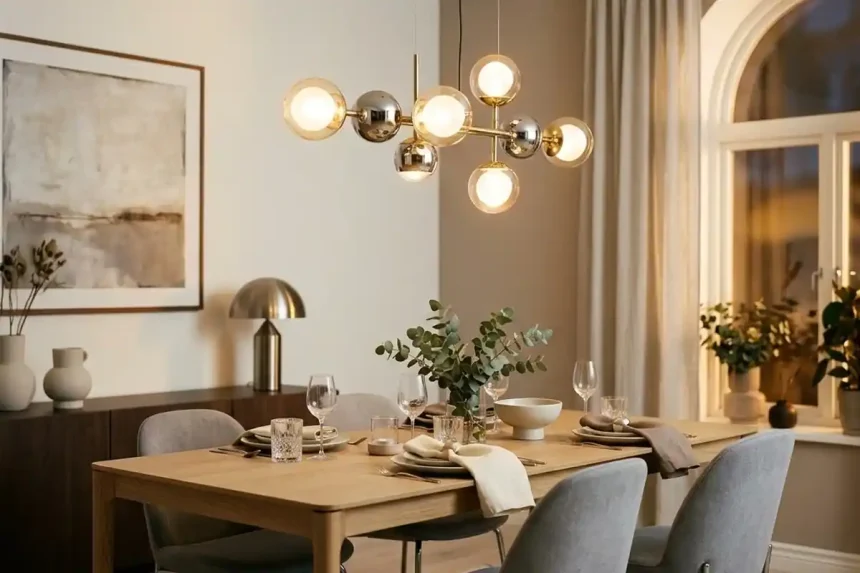
There’s a moment in every home renovation when the walls are painted, the furniture is chosen, and everything looks… almost right. That missing piece is usually light. Not just any light and but the fixtures that add character, warmth, or a sense of occasion to a space.
Lighting is one of the most underestimated and tools in interior design. It shapes how a room feels the moment you walk in, and it can make even the simplest furniture arrangement feel curated and intentional. Yet many homeowners treat it as an afterthought, something to sort out once the “important” decisions are made.
This post explores why statement lighting deserves a starring role in your home, how to choose pieces that suit your space, and where to find fixtures that combine craftsmanship with genuine personality.
Why lighting deserves more attention in your design plans
Think about the last restaurant, hotel lobby, or boutique that made you stop and take notice. Warm, layered lighting creates atmosphere. Harsh, uniform lighting can flatten a room and drain it of character.
Elevate the mood and personality of any room with designer lighting that’s been chosen with as much care as your sofa or dining table. A well-placed pendant, an elegant floor lamp, or a sculptural wall light can become the focal point of a room, giving it a sense of identity that generic fixtures may not provide.
Good lighting also does practical work. It highlights architectural features, draws attention to artwork, and creates zones within open-plan spaces. A dimmable pendant over the dining table can set a different tone for a Tuesday dinner than a Saturday night gathering, all without changing another element in the room.
Choosing fixtures that match your home’s character
There’s no single formula for lighting a room well, but a few principles can make the process easier.
Start with how the room is used
A reading nook needs focused, warm light. A kitchen island benefits from bright, even illumination paired with something decorative overhead. Bedrooms often call for softer, adjustable lighting that can shift from functional to relaxing.
Layer your light sources
Combine ambient lighting (ceiling fixtures), task lighting (desk or reading lamps), and accent lighting (wall sconces or picture lights) to create depth and flexibility.
Let materials and finishes do the talking
Brass, blackened steel, hand-blown glass, and natural stone can all bring different textures and moods into a room. A brushed brass fixture can feel warm and traditional, while matte black hardware tends to lean modern and industrial. Choosing finishes that echo other elements in the room, such as door handles or taps, can help tie a space together.
The enduring appeal of pendant lighting
Few fixtures offer the same versatility as pendant lights. They work in kitchens, dining rooms, hallways, bedrooms, and even bathrooms, and they come in an enormous range of styles, from minimalist glass globes to elaborate multi-arm chandeliers.
Pendants also solve a practical problem: they bring light closer to where it’s needed most, whether that’s over a kitchen island or a bedside table, without taking up valuable floor space.
Bring a striking, functional centrepiece into your kitchen or dining space with designer pendant lights that suit the scale and style of the room. A cluster of three smaller pendants over an island reads very differently from a single oversized statement piece, so it’s worth considering ceiling height, table size, and the amount of light actually needed before making a final choice.
For rooms with lower ceilings, slim, elongated pendant shapes can help avoid a cramped feeling. In rooms with generous height, larger or layered pendant designs can fill the space without overwhelming it.
Common lighting mistakes worth avoiding
Even well-designed rooms can be let down by a few avoidable missteps:
- Choosing fixtures that and too small for the space. A pendant that looks fine in a showroom can feel lost above a large dining table at home.
- Ignoring dimmers. Fixed brightness can limit how a room is used throughout the day.
- Matching every fixture in the house. Consistency matters, but variety between rooms can add interest and prevent a space from feeling flat.
- Overlooking bulb colour temperature. Warm white (around 2700K–3000K) tends to suit living spaces, while cooler tones may feel less inviting in a home setting.
Getting these details right doesn’t require a background in design. It simply takes a willingness to treat lighting as seriously as any other design decision.
Finding pieces that feel personal, not generic
Off-the-shelf lighting has its place, but it doesn’t always create the same impression as a fixture with a story behind it. Whether that’s a hand-finished pendant, a limited-run wall light, or a reissued mid-century design, pieces with distinctive craftsmanship can add character while remaining practical and timeless.
Investing in quality lighting can also be a practical decision. Well-made fixtures often use durable materials and quality components, with finishes designed to withstand regular use over time.
Let your lighting do more than switch on
A room’s lighting says a lot about the care that’s gone into the rest of the space. It’s one of the few design choices that works on every level: functional, atmospheric, and visual. Whether you’re planning a full renovation or simply looking to refresh a single room, starting with lighting can shape other decisions that follow, from colour palettes to furniture placement.
Take the time to consider how each room is used, layer your light sources thoughtfully, and choose fixtures that reflect your own taste rather than settling for whatever’s easiest to find. The right pieces don’t just illuminate a room. They give it a personality that generic alternatives may struggle to replicate.