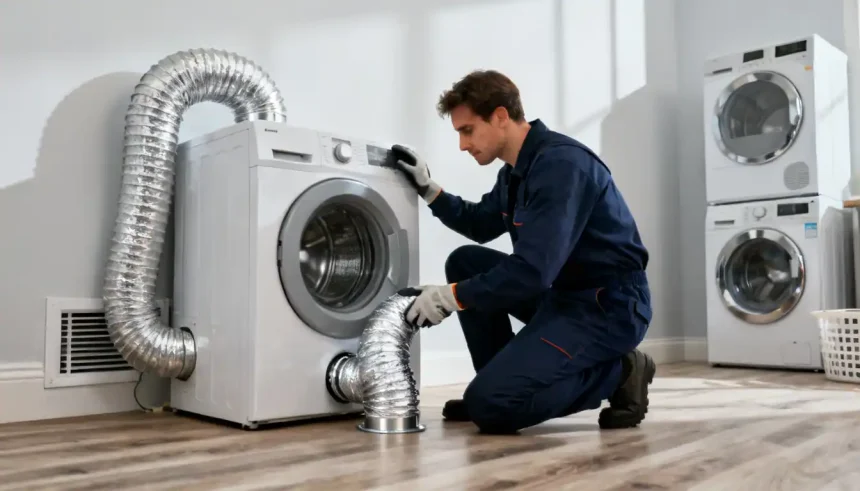
A tumble dryer is one of those household appliances that quietly earns its keep, especially through a long, damp British winter. But while most of us think carefully about which machine to buy and how much it will cost to run, we tend to pay far less attention to the part of the setup that matters most for safety: the vent.
If you have recently searched for “dryer vent installation near me,” you are probably in one of two situations. Either you have bought a vented dryer and need it fitted properly, or you have started to notice that something about your current setup is not working as it should.
Either way, understanding what dryer vent installation actually involves is well worth a few minutes of your time before you pick up the phone.
What Dryer Vent Installation Involves
Dryer vent installation is the process of creating a safe route for the warm, moisture-laden air from your tumble dryer to escape outside your home. This is different from simply plugging the machine in. A vented dryer pulls in air, heats it, and then pushes it out again along with the moisture it has drawn from your clothes. If that damp air has nowhere to go, it ends up trapped in the room, which is bad news for both your home and your health.
A professional installation typically involves cutting a hole through an external wall, fitting a duct or hose that runs from the back of the dryer to that opening, and sealing everything so that warm air cannot leak back into the room. The installer will also fit an external vent cover, often with a flap or grille, to stop rain, draughts, and small animals from getting in.
In some homes, the route is short and straightforward, with the dryer positioned against an outside wall. In others, the duct has to travel a longer distance, which requires more careful planning to avoid bends and kinks that restrict airflow.
When Do You Need a Dryer Vent?
Not every tumble dryer needs a vent. The three main types of machine work in different ways, and knowing which one you own will tell you whether this service is relevant to you at all.
Vented dryers are the traditional option. They expel hot, moist air through a hose and require an outlet to the outside. If you own one of these, a properly fitted vent is not optional – it is essential.
Condenser dryers collect the moisture in a container that you empty by hand, and heat pump dryers work in a similar way but use far less energy. Neither of these needs an external vent, although they still benefit from good room ventilation to stop the air around them becoming overly humid.
If you are replacing an old vented dryer with the same type, you may be able to reuse the existing vent, though it is always worth having it checked. If you are moving from a condenser model to a vented one, or moving your dryer to a different part of the house, you will likely need new vent installation.
Signs of a Blocked or Poorly Fitted Vent
You do not need to be able to see inside the duct to know when something is wrong. A dryer that is struggling to vent properly will usually give you some clear warning signs.
One of the most obvious is longer drying times. If a load that used to take an hour now takes ninety minutes or more, the cause is often restricted airflow. Trapped moisture has to fight to escape, which means the dryer has to work harder and longer to do the same job.
Heat is another tell-tale clue. If the outside of the machine or the room around it feels unusually hot, or if clothes come out feeling much hotter than they used to, the hot air is probably backing up rather than leaving the house. You might also notice a musty or burning smell, condensation forming on nearby windows or walls, or a build-up of lint around the vent opening.
Lint is the real villain in most blocked vents. Every drying cycle sheds tiny fibres from your clothes, and while the machine has its own internal filter, a significant amount still makes its way into the duct. Over months and years, this fluff packs down and narrows the airway. Because lint is highly flammable, a blocked dryer vent is a genuine fire risk, which is why this is not a job to put off.
Safety Considerations Worth Taking Seriously
This is the point where the word “professional” really earns its place. Fitting a vent may look like a simple hole in a wall, but getting it wrong carries real consequences.
The fire risk is the one most people have heard of. When a vent is blocked or crushed, heat and lint build up together in a confined space, and the combination is dangerous. A vent that is too long, has too many sharp bends, or uses poor-quality flexible hose is far more likely to trap lint than a short, rigid duct with a smooth interior.
Moisture is the quieter threat. A vent that leaks warm, damp air into a cavity wall or loft space can cause condensation you cannot see, and that undetected damp can lead to mould, musty smells, and damage to timbers and plasterboard over time. In a rented property, this kind of problem can also become a point of dispute between tenant and landlord.
There is also the question of backdraught. On a windy day, outside air can be pushed back into the house through a vent that has no functioning flap or is poorly sealed. This can make a utility room chilly and allow rainwater in. A good external vent cover with a gravity flap solves most of this, but only if it is fitted correctly and kept clear.
Planning the Installation: What a Good Installer Considers
Before any hole is cut, a thoughtful installer will look at the whole picture, not just the nearest wall. A few practical factors shape how well the job will go.
Route length matters more than many homeowners realise. Modern dryers have limits on how far they can push air, and every metre of duct and every bend adds resistance. The shorter and straighter the run, the better. Where possible, the vent should travel directly through the nearest external wall rather than snaking through cupboards or across a ceiling.
Hose quality makes a noticeable difference. Cheap, accordion-style flexible foil hose is easy to kink and its ridged interior catches lint readily. Rigid ducting or good-quality semi-rigid hose is smoother and usually a better long-term choice.
Wall type affects how the job is carried out. Drilling through a solid brick wall is different from working with a cavity wall, timber frame, or a property with external cladding. Older buildings may have unusually thick or hard walls, and some modern renders and finishes need care to avoid cracking. A professional will assess this before starting rather than discovering it halfway through.
Positioning of the dryer also plays a part. The machine needs enough space behind it for the hose to connect without being squashed, and the socket and any plumbing nearby need to be considered so the installation does not create a trip hazard or block access.
Choosing a Vent Cleaning or Replacement Service
If you already have a vent but suspect it is no longer doing its job, you may not need a full new installation. Vent cleaning is a specialist service that removes built-up lint from the duct, often using brushes and vacuum equipment. This is the right call if your drying times have crept up but the structure of the vent is still sound.
In other cases, replacement is the better option. If the existing hose is cracked, crushed, or the wrong type for your dryer, or if the external cover is missing or damaged, fitting new ducting is cleaner and safer than trying to patch up the old one. A good tradesperson will tell you honestly which route makes sense rather than steering you towards the more expensive job.
What to Check Before Hiring a Professional
The phrase “dryer vent installation near me” tends to bring up a mix of general handymen, appliance repair services, and ventilation specialists. Before you commit to anyone, a few simple checks will help you avoid a poor job.
Ask about experience with your specific type of home and dryer. A tradesperson who fits vents routinely will be able to talk through how they will approach your wall type and route, rather than giving a vague “we’ll see on the day.”
Check what is included in the quote. Will they supply the vent, hose, and external cover, or do you need to buy these separately? Will they make good around the hole inside and out, and will they clear up after themselves? These details are worth agreeing before work starts.
Find out whether they will test the dryer afterwards. A proper installation should end with the machine running so the installer can check that air is flowing freely through the vent and that there are no draughts or leaks. If this step is not mentioned, ask about it.
Finally, trust your own judgement on communication. Someone who returns calls, explains things in plain language, and is happy to answer questions is generally a better bet than someone who is hard to pin down, however competitive their price.
FAQ: Dryer Vent Installation
How do I know if my dryer needs a vent?
Check the type of machine you own. Vented dryers must be connected to an outside vent, while condenser and heat pump dryers collect moisture internally and do not need one. If you are unsure, look for a flexible hose at the back of the machine or check the manufacturer’s label and instructions.
Can I fit a dryer vent myself?
It is possible to fit a short, straight vent through an external wall yourself if you are confident with tools, but it is not a casual DIY task. Drilling a large hole through the wrong type of wall, sealing it poorly, or using the wrong hose can create damp and fire risks. If the route is short and the wall is straightforward, a competent DIYer may manage it; for anything more involved, a professional is the safer choice.
How often should a dryer vent be cleaned?
There is no one-size-fits-all rule, but a good general guide is to have the vent cleaned at least once a year if you use your dryer regularly. If you have pets, do a lot of laundry, or have a long or awkward vent run, you may need it cleaned more often. Keep an eye on drying times – if they start to creep up, the vent is usually the first place to check.
What is the difference between vent cleaning and vent replacement?
Vent cleaning removes the lint and debris that have built up inside an existing duct, leaving the structure in place. Vent replacement means removing the old hose or ducting and fitting new material. Cleaning is appropriate when the vent is still structurally sound; replacement is better when the hose is damaged, the wrong type, or too long and bent to work efficiently.
Will a blocked vent really cause a fire?
Lint is highly flammable, and when it builds up in a confined, warm duct it can catch fire. This is a well-documented risk with vented dryers, which is why keeping the vent clear and clean is treated seriously. A blocked vent is not a “maybe someday” problem – it is a genuine hazard worth addressing promptly.
How long does dryer vent installation take?
For a straightforward installation through an external wall, the job often takes an hour or two. Longer or more complex routes, awkward wall types, or the need to make good around the opening can extend the time. Your installer should be able to give you a realistic estimate once they have seen the property.
Making the Right Choice for Your Home
A well-fitted dryer vent is one of those things you never think about until it goes wrong, at which point the knock-on effects can be expensive and, in the worst case, dangerous. Whether you need a new installation because you have just bought a vented dryer, or you suspect your existing vent has seen better days, the principle is the same: get it done properly, by someone who understands airflow, wall types, and the safety implications of getting it wrong.
When you search for “dryer vent installation near me,” use the results as a starting point, not a final answer. Look at what each service actually offers, ask about their approach, and make sure you understand exactly what is included in the price. A little diligence at the start will save you from damp problems, poor drying performance, and a lint-clogged duct that was never worth the risk in the first place.