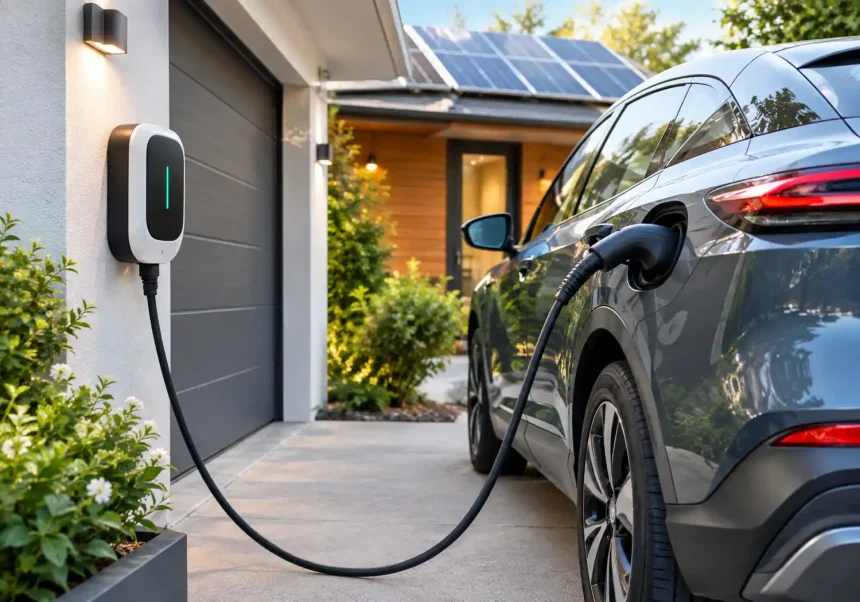
For many electric vehicle owners, the biggest advantage of owning an EV is being able to start most mornings with a charged battery. Instead of making regular trips to a petrol station, you can often charge your vehicle while it is parked at home.
However, electric vehicle charging at home involves more than simply plugging a car into a socket. The right charging method depends on your vehicle, home electrical system, parking arrangement, available power, and how quickly you need to recharge.
Understanding the basics can help you choose a practical setup without spending money on equipment you may not actually need.
How Does Electric Vehicle Charging at Home Work?
An electric vehicle stores energy in a high-voltage battery. When you connect the vehicle to a suitable power source, electricity flows into the battery through the car’s charging system.
There are several ways to charge an EV at home. The exact terminology can differ between countries, but home charging generally falls into three broad categories:
- Standard household-socket charging
- Dedicated AC home charging
- Faster charging using higher-power equipment
The charging speed depends on factors such as the charger’s power output, the vehicle’s onboard charging capability, the battery size and the available electrical supply.
Can You Charge an Electric Car From a Normal Household Socket?
In many cases, an EV can be connected to a standard household electrical outlet using the appropriate charging equipment supplied or approved for the vehicle.
This can be useful for occasional charging or for drivers with relatively low daily mileage.
However, a normal household socket is generally much slower than a dedicated home EV charger. Charging a large battery this way can take many hours.
It is also important not to rely on extension cables or unsuitable electrical equipment. EV charging can involve high and sustained electrical loads, so the equipment and installation need to be appropriate for the intended use.
If you plan to charge your EV regularly at home, a dedicated charger may be a more practical option.
What Is a Home EV Charger?
A home EV charger is a dedicated charging unit installed specifically for charging an electric vehicle.
Depending on the model and electrical supply available at your property, a dedicated charger can provide considerably more power than a standard household socket.
Modern home chargers may also offer features such as:
- Scheduled charging
- Smartphone monitoring
- Energy usage information
- Wi-Fi or other connectivity
- Load management
- Integration with some home energy systems
The right features depend on how you use your vehicle and what your home’s electrical system can support.
How Long Does Home EV Charging Take?
There is no single charging time that applies to every electric vehicle.
A simplified calculation is:
Approximate charging time = energy required ÷ charging power
For example, if a vehicle needs approximately 30 kWh of energy and the charging equipment is delivering 7 kW, the theoretical charging time would be a little over four hours.
Real-world charging can take longer because charging rates can vary during the session and because the vehicle does not necessarily draw maximum power continuously.
Battery temperature, the vehicle’s charging system, the battery’s state of charge and other factors can also affect charging speed.
This is why it is better to think of home charging in terms of your daily driving needs rather than trying to recharge the entire battery from empty every night.
Do You Need a Dedicated Home Charger?
Not every EV owner necessarily needs one.
A standard charging solution may be sufficient if:
- You drive relatively few miles each day.
- Your vehicle remains parked at home for long periods.
- You have access to another charging location.
- Your household electrical setup makes a dedicated installation impractical.
A dedicated home charger may make more sense if:
- You drive regularly.
- You want faster overnight charging.
- You want scheduled charging.
- You want more control over energy usage.
- You plan to keep the EV for several years.
The best setup is the one that matches your actual driving routine.
What Electrical Supply Does Home Charging Need?
Home EV charging can place a significant load on an electrical system.
Before installing a dedicated charger, an appropriately qualified electrician should assess the property’s electrical installation and determine whether the planned equipment is suitable.
Depending on the property and charger, the installation may involve additional protection, cabling or electrical work.
The exact requirements vary by country, property and charging equipment, so homeowners should follow local electrical regulations and manufacturer instructions rather than assuming every home can support the same setup.
Where Should You Install an EV Charger?
The most convenient location is usually close to where you regularly park the vehicle.
For a driveway, garage or designated parking area, consider:
Cable length
The cable should comfortably reach the vehicle without creating unnecessary loops or trip hazards.
Weather exposure
If the charger is installed outdoors, choose equipment designed and rated for outdoor use.
Accessibility
The charger should be positioned somewhere that is convenient to use without interfering with doors, walkways or other vehicles.
Future needs
Think about whether you might own another EV in the future or change your parking arrangement.
A little planning before installation can prevent expensive changes later.
How Much Does Electric Vehicle Charging at Home Cost?
The cost of home charging depends primarily on how much electricity the vehicle uses and the electricity rate you pay.
A simple estimate is:
Charging cost = electricity used × electricity price
For example, if your vehicle takes 40 kWh from the electricity supply and your effective electricity rate is 25 cents per kWh, the energy cost would be approximately $10.
Your actual cost can be different because electricity prices vary by location, provider and tariff.
Some electricity plans also offer lower rates during certain periods. If your provider offers time-of-use pricing, scheduling charging for cheaper periods may reduce the cost of running your EV.
However, always check your electricity plan rather than assuming overnight charging is automatically cheaper.
Can Solar Panels Charge an Electric Vehicle?
Yes, an EV can be charged using electricity generated by a home’s solar panels when the necessary equipment and electrical setup are compatible.
Solar charging can be particularly interesting for homeowners who already have solar generation installed.
During periods when the panels are producing electricity, some of that energy can potentially be directed toward charging the vehicle rather than being drawn from the grid.
The practical benefit depends on factors such as:
- Solar system size
- Vehicle battery capacity
- Household electricity consumption
- Time of day
- Weather
- Local electricity rates
- Available charging equipment
A home battery can provide another option by storing electricity for later use, although adding a battery involves additional equipment and cost.
Should You Charge an EV Every Night?
Not necessarily.
There is no universal rule that an EV must be charged every night.
If you only use a small portion of the battery during your daily commute, charging periodically may be enough.
Many drivers find it easier to plug in when they return home and let the vehicle charge according to a schedule or charging limit set through the vehicle or charger.
Following the vehicle manufacturer’s recommendations for battery charging and care is more important than following a generic charging routine.
Is It Better to Charge Slowly or Quickly at Home?
For everyday home charging, there is often little reason to use the fastest possible charging method.
Your vehicle may remain parked for several hours overnight, giving it plenty of time to recharge.
A slower, predictable overnight charging routine can be perfectly practical for many drivers.
Faster charging becomes more valuable when you need to add a significant amount of range in a shorter period.
The important point is that home charging should fit your routine rather than simply maximising charging speed.
Practical Safety Tips for Home EV Charging
Because EV charging involves electricity at substantial power levels, safety should be taken seriously.
Use suitable charging equipment
Use equipment designed and approved for your vehicle and electrical setup.
Avoid damaged cables
Do not use cables that show signs of damage, exposed wiring or other faults.
Do not overload household outlets
Avoid using unsuitable adapters, extension arrangements or makeshift connections for regular EV charging.
Follow installation requirements
A dedicated charger should be installed according to applicable electrical regulations and the manufacturer’s instructions.
Keep charging equipment accessible
Do not place cables where people can easily trip over them or where vehicles can drive over them.
Check the equipment regularly
If you notice unusual heat, damage, error messages or repeated charging interruptions, stop using the equipment and seek appropriate professional assistance.
How to Make Home EV Charging More Convenient
A few simple habits can make daily charging easier.
Schedule charging
If your vehicle or charger supports scheduled charging, you can set charging to take place during your preferred period.
Choose a sensible charging limit
Many modern EVs provide charging-limit settings. Follow the manufacturer’s recommendations rather than assuming that keeping the battery at 100% at all times is necessary.
Monitor your energy use
Connected chargers can help you understand how much electricity your vehicle is consuming.
Keep the cable organised
A tidy cable setup makes regular charging safer and more convenient.
Plan for longer journeys
Home charging works particularly well for routine driving, but longer journeys may still require public charging stops.
Home Charging vs Public Charging
Home and public charging serve different purposes.
Home charging is generally convenient because the vehicle can charge while parked overnight or during other long periods.
Public charging becomes more useful when travelling long distances or when home charging is unavailable.
For many EV owners, the two systems work together rather than competing with each other.
The ideal routine may be to handle most everyday charging at home and use public chargers when travelling beyond the vehicle’s available range.
What Should You Consider Before Installing a Home Charger?
Before purchasing equipment, ask yourself:
- How many miles or kilometres do I normally drive each day?
- Where does the vehicle stay parked overnight?
- What charging equipment does my vehicle support?
- Can my home’s electrical system support the planned charger?
- Do I need outdoor-rated equipment?
- Does my electricity provider offer different rates at different times?
- Do I want smart charging features?
- Could my charging needs change in the future?
Answering these questions can help prevent you from paying for features or installation work that do not provide much practical benefit.
Frequently Asked Questions
Is it cheaper to charge an electric vehicle at home?
It can be, depending on your electricity rate and the cost of alternative charging options. The actual cost varies by location, electricity tariff, vehicle efficiency and charging provider.
Can I leave my EV plugged in overnight?
Many modern EVs and home charging systems are designed to support routine overnight charging. Follow the vehicle and charger’s manufacturer instructions and use properly installed equipment.
Can I charge an EV without a home charger?
Depending on the vehicle and local electrical setup, you may be able to use an appropriate household outlet. However, charging is generally slower than with a dedicated home EV charger.
Do electric cars increase your electricity bill?
Charging an EV uses additional electricity, so your household consumption will generally increase. The amount depends on how much you drive, vehicle efficiency and how much energy is required to recharge the battery.
Can solar panels charge an electric car?
Yes. With a compatible electrical setup, solar-generated electricity can be used to charge an EV. The amount of solar energy available will depend on the system and weather conditions.
Final Thoughts
Electric vehicle charging at home can become one of the simplest parts of EV ownership once the right setup is in place.
For many drivers, the goal is not to charge as quickly as possible every day. It is to have a reliable and convenient way to replace the energy used during normal driving.
Start by understanding your daily driving needs, your vehicle’s charging capabilities and your home’s electrical setup. From there, you can decide whether a standard charging option or a dedicated home charger makes sense.
With suitable equipment, safe installation and a charging routine that matches your lifestyle, home charging can make everyday electric vehicle ownership considerably more convenient.