Introduction
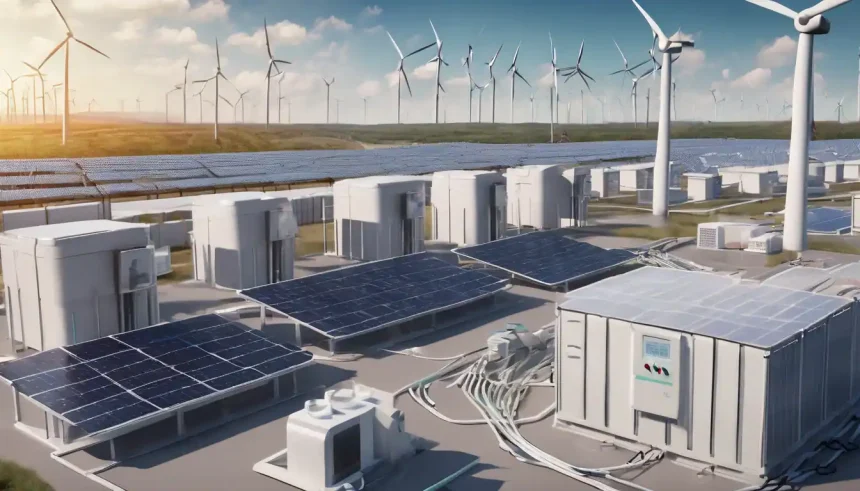
Energy storage sits at the heart of the clean energy transition. As grids absorb more solar, wind, and distributed resources, the ability to store electricity safely, affordably, and at scale becomes the linchpin for reliability and decarbonization. In this landscape, the term “enerstor” has emerged as a useful shorthand for systems and platforms that store, manage, and optimize energy across applications—from residential batteries to utility-scale assets. In this article, I unpack how enerstor concepts fit into the broader evolution of energy storage technology, where the field stands today, and where it’s headed next.
What Is Enerstor?
Enerstor is best understood as a catch‑all reference to energy storage systems and the software‑defined intelligence that orchestrates them. While some use the word as a brand or product name, I’ll use it generically here to describe:
- Electrochemical storage (e.g., lithium‑ion, LFP, NMC, sodium‑ion)
- Long‑duration storage (e.g., flow batteries, iron‑air, zinc‑hybrid)
- Mechanical storage (e.g., pumped hydro, compressed air, flywheels)
- Thermal storage (e.g., molten salts, phase‑change materials, heat batteries)
- Power electronics and energy management systems (EMS) that control and monetize assets
Under this umbrella, an “enerstor” is not only a device that holds energy; it’s a coordinated system that can forecast, schedule, and respond to grid signals in milliseconds.
Why Energy Storage Matters
Balancing Supply and Demand
Electricity must be balanced in real time. When solar output dips under a passing cloud or wind drops across a region, enerstor systems provide the rapid response that keeps frequency stable and lights on.
Enabling More Renewables
Storage absorbs excess generation during low‑demand periods and discharges when demand peaks. That capability reduces curtailment, accelerates renewable adoption, and cuts emissions from peaker plants.
Enhancing Resilience
From homes to hospitals, backup storage ensures critical loads remain powered during outages. Islanded microgrids—powered by solar and a local enerstor—can keep communities running when the wider grid falters.
Unlocking New Business Models
Storage enables revenue stacking: frequency regulation, capacity, arbitrage, demand charge management, and resilience services. A modern enerstor aligns technical function with financial value.
Core Technologies Behind Enerstor
Lithium‑ion and Its Chemistries
Lithium‑ion remains dominant due to high energy density, improving safety (especially with LFP), and falling costs over the last decade. LFP (lithium iron phosphate) leads for stationary storage thanks to thermal stability and long cycle life, while NMC (nickel manganese cobalt) is still common where space is constrained.
Sodium‑ion’s Rise
Sodium‑ion batteries promise lower raw‑material risk and acceptable energy density for stationary use. Their appeal grows where cost, cold‑weather performance, and supply security matter more than maximum energy density.
Long‑Duration Contenders
To cover multi‑hour to multi‑day needs, long‑duration energy storage (LDES) is expanding.
- Flow batteries (vanadium, zinc‑bromine, organic) offer flexible scaling and deep cycle life.
- Iron‑air and zinc‑hybrid systems target 10–100 hours at low cost, trading efficiency for duration.
- Thermal and hydrogen‑based pathways convert excess electricity into heat or molecules for later use.
Mechanical Mainstays
- Pumped hydro is the world’s largest storage technology by capacity, delivering gigawatt‑scale, multi‑hour discharge at high round‑trip efficiency.
- Compressed air and its newer cousin, liquid air energy storage, use off‑peak electricity to compress air and later expand it through turbines.
- Flywheels shine for very fast, short‑duration power quality applications.
The Software Layer
A modern enerstor depends on power electronics, controls, and market interfaces:
- Battery management systems (BMS) protect cells and maximize life
- Inverters enable bidirectional power flow and grid services (reactive power, voltage support)
- Energy management systems (EMS) forecast, schedule, and transact across markets
- Cybersecurity and telemetry ensure reliable participation in grid operations
Key Performance Metrics
Safety and Reliability
Design for failure—cell‑to‑pack isolation, fire suppression, and standards compliance—reduces risk. LFP and improved pack designs lower thermal propagation hazards.
Efficiency and Round‑Trip Losses
Round‑trip efficiency (RTE) measures how much energy you get back compared to what you store. Li‑ion typically delivers 88–94% RTE; mechanical and thermal solutions vary widely.
Lifetime and Degradation
Cycle life, calendar life, and depth‑of‑discharge (DoD) limits define total usable energy over time. Smart EMS can extend life by optimizing charge windows and temperature.
Cost and Bankability
Levelized cost of storage (LCOS) integrates capital cost, efficiency, lifetime, and financing. Bankability hinges on warranties, performance guarantees, and field data.
Applications Across the Value Chain
Residential and Commercial
- Solar self‑consumption and backup power
- Demand charge reduction and time‑of‑use arbitrage
- EV charging support and vehicle‑to‑home (V2H) pilots
Utility‑Scale and Grid Services
- Frequency regulation and spinning reserve
- Capacity markets and peak shaving
- Transmission deferral and congestion relief
Industry and Microgrids
- Process resilience and power quality
- On‑site generation smoothing for mines, ports, and campuses
- Remote microgrids replacing diesel with renewables plus storage
Integration and Project Development
Siting and Interconnection
Early engagement with utilities shortens interconnection timelines. Thermal management, noise, setbacks, and fire code approvals shape system layout.
Procurement and Contracts
EPC selection, performance guarantees, and O&M strategies drive long‑term outcomes. Availability and augmentation plans protect project economics.
Data, Controls, and Market Access
Grid‑aware EMS with accurate forecasting unlocks value. APIs connect assets to aggregators and virtual power plants (VPPs), enabling fleet‑level optimization.
Policy, Standards, and Safety
Codes like NFPA 855 and UL 9540A testing guide safe installation. Interconnection rules (e.g., IEEE 1547 for distributed energy resources) and market participation rules determine how enerstor assets earn revenue. Clear permitting pathways and standardized testing reduce soft costs and accelerate deployment.
Trends Shaping the Next Decade
Decarbonized, Digital, and Distributed
- More LFP and sodium‑ion in stationary markets
- Growth of long‑duration storage for reliability and seasonal shifting
- Digital twins, edge AI, and predictive maintenance to extend asset life
- Expansion of VPPs, enabling millions of small enerstor devices to act as a single grid resource
Sustainability and Circularity
Material transparency, low‑carbon manufacturing, and end‑of‑life pathways are becoming table stakes. Second‑life EV batteries and advanced recycling will anchor a circular supply chain.
Coupling with Mobility and Heat
EV fleets provide flexible demand and potential grid services through vehicle‑to‑grid (V2G). Thermal storage pairs with heat pumps to decarbonize buildings, while green hydrogen supports industrial heat and backup power.
How to Choose an Enerstor Solution
Clarify Objectives
- What service matters most: resilience, savings, or market revenue?
- What duration do you need—1–4 hours or multi‑day?
- What are site constraints: space, noise, permitting?
Compare Options
- Chemistry and technology fit, including safety profile
- Total cost over life (LCOS), not just capex
- Vendor bankability, warranties, and integration support
Plan for Operations
- EMS capabilities and market connectivity
- Maintenance schedule and spare parts strategy
Conclusion
As power systems decarbonize, enerstor solutions evolve from simple batteries into intelligent, networked infrastructure. The winners will pair robust hardware with software that unlocks performance and value—safely, affordably, and at scale. For homeowners, businesses, and grid operators alike, today is the moment to design storage with tomorrow in mind.