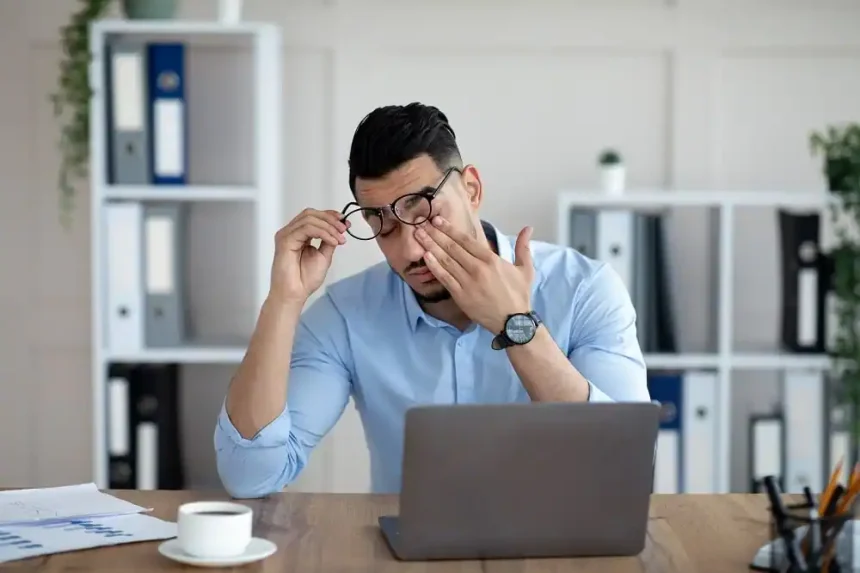
In today’s world, screens are essential components of all regular activities. People maintain their gaze on bright screens of phones, laptops and televisions. Excessive screen time without breaks leads to eye strain, headaches and results in visual impairment. Device users experience decreased blinking rates which results in long-term discomfort. This habit slowly affects eye comfort and makes focusing harder. The practice of taking short breaks together with screen brightness adjustments enables people to reduce eye strain while achieving better visual acuity.
Early Signs You Should Not Ignore
The eyes require only minimal changes to display their first warning sign about an upcoming major health issue. People tend to overlook their discomfort because they believe it will pass, but they need to treat their condition to avoid further issues. The typical problems people face include symptoms of eye redness, irritation and their inability to tolerate bright lights.
People with dry eye symptoms experience symptoms which include itching, burning and a sensation of something stuck in their eyes. People need to pay attention to these signs because they appear from extended screen time together with insufficient sleep and environmental conditions.
Poor Lighting While Reading or Studying
Your eyes sustain hidden harm from reading or studying in bad lighting conditions which persist through time. Your eyes need to work harder in dim light conditions, while bright light causes glare and discomfort. The two scenarios produce excess pressure which results in exhaustion.
Students and workers create this nighttime behavior, which they commonly overlook. The use of balanced lighting allows eyes to remain relaxed while reading extends through long periods. Proper lighting conditions enhance concentration while stopping people from squinting their eyes.
Skipping Eye Breaks During Work or Study
People who concentrate on their work forget to take eye breaks. People who concentrate on close-up work without interruption will experience both fatigue and decreased ability to focus. The 20-20-20 rule provides an easy solution which requires users to take breaks after 20 minutes to view objects that are 20 feet away for 20 seconds.
The eye muscles need this period because it provides them with time to relax. People who work without taking breaks will experience initial comfort, but their visual ability to perform daily tasks will decrease as time passes.
Common Daily Problems Linked to Vision
People who develop daily health problems which result from their bad eye habits. People experience allergies, dryness, and irritation as they fail to recognize their underlying causes. Prolonged exposure to screens, dust and pollution increases the development of sensitivity. People who experience Eye Conditions develop their disease through their continuous eye strain and their failure to receive necessary treatment.
The conditions cause people to experience double vision and they struggle to maintain focus on objects for extended times. The ability to understand daily routines which impact eye health allows you to improve your ability to prevent serious eye problems from occurring in the future.
Lack of Proper Sleep and Eye Recovery
Sleep holds vital importance for sustaining optimal eye health. Eye recovery from daily strain requires sufficient rest because lack of sleep prevents this process. This condition results in puffiness, redness, and the appearance of tiredness. The eyes conduct their self-repair process during sleep through natural mechanisms.
The body experiences increased daytime discomfort because of sleep interruptions caused by bad sleep patterns. The establishment of consistent sleep times protects your eyes from fatigue while decreasing the impact of daily activities on your eyes.
Not Protecting Eyes in Everyday Environments
Many people think eye protection is only needed outdoors but indoor environments can also affect eye health. The combination of dust particles, air conditioning systems, and prolonged screen time creates eye irritation. People can improve their eye health through basic practices which include maintaining clean spaces and reducing light glare from artificial sources. The proper use of protective eyewear together with good hygiene practices helps people avoid experiencing eye strain. Minor modifications to people’s workspaces will lead to major enhancements in their eye comfort throughout the day.
Final Thoughts
Eye health depends on daily routines which people typically overlook. The combination of eye rest, better lighting with proper sleep, and reduced screen time brings significant benefits. Long-term discomfort arises when people disregard initial symptoms and maintain their destructive behavior. You can secure your eyesight through small consistent changes which will help you maintain healthy vision for many years.