
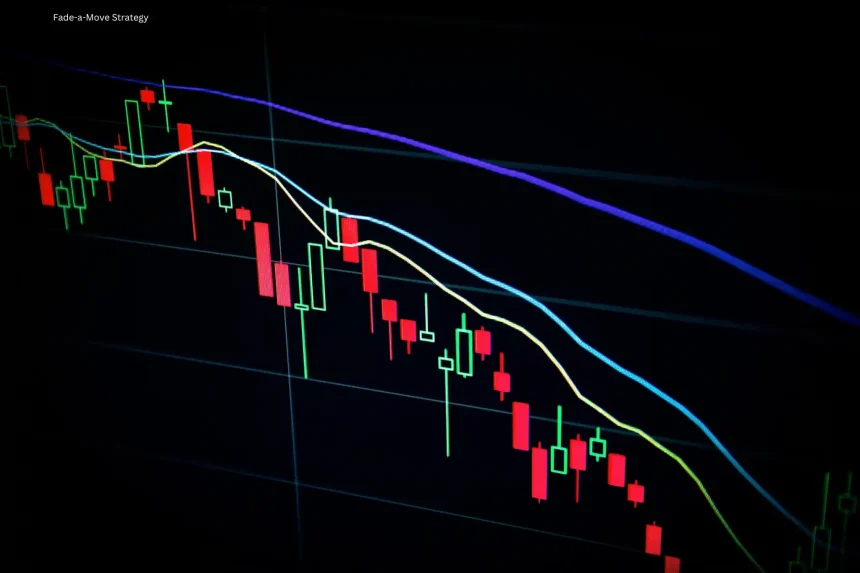
The “Fade A Move” strategy in Forex trading is a technique where traders attempt to profit from countertrend movements. In other words, when the market makes a sharp move in one direction, traders using this strategy will look to enter positions in the opposite direction, expecting a short-term reversal.
Here’s how the Fade A Move strategy typically works.
Identifying a Strong Move
Traders using the fade-a-move strategy first identify a strong and sudden move in the market. This could be a significant spike or drop in price resulting from news events, economic data releases, or other market-moving factors.
Waiting for Exhaustion
Instead of following the crowd and trading in the direction of the initial move, fade traders wait for signs of exhaustion or overextension in the market. This could be indicated by overbought or oversold conditions on technical indicators like the Relative Strength Index (RSI), or by observing price action patterns such as long wicks or doji candles.
A doji candlestick is a significant candlestick pattern commonly used in technical analysis to signal potential reversals or indecision in the market. It forms when the opening and closing prices of an asset are very close to each other, resulting in a candlestick with a very small or non-existent body and long wicks/shadows. Essentially, a doji candlestick represents a period where the market opens and closes at or near the same price, indicating a tug-of-war between buyers and sellers.
Entry Point
Once they believe the initial momentum has run its course, fade traders enter positions in the opposite direction of the initial move. They aim to capitalise on the anticipated retracement or reversal in price.
Risk Management
As with any trading strategy, risk management is crucial. Traders using the fade-a-move strategy typically set stop-loss orders to limit potential losses if the market continues to move against them. Additionally, they may use profit targets to take profits once the market retraces to a certain level.
Monitoring and Adjusting
After entering a fade trade, traders closely monitor the market for signs that their thesis is playing out or failing. They may adjust their stop-loss orders or take profits early if the market dynamics change.
While the Fade-a-Move trading strategy holds potential for profitability, it carries inherent risks, including:
Trend Continuation
There’s a risk that instead of reversing, the market may persist in the direction of the existing trend, disregarding the anticipated retracement.
Extended Trends
Markets can defy expectations by remaining in overbought or oversold conditions for longer durations, prolonging trends beyond what traders anticipate.
Market Volatility
High levels of volatility amplify the dangers of fade trading. Swift price swings and abrupt market movements can trigger stop-loss orders or result in slippage, causing traders to incur larger-than-expected losses when fading a move.
It’s important to note that the fade-a-move strategy can be risky, as it involves trading against the prevailing market direction. Therefore, traders need to have a solid understanding of market dynamics, technical analysis, and risk management techniques before attempting to use this strategy. Additionally, it’s advisable to practice on a demo account or with small position sizes until comfortable with the approach.
