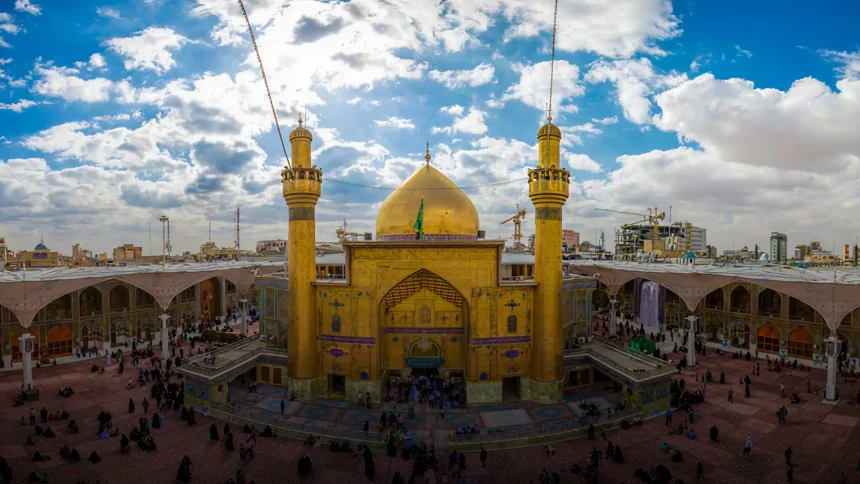
Najaf is not just a city people visit, it is a place many Muslims dream of reaching at least once in their lifetime. Located in southern Iraq, Najaf holds deep spiritual importance as the home of the shrine of Imam Ali (AS), one of the most beloved and respected figures in Islam. Every year, millions of pilgrims travel here from Pakistan, Iran, India, Lebanon, and dozens of other countries through well-planned Iraq Ziyarat tours to experience its spiritual atmosphere.
Many come for the first time with no idea what to expect, and most return home deeply moved. Going without any preparation can leave you feeling lost or rushing through places that deserve more of your time.
What Is the Spiritual Significance of Najaf for Pilgrims?
Najaf is home to the shrine of Imam Ali ibn Abi Talib (AS), the cousin of Prophet Muhammad (PBUH), his son-in-law, and one of the most important figures in Islamic history. Both Shia and Sunni Muslims visit Najaf to pay their respects and offer prayers at his shrine. The city sits in southern Iraq, just a short drive from the holy city of Karbala.
Imam Ali (AS) holds one of the highest positions in Islamic scholarship, justice, and spiritual guidance. His shrine, called Haram Imam Ali, is among the most sacred religious sites in the world. Muslims believe that visiting his grave brings blessings, forgiveness of sins, and closeness to Allah. Pilgrims who enter the shrine for the first time often describe feeling an immediate sense of calm and peace.
What to Expect on Your First Ziyarat Trip
Before You Arrive
A Ziyarat trip is unlike any regular holiday, so your mindset and preparation matter a great deal. This journey is built on spiritual intention, and that intention should begin before you even board your flight. Most pilgrims arrive via Najaf International Airport, which operates regular flights for religious travellers year-round. Those coming from Baghdad or Karbala can also reach Najaf by road in a few hours.
At the Shrine
Seeing the golden dome of Haram Imam Ali for the first time is something most pilgrims never forget. The minarets rise high above the city skyline and are visible from a considerable distance as you approach. You will pass through security checks at multiple entry points, so only carry the essentials in a small bag. Always remove your shoes before entering the prayer halls and place them carefully in the provided bags.
Once inside, you will be surrounded by thousands of pilgrims praying, weeping, and seeking closeness to Imam Ali (AS). Move slowly, stay close to your group, and agree on a fixed meeting point before entering the busy inner areas. The zarih, the golden screen around the grave, is where pilgrims stand to offer their Ziyarat and prayers. Read your Ziyarat dua from a printed booklet or a trusted Islamic app on your phone.
Best Places to Visit in Najaf
Najaf has many important religious sites beyond the main shrine, each with its own spiritual weight. Plan to spend at least two to three full days in the city so you can visit each place properly.
Haram Imam Ali (AS)
The shrine of Imam Ali (AS) is the heart of Najaf and the reason every pilgrim makes this journey. The complex is vast, beautifully decorated with mirror tiles, and open for visitors throughout most of the day and night. Its golden dome has been restored and expanded many times across centuries of Islamic history. Try to spend extended time here, particularly during the Fajr prayer and after Isha in the evening.
Wadi-us-Salaam Cemetery
This is one of the largest cemeteries in the world, with millions of graves spanning over 1,500 years. Prophet Hud and Prophet Salih are believed to be buried here alongside countless other souls. Families travel long distances to bury their loved ones near Imam Ali (AS), and walking through the graves while reciting prayers for the deceased is deeply humbling.
Masjid al-Hannana
This mosque marks the spot where the body of Imam Ali (AS) is believed to have rested before burial. A pillar inside is said to have groaned with grief when the Imam’s body passed by. It is smaller and quieter than the main shrine, which makes it a good place for personal prayer and reflection.
Masjid al-Sahla
Masjid al-Sahla is one of the most historically important mosques in Islam and one of the largest in the Najaf region. It is linked to Prophet Ibrahim, Prophet Idris, and Prophet al-Khidr through Islamic tradition. Tuesday nights are considered especially blessed, with large gatherings for prayer and supplication. It is also believed that Imam Mahdi (AS) will reappear from this mosque when Allah decrees his return.
Masjid al-Kufa
Masjid al-Kufa sits roughly fifteen minutes by car from the centre of Najaf and is well worth the short journey. It is the mosque where Imam Ali (AS) led prayers during his time as caliph, and also the place where he was struck by the poisoned sword of Ibn Muljam while standing in Fajr prayer. Visiting it gives pilgrims a direct connection to one of the most heart-wrenching moments in Islamic history.
House of Imam Ali (AS) in Kufa
Just steps away from Masjid al-Kufa is the house believed to be where Imam Ali (AS) lived during his years as caliph. It has been preserved as a small ziyarat site and is easy to visit as part of the same trip to Kufa. The space is quiet and intimate, away from the larger crowds at the main shrine. Many first-time pilgrims skip this site, but those who visit say it stays with them long after they return home.
Practical Tips for First-Time Pilgrims
Best Time to Visit
October to March offers lower temperatures and more comfortable conditions for walking between sites. The summer months, June to August, regularly exceed 45°C, making outdoor movement exhausting. The Arbaeen period draws tens of millions of visitors, making it the most spiritually intense but heavily crowded time to go. The last ten nights of Ramadan bring massive prayer gatherings and a deeply charged atmosphere at the shrines.
Health and Safety
Agree on a fixed meeting point with your group before entering the crowded shrine areas. Check the latest Iraqi visa requirements early, as they vary by nationality and can change without much notice. Get a travel insurance policy that covers medical emergencies abroad before you depart.
Conclusion
Your first Ziyarat trip to Najaf is more than travel, it is a spiritual journey that leaves a lasting impact on the heart. From the shrine of Imam Ali (AS) to Wadi-us-Salaam and the historic mosques of Kufa, every place carries deep meaning and reflection. Visiting with sincere intention, patience, and proper preparation makes the experience far more meaningful.
Planning your visa, accommodation, transport, and travel dates in advance helps you stay focused on worship instead of stress. When everything is arranged well, your Ziyarat becomes a peaceful, memorable, and truly life-changing experience.