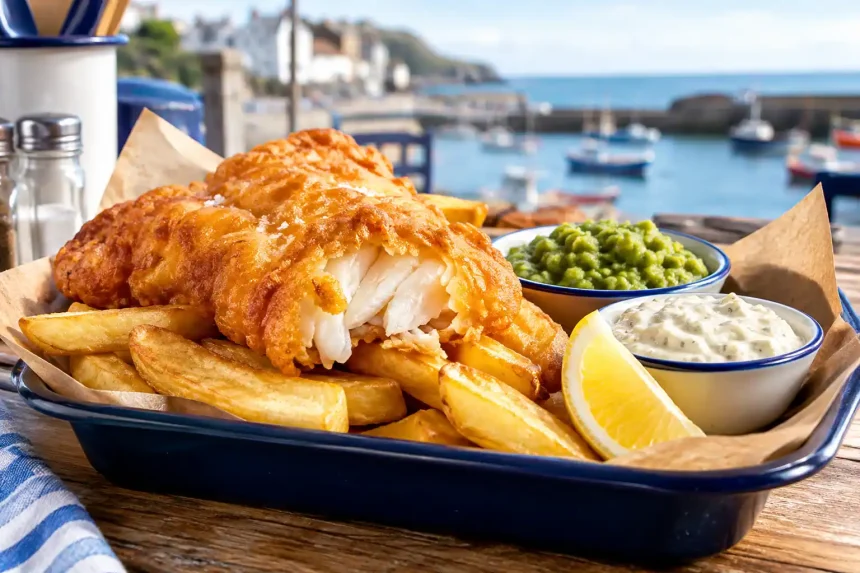
Few meals are as closely tied to British life as fish and chips: hot, salty and eaten from paper on a sea wall or in the car on the way home. Behind that familiar parcel is a story of immigration, new railways, trawler fleets and wartime politics. It is also a story that historians still argue about.
This guide covers what fish and chips is, where it came from, which fish work best, and how to make a decent version at home.
What Is Fish and Chips?
Fish and chips is fried fish in batter, served with thick-cut chips. The fish is usually white and flaky, the batter crisp and golden, and the chips fluffy inside. Salt and malt vinegar are the traditional seasoning.
Traditional British fish and chips is a takeaway meal at heart. Chip shops, known as “chippies”, have long served it wrapped in paper. In Scotland the dish is often called a “fish supper”.
British Fish and Chips History: Where Did It Come From?
The history of fish and chips is a combination of two older foods, and nobody can say for certain who first put them together.
Fried Fish Came First
Royal Museums Greenwich notes that fried fish was introduced and sold in Britain by Jewish immigrants in the East End of London. It was often described as fish “fried in the Jewish fashion”, and the popular chip-shop version grew out of that tradition.
The Rise of the Chip
Fried potatoes have a long history in Britain. The earliest known recipe for something close to chips appears in William Kitchiner’s cookbook The Cook’s Oracle, first published in 1817, according to Royal Museums Greenwich. The museum also points out that chips took off in the industrial north, particularly Lancashire and Yorkshire.
Malin or Lees? A Disputed Origin
Two names dominate the debate over who opened the first fish and chip shop.
Joseph Malin in East London
Joseph Malin is credited with opening a shop in Bow, East London, around 1860. He is described as a Jewish immigrant.
John Lees in Lancashire
John Lees is said to have sold fish and chips from a wooden hut at Mossley market, near Oldham in Lancashire, in 1863.
So Who Was First?
Both claims have their supporters. The National Federation of Fish Friers presented a plaque to Malin’s, calling it the world’s first fish and chip shop, while a blue plaque at Oldham’s Tommyfield Market backs the northern claim. It is also worth remembering that fried fish and chips existed separately for at least 50 years before the 1860s, so an earlier pairing cannot be ruled out. The safest conclusion is that the first shops appeared in the 1860s, and that the exact “first” is unproven.
Trawlers, Trains and the Working Classes
The dish spread because of how Britain was changing. Its rise as a staple of working-class diets is attributed to the rapid growth of North Sea trawling and to railways linking ports with industrial cities in the second half of the 19th century. Fresh fish could suddenly reach crowded towns quickly and cheaply, and a hot, filling meal for a few pence found plenty of customers.
Two World Wars
The dish held a special place in wartime policy. Historian John Walton, author of Fish and Chips and the British Working Class, has said the government made safeguarding supplies a priority during the First World War, judging it important for morale on the home front. In the Second World War, fish and chips was one of the few foods not rationed, according to Royal Museums Greenwich. In 1937, George Orwell listed it among the comforts that helped keep the working classes content in The Road to Wigan Pier.
Traditional Ingredients
The classic recipe is short, which is why the quality of each part matters.
- Fish: a firm white fillet, usually cod or haddock
- Batter: flour, a liquid (water, beer or sparkling water) and seasoning
- Potatoes: a floury variety, cut thick
- Frying medium: historically dripping or lard in many shops, though vegetable oils are now common
- Seasoning: salt and malt vinegar
The Best Fish for Fish and Chips
The best fish for fish and chips has firm, white flesh that holds together under hot oil and flakes cleanly.
Cod and Haddock
These two are the stars. A report from Seafish, the UK’s public body for the seafood industry, found that cod, haddock, scampi and fishcakes are the most common seafood items on chip-shop menus. Haddock dominates in Scotland and parts of Yorkshire and the Midlands, and cod is the most common choice elsewhere.
Cod
Cod has large, soft flakes and a mild flavour.
Haddock
Haddock is slightly sweeter and more distinctive.
Worthwhile Alternatives
Seafish has highlighted plaice, skate and pollock as lesser-known options that offer excellent eating quality. Hake is another good choice for frying. Thicker fillets suit battering best because they stay moist while the coating crisps.
Fresh, Frozen and Sustainable
Frozen fish is not a compromise. Many chip shops use fillets frozen at sea, and for home cooks it is often the more practical option. Defrost it fully in the fridge and pat it very dry before battering. If sustainability matters to you, look for the Marine Stewardship Council (MSC) blue label, which the MSC uses to show fish has come from certified fisheries.
How to Make Fish and Chips at Home
If you want to know how to make fish and chips that come close to the takeaway, these principles matter more than any exact recipe. Take care with hot oil: never leave it unattended, never overfill the pan, and keep a lid nearby.
Achieving Crispy Batter
Start with Dry Fish
Moisture on the surface makes the batter slide off. Pat the fish dry, then dust lightly with flour.
Keep the Batter Cold
Mix it just before frying and use ice-cold liquid. Sparkling water or beer adds bubbles that help produce a lighter coating. Don’t overmix: a few lumps are fine, and over-whisking develops gluten and makes the batter tougher.
Control the Oil Temperature
Around 180°C is a sensible target. Too cool and the batter turns greasy; too hot and it browns before the fish cooks through. Fry in small batches so the temperature doesn’t drop, then drain on a wire rack rather than kitchen paper to keep the underside crisp.
Preparing Good-Quality Chips
Choose and Prepare the Potatoes
Maris Piper is a popular British choice for chips because it is floury. Rinse the cut chips in cold water to remove surface starch, then dry them thoroughly.
Cook Them Twice
Fry first at a lower temperature, around 130–140°C, until soft but pale. Rest them, then fry again at about 180–190°C until golden and crisp. Salt straight away, while they are still hot and glistening.
Classic Accompaniments
Chips and fish rarely arrive alone. Common additions include:
- Mushy peas
- Tartare sauce
- Curry sauce, especially popular in many chip shops
- Pickled onions, gherkins and pickled eggs
- A wedge of lemon
- Bread and butter, for a chip butty
In parts of northern England, the crispy batter fragments from the fryer are sometimes served as “scraps” or “bits”.
Regional Variations
The basic dish is consistent, but the details change across the country. As the Seafish data shows, the haddock-versus-cod divide follows regional lines. Scottish shops often sell a “fish supper”, and local preferences for sauces, sides and pickles vary from town to town. If you are travelling, asking what locals order is usually the quickest route to the regional favourite.
Fish and Chips in Modern Britain
Fish and chips remains a widely recognised national dish. A Seafish report published in June 2026 counted around 7,210 fish and chip shops across the UK. It also noted that many businesses are under pressure from rising costs for fish, potatoes, oil and energy, and that many have broadened their menus beyond the traditional offering.
The dish is no longer only a takeaway. Sit-down restaurants, gastropubs and independent chippies now serve it, often with an emphasis on provenance and sustainable sourcing. The National Federation of Fish Friers also runs an MSC group certificate scheme to help more shops demonstrate responsibly sourced seafood.
Conclusion
Fish and chips grew out of a mix of cultures, fishing technology and everyday economics. The details of who opened the first shop remain contested, but the broader picture is clear: Jewish fried fish, northern chip culture, trawling and rail transport combined in the 19th century to create a cheap, hot meal that Britain took to heart.
At home, the formula is simple: choose a firm white fish, keep the batter cold, dry everything well and cook the chips twice.
Frequently Asked Questions
Who invented fish and chips?
Nobody can say for certain. Joseph Malin is associated with a shop in Bow, East London, around 1860, and John Lees with a market hut in Mossley, Lancashire, in 1863. Both claims have supporters, and fried fish and chips existed separately long before.
What is the best fish for fish and chips?
Cod and haddock are the traditional choices. Plaice, pollock, hake and skate also work well. Choose firm, white fillets, and look for MSC certification if sustainability matters to you.
Is fish and chips really British?
It is closely associated with Britain, and the first shops opened here in the 19th century. Its roots, however, include fried fish brought by Jewish immigrants, so it is better seen as a British dish with international influences.
Why does my batter go soggy?
Common causes are wet fish, batter that is too warm, oil that is not hot enough, or draining the fried fish on paper instead of a rack. Dry the fish, use cold batter and keep the oil steady at around 180°C.
Is frozen fish acceptable for fish and chips?
Yes. Many chip shops use fillets frozen at sea. Defrost it fully and dry it thoroughly before battering.