When the time comes to sort out bedroom storage, most homeowners face the same decision: fitted or freestanding? It sounds simple, but the implications stretch well beyond aesthetics. Budget, practicality, property value, flexibility and long-term satisfaction all come into play. This guide breaks down the key differences so you can make an informed decision that you won’t regret.
The Case for Freestanding Wardrobes
Freestanding wardrobes have been the default choice for generations, and there are good reasons they’ve endured. They’re widely available, often less expensive upfront, and don’t require a specialist to install. If you’re renting, or you simply want something you can take with you when you move, freestanding furniture offers an obvious advantage.
Flat-pack options from major retailers put a wardrobe within almost any budget. Quality varies enormously, from solid hardwood pieces that will last decades to budget chipboard units that may begin to deteriorate within a few years.
However, freestanding wardrobes come with limitations. They rarely make efficient use of space — most are designed to standard dimensions rather than your room’s actual dimensions, leaving awkward gaps at the sides, tops and corners. They can feel bulky in smaller rooms, and their fixed interior configurations often fail to match how you actually store things.
The Case for Fitted Wardrobes
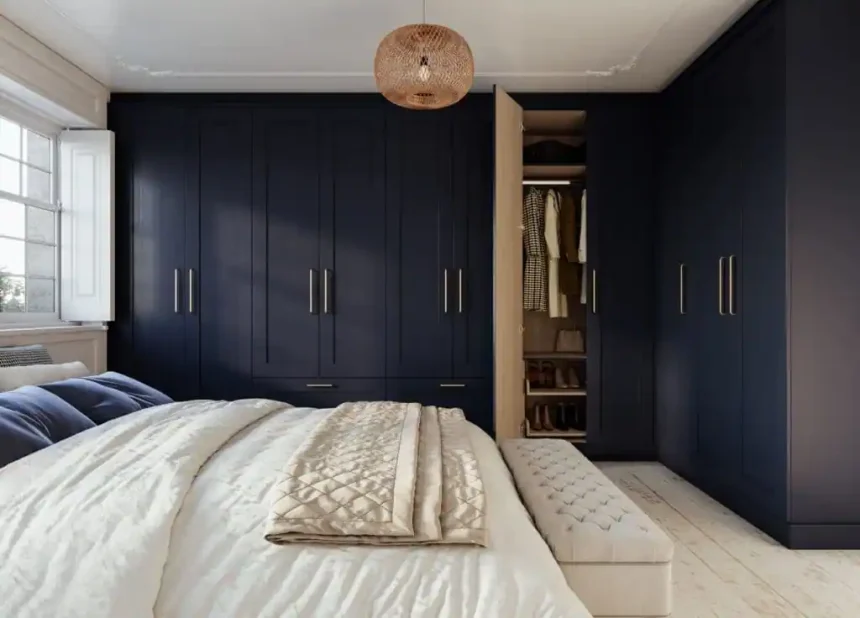
They make use of every available centimetre — floor to ceiling, wall to wall — eliminating dead space and creating a seamless, built-in look that feels considered and intentional.
Because they’re custom-made, you can specify exactly what goes inside: the balance of hanging rails, shelving, drawers, shoe storage and specialist fittings. You choose the door style, the finish, the hardware — everything is tailored to you. That means the result is genuinely useful in a way that off-the-shelf furniture rarely is.
The installation is more involved than carrying home a flat-pack, but the end result is a piece of furniture that becomes part of the room itself, rather than sitting in it.
Cost: Upfront vs. Long-Term
This is where the comparison gets interesting. Freestanding wardrobes often cost less upfront, particularly if you’re buying from a budget retailer. But the long-term picture looks different.
A quality fitted wardrobe is a permanent addition to your property. It doesn’t chip, peel or wobble after a few years. It won’t need replacing when hinges fail or panels warp. And because it’s fixed, it moves with the house — adding genuine value to the property rather than depreciating like a piece of portable furniture.
When you sell your home, estate agents and buyers respond positively to fitted storage. It’s one of the details that makes a bedroom feel finished and considered. Multiple surveys have shown that buyers are willing to pay more for properties with well-fitted bedrooms.
Space Efficiency
This is perhaps the most tangible difference between the two options. Take a standard bedroom wall and compare what each solution achieves.
A freestanding wardrobe will leave a gap above it (typically 30-50cm of unusable space), gaps at either side if the wall is wider than the unit, and will project further into the room than a fitted solution built into the wall plane. Over a typical bedroom, these losses add up to a significant amount of floor and cubic space.
A fitted wardrobe fills the entire wall. Ceiling height is used, corners are addressed, and the unit sits flush against the wall or within an alcove. The net gain in usable storage and floor space is often considerable — particularly important in bedrooms where every square metre matters.
Aesthetics and Room Cohesion
Freestanding furniture has its own aesthetic appeal — particularly antique or vintage pieces that bring character to a room. But for bedrooms designed to feel coherent and calm, fitted wardrobes win comfortably.
A fitted wardrobe disappears into the room in a way that freestanding furniture can’t. When door finishes, handles and interior lighting are chosen to complement the wider decor, the wardrobe becomes part of the architecture rather than a piece of furniture sitting within it. That creates bedrooms that feel genuinely designed rather than assembled from available parts.
Flexibility and Portability
Fitted wardrobes are, by definition, fixed. They’re built for the room they’re in, and leaving them behind when you move is part of the calculation. For homeowners with no immediate plans to move — or who view the wardrobe as an investment in the property — this is rarely a problem. For those who may move in the near term, it’s worth factoring into the decision.
Which Is Right for You?
The answer depends on your circumstances. If you’re renting, if budget is a primary constraint, or if you move frequently, a quality freestanding wardrobe is a perfectly sensible choice. Choose the best you can afford and treat it as a medium-term purchase.
If you own your home, plan to stay for a meaningful period and want the best possible use of your space, fitted is almost always the better long-term investment. The upfront cost is higher, but the return — in daily satisfaction, property value and longevity — typically justifies it many times over.
For homeowners ready to explore what’s possible, a good place to start is looking at a range of fitted wardrobes from a specialist who can advise on materials, style and configuration for your specific space.
Final Thoughts
Freestanding and fitted wardrobes both have their place. But for homeowners looking at the long game — better storage, better aesthetics, better property value and a bedroom that truly works — fitted wardrobes are the stronger investment. Get the design right and you’ll still be enjoying it twenty years from now.