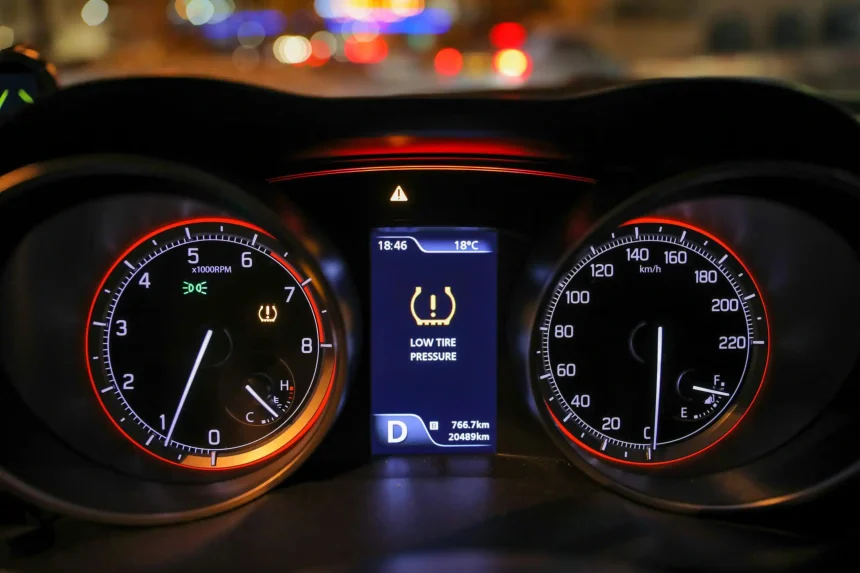
Why Your Tire Pressure Light Is Flashing
A flashing tire pressure light is more than a mild annoyance—it’s a warning that your Tire Pressure Monitoring System (TPMS) needs attention. While a steady TPMS light typically points to low tire pressure, a flashing light often indicates a sensor or system fault. Knowing the difference can save you time, money, and reduce safety risks.
Quick Takeaways
- Flashing generally = TPMS fault; solid = one or more tires are under-inflated.
- Check pressures first with a reliable gauge, then look for damage or air leaks.
- Extreme temperatures, dead TPMS batteries, wheel swaps, and recent service can all trigger flashing.
- You can usually drive short distances carefully, but fix the issue promptly to avoid hidden risks.
Flashing vs. Solid: What Your Dash Is Telling You
Solid TPMS Light
A steady light means at least one tire is below the recommended cold pressure (often 25% under spec). Inflate to the placard pressure on the driver’s door jamb—not the sidewall max. The light should switch off after driving a few minutes once pressures are corrected.
Flashing TPMS Light
If the light flashes for 60–90 seconds at startup and then stays on, the TPMS detects a fault. Common culprits include dead sensor batteries, failed sensors, damaged valve stems, mismatched wheels, or a system that needs relearning after tire rotation or replacement.
Top Causes of a Flashing Tire Pressure Light
1) Low or High Pressure Swings From Weather
- Rapid cold snaps can drop pressure ~1 psi for every 10°F decrease.
- Heat waves can push pressures over spec, confusing weak sensors.
- Seasonal changes may expose a slow leak or borderline sensor battery.
2) TPMS Sensor Battery Failure
- Built-in lithium cells typically last 5–10 years.
- When they die, the module can’t read one or more sensors, leading to a flashing indicator.
- Replacement requires breaking the tire bead to swap the sensor.
3) Sensor Damage or Corrosion
- Aluminum valve stems can seize, crack, or corrode (especially with road salt).
- Tire service, impacts with curbs, or over-tightening valve cores can break sensors.
4) Recent Tire or Wheel Work
- Rotations, new tires, or wheel swaps may require a TPMS relearn.
- Aftermarket wheels or winter sets lacking compatible sensors will trigger faults.
5) Module or Antenna Communication Issues
- Faulty TPMS receiver, wiring, or wheel-well antennas can block data from sensors.
- Less common, but more likely on older vehicles or those with prior electrical work.
6) Spare Tire or Mixed Sets
- Some SUVs and trucks include a TPMS sensor in the full-size spare—if underinflated or missing, the system can fault.
- Mixing sensor types or frequencies between sets can confuse the module.
Step-by-Step: What to Do When the Light Flashes
Step 1: Verify Cold Tire Pressures
- Park for at least 3 hours; check with a quality gauge.
- Use the door-jamb placard (not the sidewall) for target psi.
- Adjust all four tires (and the full-size spare, if equipped).
Step 2: Inspect for Damage and Leaks
- Look for nails, cuts, bulges, or valve-stem cracks.
- Spray soapy water around tread, bead, and valve; bubbles indicate leaks.
Step 3: Power Cycle and Drive
- Start the car and drive 5–10 minutes over 20–30 mph.
- If the light stops flashing and turns off, the issue was pressure-related.
Step 4: Relearn or Reset the TPMS
- Many vehicles auto-relearn after a few minutes of straight driving.
- Others require a dash-menu reset, a button, or a sequence in the owner’s manual.
- Some makes need a TPMS tool to ping sensors and assign positions.
Step 5: Scan for TPMS Fault Codes
- A tire shop or parts store can read TPMS DTCs with a scan tool.
- Codes can pinpoint a dead sensor battery, missing sensor ID, or receiver fault.
Step 6: Replace Faulty Sensors or Components
- Replace sensors in sets if multiple are aging to avoid repeat labor.
- Use new service kits (seals, cores, caps) to prevent leaks and corrosion.
Can You Drive With a Flashing TPMS Light?
Short Answer
Yes, for short distances—but use extra caution. A flashing light means the system can’t reliably warn you of low pressure, increasing the risk of a blowout or poor handling if a tire loses air.
Best Practices
- Keep speeds moderate; avoid heavy loads and long highway trips until fixed.
- Manually check tire pressures more frequently.
- Address leaks or sensor faults within days, not weeks.
Preventing Future TPMS Alerts
Maintain Consistent Pressures
- Check monthly and before road trips; adjust for seasonal swings.
- Use metal valve caps with seals; avoid overtightening.
Service Smart
- Ask shops to perform a TPMS relearn after rotations or new tires.
- Replace aging sensors proactively around the 7–10 year mark.
- Keep sensor IDs documented when swapping wheel sets.
Store and Swap Carefully
- For winter/summer wheels, ensure each set has compatible, programmed sensors.
- Store wheels clean and dry to reduce stem corrosion.
Special Cases and FAQs
Why does the light flash only on cold mornings?
Cold air contracts, lowering pressure. If a tire is near the threshold, the module may detect under-inflation or intermittent sensor communication until the tires warm up.
The light still flashes after topping up—now what?
There’s likely a dead sensor battery, damaged sensor, or a missing relearn. A TPMS scan tool can confirm the culprit in minutes.
Do I need OEM sensors?
Not always. Quality aftermarket sensors that match your vehicle’s frequency and protocol work well. Some are cloneable to match your original IDs for seamless swaps.
Will disconnecting the battery reset TPMS?
No. TPMS stores sensor IDs in non-volatile memory. Battery pulls won’t fix sensor or receiver faults.
Bottom Line
A flashing tire pressure light flags a system problem, not just low air. Start with a precise pressure check, inspect for leaks, and then verify TPMS sensor health and relearn status. Fixing the root cause restores a critical safety net—so your tires, handling, and fuel economy stay in the safe zone.