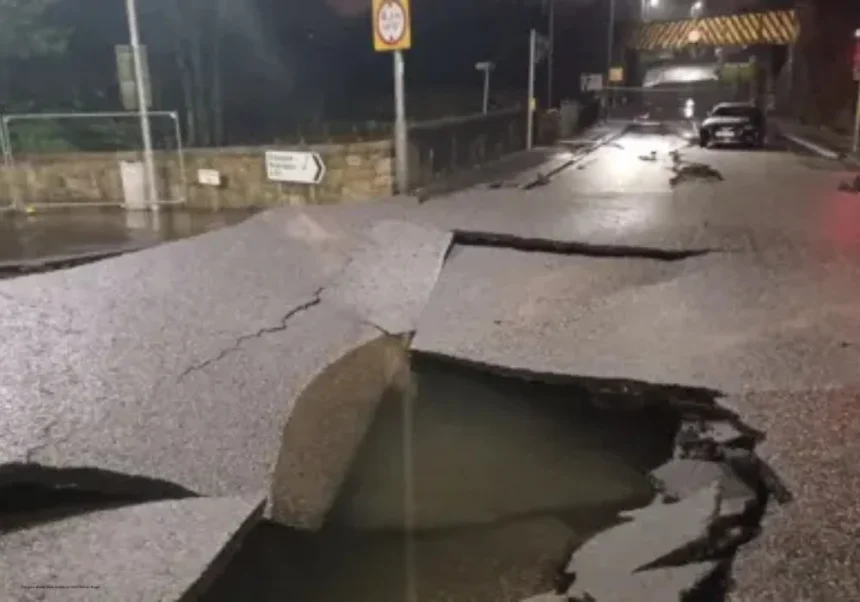
A severe water main break on Shettleston Road in Glasgow’s East End recently caused widespread disruption — flooding streets, cutting water supply, and snarling traffic. While utility crews worked to repair the damage, the incident revealed vulnerabilities in aging infrastructure and underlined the importance of preparedness in urban systems.
The Incident: What Happened on Shettleston Road
In the early morning hours, a major underground water pipe ruptured beneath Shettleston Road, between the junctions of Old Shettleston Road and Fernan Street (and the stretch toward Westmuir to Hart Street). This break led to a torrent of water emerging through the road surface, flooding adjacent paths and lanes, and forcing authorities to close key sections of the road to ensure public safety.
As water spilled outward, neighboring properties and road surfaces saw flooding, and the local water network faced pressure loss. Residents in the G32 postcode area began reporting either no water or very low pressure, along with discolored water. Businesses along the corridor also felt the impact, as access was interrupted and water-dependent services were disrupted.
Immediate Effects on Residents and Businesses
Water Supply Interruptions
Many households lost access to clean running water, experienced low water pressure, or received cloudy or brown-tinged water. These conditions made simple daily tasks — cooking, washing, even flushing toilets — more difficult.
Vulnerable groups like the elderly, families with young children, and those with health needs were especially affected, as their dependency on continuous water access is more acute.
Traffic Disruptions and Road Closures
Shettleston Road is a major arterial route. With portions shut down, traffic was diverted onto smaller side streets like Westmuir Street, causing congestion and longer commute times. Public transport routes had to be altered, and many drivers found their journeys delayed.
The road closures extended through the morning and midday periods, compounding frustrations for commuters trying to navigate around the affected area.
Business Impacts
Shops, cafés, laundromats, and other water-reliant businesses along the street suffered. Reduced foot traffic and operational constraints forced many to close temporarily or limit services. The downtime represented lost revenue and extra costs for cleanup or repairs.
Some businesses reported water ingress into basements or low-lying floors, adding property damage to the list of concerns.
Response and Repair Efforts
Emergency Measures
Scottish Water crews and municipal workers rapidly mobilized to isolate the broken section, block further flooding, and divert water flows via alternate valves in the network. Barriers were erected around the affected area to protect pedestrians and prevent additional damage.
Traffic management teams established detours and coordinated with local authorities to minimize congestion and provide safe alternative routes.
Repair and Restoration
Crews excavated the roadway to access the ruptured pipe, removed damaged portions, and installed replacement segments. Once the new section was connected, the pipeline was tested for leaks and pressure stability before restoring full supply.
In many instances, restoring water to households came before full road reinstatement. While water flows could resume, road surfaces, sidewalks, and pavements needed repair, which continued for days after the break.
Officials announced advisory statements telling residents to run their cold kitchen tap at low flow until water cleared (to remove sediment) and to avoid using other taps or appliances until restoration was complete.
Underlying Causes and Contributing Factors
Aging Infrastructure
Many of Glasgow’s water mains—especially in older districts—are decades old and susceptible to wear, corrosion, and fatigue. The break on Shettleston Road appears to have been tied primarily to infrastructure aging that reached a critical failure point.
Pressure Surges & Environmental Stress
Sudden changes in water pressure, ground shifts, or subsurface movement can strain old pipes. Weather events, soil shifts, or nearby construction may have exacerbated weaknesses in the network.
Lack of Preventive Upgrades
While reactive repairs can restore service temporarily, frequent breaks like this highlight the need for preventive replacement, systematic monitoring, and proactive maintenance of water systems before breakdowns occur.
Broader Impacts & Lessons Learned
Urban Resilience Exposed
This incident emphasized how a single pipeline failure can ripple through a city — affecting water, traffic, commerce, and daily life. For older urban areas, resilience must include redundancy, monitoring, and rapid response capability.
Communication and Public Trust
Transparent and timely updates by Scottish Water and local council authorities helped residents manage expectations, plan ahead, and take precautions. Messaging about water quality, restoration estimates, and safety instructions proved vital.
Need for Infrastructure Investment
To avoid repeated incidents, the utility and city planners must invest in replacing aging pipelines, installing smart sensors for early detection, and reinforcing pressure regulation systems.
What Residents Can Do During a Break
- Store bottled water in preparation.
- Limit non-essential water use.
- Run your cold kitchen tap slowly until it runs clear if water returns discolored.
- Avoid using washing machines, dishwashers, or hot taps until supply stabilizes.
- Stay updated via local announcements.
- Report leaks or damage promptly.
Conclusion
The Glasgow water main break on Shettleston Road was more than just a local disruption — it was a stark reminder that infrastructure under our feet is critical and brittle. While emergency repairs restored water supply, the incident revealed gaps in aging systems and the importance of proactive maintenance.
Going forward, Glasgow’s authorities and utilities will need to lean into modernization, resilience planning, and community communication to prevent such breaks and better protect residents from their consequences.
For new latest blogs visit ventsmagazine.