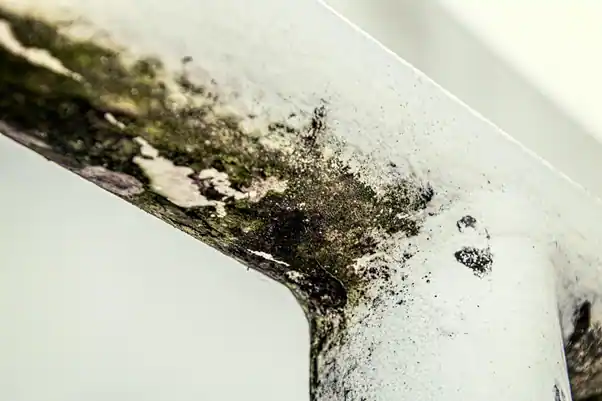
Mould is a common problem in many households, but that doesn’t mean it should be left untreated. Sometimes it’s a quick fix, other times the mould you see is a warning sign of a bigger problem.
If you’re trying to tackle your home’s mould problem, here’s why it could be happening, and how to get rid of it.
Why do we get mould in our home?
Weather
Across the UK, mould is a familiar problem in many homes. Largely, this is due to the wet weather we famously experience for much of the year. Wet weather makes the air humid and can cause moisture in your home to build.
Leaky housing
Homes in Britain are some of the oldest to exist and still be used. This can result in unsound structures and leaks. So, when heavy rainfall occurs, rainwater can get inside and cause mould. Older homes may also be poorly ventilated, trapping moist air and contributing to mould growth.
Home activity
Long showers and boiling water for cooking also creates warm air. And when this warm, wet air hits a cold surface, like your home’s windows, condensation happens. Combine that with the lack of ventilation, and this also causes mould.
How to manage mould
Managing mould successfully depends on how bad the mould in your home is.
Light spots of mould can be dealt with by yourself, but in more extreme cases, calling a professional is necessary.
Inhaling mould is a health risk, so no matter how little there is, all mould should be tackled immediately.
Cleaning
Before beginning to clean, open any windows for better air ventilation, and wear protective gear, like rubber gloves and a face mask.
You should avoid using a dry cloth as this just disturbs the mould spores, causing them to spread. Instead, use a specialised mould spray or a white vinegar mix.
When using a mould spray, the instructions on the bottle should be followed precisely.
If you’re opting for the white vinegar mix, combine the white vinegar with equal parts water, spray on the affected area, and leave alone for an hour. After this time, use a damp cloth to wipe down the wall.
Painting
After cleaning mould off the walls or surfaces it has grown on, you can paint over the affected area. But this should be done with caution.
Anti-mould paints don’t prevent moisture in the walls, they prevent mould growth. This means without proper ventilation, especially in homes with older brick and stone, moisture becomes trapped again. Although mould may not be growing, the air quality and structural integrity of your home is still at risk.
Your walls need to breathe. So, when buying mould paint, look for one that’s breathable and encourages ventilation. This prevents mould and keeps your air healthy.
Proper ventilation
Improving your home’s ventilation, removes excess moisture from the air, reducing condensation and mould growth. You can achieve better air ventilation in your house by:
- Keeping trickle vents open all the time.
- Placing a dehumidifier in affected spaces.
- Using extractor fans when cooking or washing.
- Opening windows regularly.
Professional mould removal
Cleaning, painting and improved ventilation are solutions to small areas of mould that’s confined to one room. If your home has large patches of mould (more than a meter squared) in multiple rooms, you need to arrange for a professional mould removal.
Living with mould poses health risks that can escalate if not dealt with properly and thoroughly. Investing in proper treatment is necessary when a mould infestation spirals out of control.
Signs of a bigger problem
Serious mould infestations are usually signs of a bigger problem, like faulty plumbing and a poor heating system.
Faulty plumbing
Leaky pipes, slow drips and slow drainage all foster a great environment for mould growth. Particularly if mould is growing in your bathroom or kitchen, faulty plumbing could be to blame.
Poor heating
Good heating prevents condensation, reducing mould growth. Because warm air holds more moisture than cold air, when a home is underheated, moisture in the air turns into liquid when hitting cold walls and windows.
When to call a professional
Because the pipes are hidden, it can be difficult to spot plumbing and heating problems yourself. But if mould is becoming a recurring problem for you, the cause may be one of the above.
Searching for plumbing and heating near me and calling an expert can tackle the cause at its roots, preventing future mould growth.
Final thoughts
Living in the UK, mould is a common problem, especially in the colder, wetter months. But keeping on top of it protects your household’s health and your home’s appearance.
While small spots of mould are straightforward to deal with, large infestations should be dealt with professionally. And if the mould keeps coming back, it’s time to look at possible causes hidden in your home’s structure.