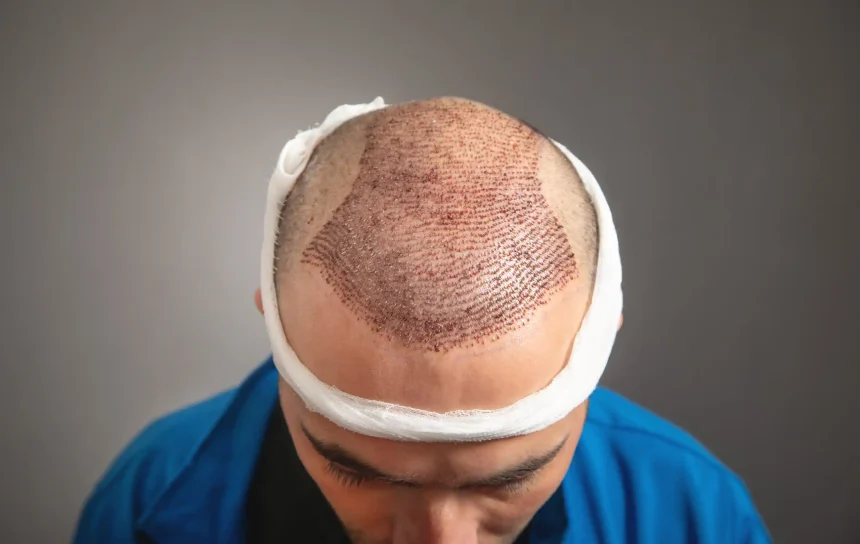
Hair transplant prices vary more widely between countries than many other elective medical procedures. A treatment plan that may cost several thousand dollars in Istanbul can reach five figures in South Florida, while Mexico, Brazil and Thailand often occupy different positions between those two ends of the market.
The difference is not simply a question of one country charging more for the same procedure.
Hair restoration pricing reflects local medical salaries, clinic operating costs, taxation, facility expenses, technique, graft requirements and the services included in a treatment package. International patients also have to consider flights, accommodation, local transportation and the practical cost of returning for follow-up care.
As a result, the headline price rarely tells the full story.
Turkey, the United States, Mexico, Brazil and Thailand represent five useful examples of how dramatically hair transplant costs can differ across established aesthetic medicine markets.
What Determines the Price of a Hair Transplant?
The number of grafts remains one of the most important factors.
Someone with limited frontal recession may require a considerably smaller procedure than a patient seeking coverage across the frontal, mid-scalp and crown regions. More grafts generally mean longer extraction and implantation times, greater staffing requirements and a higher final cost.
Technique can also influence the quotation.
FUE, or Follicular Unit Extraction, involves removing individual follicular units from the donor area. DHI, or Direct Hair Implantation, commonly uses an implanter instrument during the placement stage. Unshaven procedures and other technically demanding variations can carry additional charges because of the time and precision involved.
Location has an equally significant effect.
A hair transplant clinic in Miami operates under a very different cost structure from one in Istanbul or Cancún. Property, medical staffing, insurance, administration and general operating expenses all affect the amount ultimately charged to the patient.
This explains why comparing only the number of grafts can be misleading.
Hair Transplant Prices in Turkey
Turkey continues to sit toward the lower end of the international hair transplant price range.
Current published comparisons place hair transplant Turkey cost at approximately $1,500 to $4,000, although more complex treatments and DHI procedures can move beyond the lower part of this range.
Turkey’s pricing structure is particularly interesting because international hair restoration developed there around package-based medical tourism.
A quotation may cover considerably more than surgery. Depending on the clinic and package, services can include airport transfers, hotel accommodation, consultation, the procedure, medications, aftercare products and post-treatment communication.
This is important when comparing Turkey with countries where the quoted amount may relate mainly to the medical procedure.
A $3,000 package including accommodation and local transfers is not directly comparable with a $3,000 surgical fee that excludes both.
Operating expenses also help explain Turkey’s position. Medical staffing, commercial property and administrative costs are generally lower than in the United States, while Istanbul has developed a large concentration of clinics working specifically with international hair restoration patients. Price should still not replace medical evaluation. A lower quotation does not establish whether a provider, technique or graft plan is suitable for a particular patient.
Hair Transplant Prices in the United States
The United States is generally the most expensive of the five markets considered here.
In the Miami and South Florida market, published hair transplant prices commonly range from approximately $4,000 to $15,000. Individual graft pricing may run around $3 to $10 per graft at some clinics.
Technique-specific figures can climb higher within that range. Published Miami pricing places FUE procedures at roughly $4,000 to $12,000, while DHI may range between approximately $5,000 and $15,000. Sapphire FUE has been listed at around $6,000 to $14,000. Several factors contribute to the difference.
Medical salaries, facility costs, regulatory expenses, insurance and the wider cost of operating a healthcare business in the United States are substantially higher than in many medical tourism destinations.
For American patients, however, the price equation changes when travel is included.
Someone living in Florida may pay considerably more for surgery locally but avoid international airfare, overseas accommodation and the time associated with traveling for treatment.
Local care can also make in-person follow-up more practical.
This is why the most expensive procedure price does not necessarily translate into the least practical option for every patient.
Hair Transplant Prices in Mexico
Mexico has developed a strong position between U.S. pricing and lower-cost international destinations. Current market comparisons place hair transplantation in Mexico at approximately $2,000 to $6,000, although individual quotes vary according to technique, graft requirements and clinic. Cancún has become one of the locations serving international hair restoration patients, particularly those arriving from the United States and other parts of the Americas.
The geographic advantage is obvious.
A patient travelling from Texas, Florida or another southern U.S. state can generally reach Mexico far more easily than Istanbul or Southeast Asia.
That can create a middle-ground cost model. The medical quotation may be lower than a comparable procedure in the United States, while airfare and travel time may remain substantially below those associated with a trip to Turkey.
Packages can also affect the calculation. Some Mexican hair restoration providers combine the procedure with accommodation, transfers, medications or aftercare. Others quote these items separately. Patients should therefore ask for a written breakdown before comparing two prices.
Hair Transplant Prices in Brazil
Brazil represents another large and established aesthetic medicine market.
São Paulo pricing shows particularly wide variation.
A market guide published by a São Paulo hair transplant physician places procedures at approximately R$8,000 to R$45,000, depending on treatment complexity, technique and provider.
That wide range reflects the diversity of the Brazilian market.
Brazil has specialist clinics at multiple price levels, and the difference between a relatively straightforward FUE case and a complex procedure performed by a highly established specialist can be significant. Local currency also matters.
For Brazilian residents, comparing a domestic quotation with a procedure in Istanbul, Cancún or Miami requires more than converting the surgical fee into reais. Flights, accommodation, exchange-rate movements and time away from work all affect the final expenditure. For someone already living in São Paulo, local treatment may therefore make financial sense even when a foreign clinic advertises a lower procedure price. Brazil demonstrates particularly well why hair transplant cost and hair transplant travel cost should be treated as separate figures.
Hair Transplant Prices in Thailand
Thailand occupies the mid-range of the international market. Current published comparisons place typical hair transplant costs at approximately $3,000 to $8,000, depending on the provider and treatment plan. Phuket and Bangkok are both associated with international healthcare, although they serve somewhat different patient profiles.
For patients travelling from Australia, Singapore and other Asia-Pacific markets, Thailand can offer a significant geographic advantage over Turkey, Mexico or the United States. Package pricing also remains a feature of the Thai medical tourism model.
Hair restoration packages may combine the procedure with accommodation, airport transportation, medications and patient coordination. Some clinics confirm the final price only after photographs have been assessed and an approximate graft requirement has been established. A patient should therefore establish whether an advertised figure refers to surgery alone or to the complete treatment trip. That distinction can alter the comparison considerably.
One International Example: Esthetic Hair Across Five Countries
The differences between these markets can also be seen within individual international clinic networks.
Esthetic Hair is one example because the organization currently lists locations across the same five countries covered in this comparison: Turkey, the United States, Mexico, Brazil and Thailand.
Its network includes Istanbul, a South Florida branch operating from Boca Raton, Cancún, the São Paulo region and Phuket. The organization identifies Istanbul as the center of its international structure and treatment coordination.
This makes the network useful for understanding how geography affects pricing even when the broader organizational identity remains connected. A procedure offered within the same international network may still carry different costs in Florida, Turkey or Mexico because each clinic operates within its own local medical economy.
The company’s U.S. pricing information, for example, places the wider Miami market at around $4,000 to $15,000 while also listing Turkey at $1,500 to $4,000, Mexico at $2,000 to $6,000 and Thailand at $3,000 to $8,000.
Its Thailand operation, meanwhile, uses personalized DHI quotations based on graft count rather than publishing one universal fee. Package information states that accommodation, airport transfers, medication and follow-up may be included.
The point is not that one branch is inherently preferable to another.
Rather, an international network illustrates how the same broad category of treatment can take on different price structures depending on the healthcare market in which it is delivered.
Why Graft Numbers Can Change the Final Price
A headline national average becomes less useful once the individual treatment plan is established. Consider two patients.
One requires approximately 2,000 grafts concentrated around the frontal hairline. The other requires 4,000 or more grafts covering a much larger area. Those treatments involve different extraction times, implantation workloads and donor-area considerations.
Some clinics use a fixed package structure within a certain graft range. Others calculate prices per graft. Still others provide a single personalized quotation after reviewing photographs or performing an examination. The technique can also change the figure.
DHI or unshaven DHI may carry a premium because of additional time, instruments and procedural requirements. Clinics themselves commonly identify graft count, technique, extent of hair loss and donor-area characteristics as significant pricing factors. This makes advertisements based on one low starting price particularly limited as comparison tools.
Package Price or Procedure-Only Price?
This is one of the most important questions for international patients. Suppose one clinic quotes $2,800 and another quotes $3,400. At first glance, the first appears cheaper. But the $3,400 package may include three hotel nights, airport transfers, medications, postoperative products and follow-up services. The $2,800 quotation may cover only the procedure. Once those additional expenses are added, the difference can narrow or even reverse.
Patients should establish whether the quotation includes:
- consultation and medical assessment;
- the complete surgical procedure;
- medications used during treatment;
- postoperative medication or care products;
- hotel accommodation;
- airport and clinic transfers;
- interpreter or patient coordinator services;
- postoperative washing or follow-up;
- additional therapies.
Comparing like with like produces a much clearer picture.
Hair Transplant Price Comparison
| Country | Indicative Hair Transplant Price | General Cost Position | Important Cost Consideration |
|---|---|---|---|
| Turkey | $1,500–$4,000+ | Lower-cost international market | Packages frequently combine treatment with hotel and transfers |
| Mexico | $2,000–$6,000 | Lower to mid-range | Particularly accessible for North American patients |
| Thailand | $3,000–$8,000 | Mid-range | Package-based medical travel is common; practical for Asia-Pacific patients |
| Brazil | R$8,000–R$45,000 | Broad domestic price range | São Paulo has significant variation between clinics and procedure complexity |
| United States | $4,000–$15,000+ | Generally highest-cost market in this comparison | Higher clinical operating costs, but international travel may be unnecessary |
Prices are indicative market ranges rather than guaranteed clinic quotations. Individual costs can differ substantially according to graft count, technique, provider and package contents.
Which Country Offers the Lowest Hair Transplant Prices?
On headline procedure prices, Turkey generally remains the least expensive of these five markets, followed by Mexico at the lower end of its range.
Thailand occupies a broader middle position, while Brazil varies substantially depending on clinic and treatment type. The United States, particularly markets such as South Florida, generally carries the highest procedure prices. The calculation changes when the patient’s home country is considered. For a British or European patient, Istanbul may remain relatively easy to reach.
For an American living near the Mexican border or a major route to Cancún, Mexico may offer a different balance between procedure price and travel. For someone living in Australia, Thailand may be more practical despite having a somewhat higher headline cost than Turkey. For a Florida resident, paying more in South Florida could eliminate virtually all international travel expenses.
There is therefore no single cheapest destination for every patient. There is only a lowest total cost for a specific treatment plan and individual travel situation.
The Final Quotation Matters More Than the Advertised Starting Price
International hair transplant pricing is becoming easier to compare, but the numbers still require context. A national average cannot reveal the condition of an individual’s donor area, the number of grafts required or whether DHI, FUE or another approach will be recommended.
Nor does it show what is included in the package. Turkey remains notable for lower procedure prices and established medical tourism packages. Mexico offers geographical convenience for North American patients. Thailand occupies a strategic position for the Asia-Pacific region. Brazil has a large domestic aesthetic medicine market, while the United States combines higher medical costs with the convenience of local treatment for American patients.
Those differences are more useful than simply identifying the lowest number. For anyone comparing hair transplant prices, the most meaningful calculation begins after receiving an individualized treatment plan. Only then can procedure cost, package inclusions, airfare, accommodation and follow-up be compared on equal terms.