
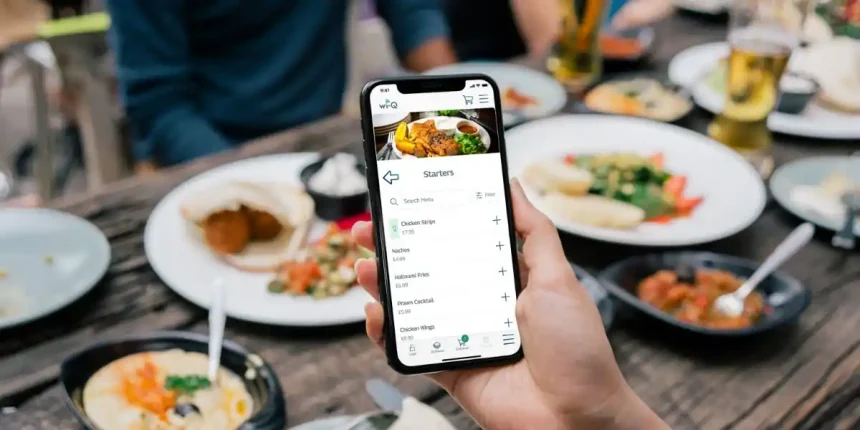
The restaurant business has always depended on speed, organization, and the ability to deliver a consistent experience to every guest. In recent years, however, the pressure on restaurant operators has increased significantly. Rising operational costs, labor shortages, and changing customer expectations have forced many restaurants to rethink how they manage everyday processes. One solution that has gained real momentum is the digital menu app.
A digital menu app is more than a modern replacement for printed menus. When used correctly, it becomes a practical operational tool that simplifies menu management, reduces unnecessary costs, and improves the overall dining experience. For many restaurant owners, it represents a straightforward way to modernize service without disrupting the essence of hospitality.
Understanding What a Digital Menu App Does
A digital menu app allows customers to view a restaurant’s menu through their mobile devices. In most cases, guests scan a QR code placed on the table, counter, or menu stand. The code directs them to a mobile-friendly digital menu that opens instantly in their browser. No app download is required, which makes the process simple for customers.
From the restaurant’s perspective, the system is managed through an online dashboard. Managers can update prices, add or remove dishes, highlight specials, or mark items as unavailable. These changes appear immediately for customers viewing the menu.
Improving Restaurant Efficiency
One of the biggest advantages of using a digital menu app is improved operational efficiency. Traditional menus introduce small but constant interruptions throughout service. Staff distribute menus, replace damaged copies, explain unavailable items, and clarify pricing discrepancies. These tasks consume time that could be spent on service.
A digital menu app reduces many of these inefficiencies. Customers can access the menu immediately after sitting down, and updates are reflected instantly across all tables. If an item sells out, it can be marked unavailable in seconds.
This leads to several operational improvements:
- Faster table turnover during busy hours
- Fewer misunderstandings about menu availability
- Reduced administrative tasks for staff
- More consistent information for customers
Servers are able to focus more on guiding the dining experience rather than managing logistical issues related to printed menus.
Reducing Menu Management Complexity
Menu updates are a routine part of restaurant operations. Prices fluctuate due to supplier changes, seasonal items rotate frequently, and promotions are introduced throughout the year. With printed menus, every update requires redesigning and reprinting.
A digital menu app removes this complexity. Changes can be made instantly from a central dashboard, ensuring that every customer sees the most current version of the menu. For restaurants operating multiple locations, this centralized control is particularly valuable.
Managers can maintain consistency across branches while still allowing location-specific adjustments when necessary. This flexibility is difficult to achieve with traditional menu systems.
Cost Savings Over Time
Although the most visible benefit of a digital menu app is convenience, the financial impact is often just as significant. Printing menus repeatedly becomes an ongoing expense, especially for restaurants that change prices frequently or introduce seasonal offerings.
By switching to a digital menu system, restaurants eliminate most of these recurring costs. Over time, this reduces spending on design, printing, and replacement materials.
There are also indirect savings. When menus are always accurate, order errors decrease. Fewer mistakes mean fewer refunds or disputes. Staff spend less time correcting misunderstandings and more time focusing on customer service.
For many restaurants, these combined savings quickly offset the cost of implementing a digital menu app.
Enhancing the Customer Experience
Customer expectations have evolved. Diners appreciate convenience and transparency, especially when choosing dishes or reviewing pricing. A digital menu app provides both.
Customers can browse the menu at their own pace, zoom in on items, and read descriptions clearly. This is particularly helpful in dim lighting or busy dining environments where printed menus may be difficult to read.
Digital menus also allow restaurants to present information in a more organized way. Categories are easy to navigate, and items can include detailed descriptions or dietary information.
When implemented thoughtfully, a digital menu app improves the guest experience by:
- Reducing wait time for menu access
- Providing clear and accurate pricing
- Helping customers understand dishes before ordering
- Allowing diners to review the menu without pressure
Importantly, this technology does not replace the role of the server. Instead, it removes small inconveniences so staff can focus on hospitality.
Supporting Different Restaurant Formats
Digital menu apps are flexible enough to support a wide range of restaurant types. Cafés often use them to update daily specials without reprinting menus. Casual dining restaurants rely on them to manage large menus more efficiently.
Fine dining establishments can use digital menus to present tasting menus, wine pairings, and allergen information in a refined and organized format. Food trucks and pop-up kitchens benefit from the ability to adjust menus quickly based on ingredient availability.
Hotels and tourist-focused restaurants frequently use digital menu apps to support multiple languages, making the dining experience more accessible for international guests.
Implementation Considerations
Adopting a digital menu app requires thoughtful implementation. Speed and usability are critical. The menu must load quickly and display properly on a variety of devices.
Menu design should remain simple and intuitive. Categories should be clearly labeled, descriptions concise, and images optimized so they enhance the experience without slowing performance.
QR codes should be placed in locations that are easy for customers to see and scan. Staff should also be familiar with the system so they can assist guests who may be less comfortable with digital menus.
Testing the system before full deployment helps ensure that the transition is smooth for both employees and customers.
Why Digital Menu Apps Are Becoming Standard
The growing adoption of digital menu apps reflects a broader shift in how restaurants operate. Flexibility, efficiency, and accuracy have become essential qualities for any successful operation.
As restaurants face increasing competition and tighter margins, tools that simplify processes while improving customer satisfaction become valuable assets. A digital menu app addresses both sides of this equation.
Rather than being a temporary solution, digital menus are becoming a standard part of modern restaurant infrastructure.
Final Thoughts
A digital menu app represents a practical step forward for restaurants looking to improve efficiency and enhance the customer experience. By simplifying menu management, reducing operational costs, and giving diners easier access to information, it helps restaurants operate more smoothly without sacrificing the personal touch that defines hospitality.
For restaurant owners who want to modernize their operations while maintaining service quality, adopting a professional digital menu app is not just a technological upgrade. It is a strategic improvement that supports long-term growth and consistency.

