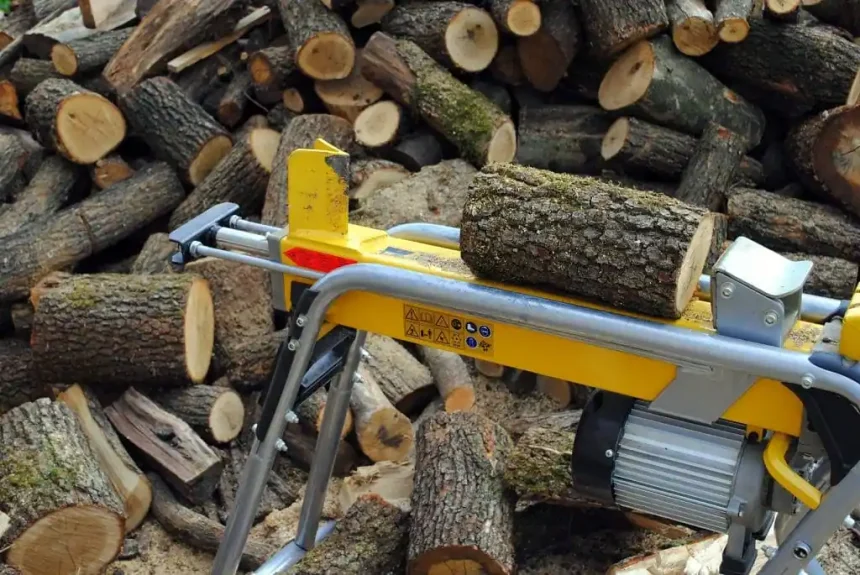
For the first three winters after moving onto our property, I split firewood by hand. Eight-pound maul, a chopping block, and two cords of mixed oak and locust that I’d sourced from a neighbor down the road. It was satisfying work, at least in theory. In practice, by mid-October, I had blisters, a sore lower back, and was already dreading the second cord.
The wood splitter changed everything. Not because I stopped enjoying physical work — I still split a fair amount by hand — but because the machine made it possible to process wood on my schedule rather than being tyrannized by the calendar. I could knock out most of a cord in an afternoon, stack it, and move on. What had been a seasonal dread became a manageable task.
If you’re contemplating buying a wood splitter, this is an attempt to give you an honest picture of what to expect from the decision — including what I got wrong before I got it right.
The Case for Owning vs. Renting
When I started looking seriously, I got the standard advice: rent first, buy if you use it enough. That’s not wrong, but it misses a few things. Rental units are often well-worn and slower than a new machine of the same spec. You have to schedule the rental around availability, not your own schedule. And if you’re processing more than half a cord, the economics of renting start to look questionable pretty quickly.
If you heat primarily with wood and own at least an acre or two with trees to process, ownership almost certainly makes financial sense. If you’re doing one or two face cords a year, renting remains reasonable.
What I Got Wrong the First Time
I underestimated tonnage. My first purchase was a respectable mid-range unit rated at 22 tons, and it handles most of what I throw at it — but I have some ancient locust on this property that tests it. Locust is extraordinarily dense and often twisted. I’ve had the ram stall on large rounds, requiring me to rotate the log and make multiple passes. A 28-ton machine would make that process smoother.
The lesson: think honestly about your hardest wood, not your average wood. A machine that sails through pine will labor through wet oak and potentially stall on mature locust or elm. Buying slightly more capacity than you think you need is better than fighting your equipment every season.
The Vertical Position: Use It
Before I had a dual-position machine, I never appreciated how important the vertical splitting mode was. Lifting a 24-inch diameter oak round onto a horizontal beam isn’t just inconvenient — it’s genuinely risky to your back. With the machine tilted vertical, you roll the round into position, stand back, and let the ram come down to meet it. It’s dramatically easier and faster for large rounds.
If you’re deciding between a horizontal-only and a dual-position machine, go dual. The price difference is usually modest, and you’ll thank yourself every time you’re working with large-diameter wood.
Practical Considerations for Your Setup
Before you buy, think through the logistics:
- Where will you store the machine? Gas units are large and heavy — measure your shed or barn space
- Will you be moving it between locations? Look for a towable unit with a wheel kit
- Is splitting near an outlet feasible? If so, a quality electric unit is worth considering for the quiet and cleaner operation
- Do you have a helper? Splitting goes much faster with one person loading and one person operating the controls
- What’s your log diameter? This single variable drives the tonnage decision more than anything else
Maintenance Is Minimal but Non-Negotiable
Gas-powered log splitters are relatively low-maintenance machines, but skipping what maintenance they do require leads to problems. Change the engine oil annually (or per manufacturer recommendation), inspect the hydraulic fluid level before each use, check the wedge for damage at the end of the season, and store the machine out of the weather with fuel either drained or stabilized.
Hydraulic hose inspection is worth doing annually. A hose failure under pressure is a mess and potentially a safety issue. Catching cracked or abraded hoses before they fail is cheap. Dealing with a hydraulic blowout in the middle of the splitting season is not.