
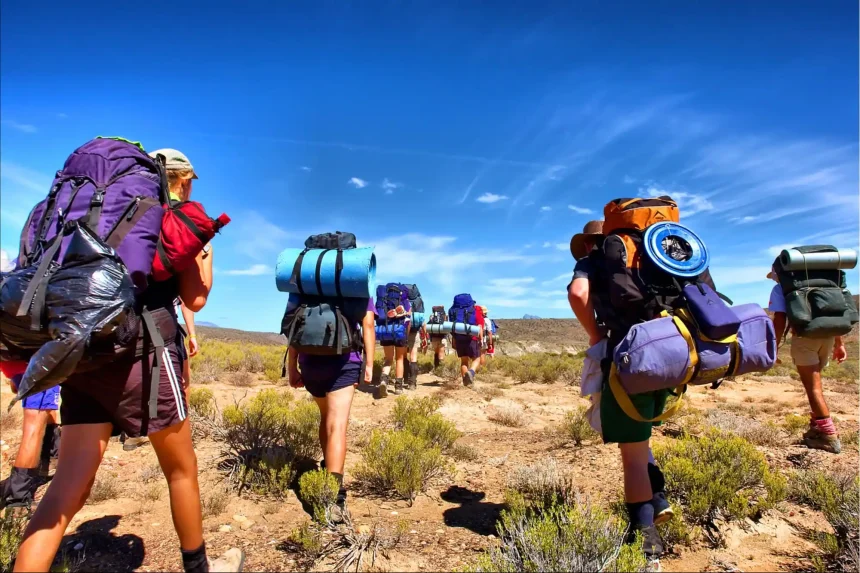
Hiking groups build a recognisable identity through shared values, consistent visual branding, coordinated outdoor clothing, and distinctive group symbols. From matching jackets to bespoke fabric patches featuring club logos, these elements help walkers recognise fellow members and develop a stronger sense of belonging.
A clear group identity also communicates what a hiking club represents. Whether a team explores the Lake District, organises weekend countryside walks, or completes challenging mountain routes, its visual identity can reflect its personality, achievements, and connection to the outdoors.
Why Is Group Identity Important for Hiking Clubs?
Group identity represents the shared characteristics, values, and traditions that distinguish one hiking club from another. It connects individual walkers through a common name, purpose, and visual appearance.
Hiking clubs often bring together people with different backgrounds, fitness levels, and outdoor experiences. A recognisable identity gives these members something in common beyond their interest in walking.
A strong hiking group identity provides several practical and social benefits:
- Member recognition: Consistent clothing, embroidered badges, and club insignia help members identify one another during organised walks.
- Sense of belonging: Shared symbols reinforce membership and encourage participants to feel part of a wider community.
- Club visibility: Distinctive group branding makes hiking organisations easier to recognise at outdoor events and walking festivals.
- Team pride: Personalised equipment allows walkers to represent their club during local hikes and longer expeditions.
- Group continuity: Established logos, colours, and traditions preserve the identity of a hiking club as new members join.
These benefits become particularly valuable when clubs organise regular activities involving large numbers of participants.
How Do Hiking Groups Create a Unique Visual Identity?
A hiking group’s visual identity consists of the design elements that represent its name, location, interests, and outdoor activities.
Successful visual branding combines a memorable club name, a distinctive logo, consistent colours, and recognisable clothing accessories.
Choose a Meaningful Hiking Group Name
A hiking club’s name establishes its identity and communicates its purpose.
Some walking groups choose names inspired by geographical locations, such as the Yorkshire Dales, Scottish Highlands, or Peak District. Others prefer names that reflect adventure, endurance, exploration, or environmental appreciation.
For example, a walking group that regularly explores coastal routes might choose a name associated with cliffs, coastal paths, or sea views.
The name should be easy to remember, pronounce, and reproduce on clothing, badges, and promotional materials.
Design a Distinctive Club Logo
A hiking club logo visually represents the organisation and helps members distinguish it from other outdoor groups.
Popular design elements include mountain silhouettes, walking boots, trees, compasses, trail markers, and natural landscapes.
Each symbol communicates a different aspect of hiking culture. Mountains represent exploration and challenging terrain, while a compass suggests navigation and adventure.
A simple logo is often more practical than a highly detailed design because it remains recognisable when reproduced on small fabric badges, jacket sleeves, or rucksack accessories.
Establish Consistent Club Colours
Club colours create visual consistency across hiking clothing, accessories, and printed materials.
Earth tones such as forest green, brown, and slate grey reflect natural landscapes. Brighter colours, including orange and yellow, create contrast and improve the visibility of club branding.
Hiking groups should select colours that remain distinguishable against different clothing materials.
However, club colours should not replace appropriate high-visibility clothing or safety equipment where conditions require them.
Custom Fabric Patches Help Hiking Groups Stand Out
Custom fabric patches are personalised textile emblems that display a hiking club’s name, logo, slogan, or distinctive artwork. They can be attached to outdoor clothing and selected fabric accessories to create a consistent group appearance.
Unlike full uniform requirements, personalised patches allow members to retain their preferred hiking gear while displaying a shared club symbol.
For example, members might wear different waterproof jackets, fleece tops, and walking trousers but attach the same embroidered club badge to compatible garments or rucksacks.
This approach creates visual consistency without requiring everyone to purchase identical outdoor clothing.
Embroidered Patches for Traditional Hiking Club Badges
Embroidered patches use stitched threads to create designs on a fabric base. Their textured appearance makes them suitable for outdoor club emblems, traditional walking badges, and achievement insignia.
Hiking groups can incorporate mountain outlines, initials, route names, and simple landscape illustrations into embroidered designs.
The raised stitching gives the badge a distinctive finish that complements traditional outdoor clothing.
Woven Patches for Detailed Club Logos
Woven patches use interlaced threads to reproduce fine lines, small lettering, and detailed graphics.
Their comparatively smooth surface makes them suitable for hiking club logos containing intricate illustrations or compact typography.
Clubs should consider the complexity of their artwork when choosing between embroidered and woven designs.
Iron-On and Sew-On Patches for Outdoor Clothing
Iron-on patches use heat-activated adhesive backing, while sew-on patches are secured with stitching.
Iron-on backing can be convenient for compatible cotton or other heat-tolerant fabrics. However, many waterproof jackets, synthetic hiking garments, and technical outerwear are unsuitable for direct heat application.
Sew-on attachment offers a mechanical fastening method for suitable fabric items, although stitching through waterproof garments can damage protective membranes or affect water resistance.
For technical clothing, clubs should follow the garment manufacturer’s care instructions and consider attaching patches to removable fabric accessories instead.
The appropriate backing depends on the garment material, expected use, and maintenance requirements.
How Matching Hiking Accessories Strengthen Club Recognition
Matching accessories reinforce group identity without limiting individual clothing preferences.
Hiking clubs can introduce shared branding through items that members regularly carry or wear during outdoor activities.
Branded Rucksacks and Backpack Badges
Rucksacks are among the most practical places to display hiking club insignia.
A personalised patch attached to a suitable fabric panel can identify a member’s club without interfering with the backpack’s function.
Some groups also use removable badges to identify walk leaders, event organisers, or members participating in a particular expedition.
Placement matters. Badges should not obstruct reflective details, access points, or essential backpack features.
Club Jackets and Fleece Clothing
Club-branded jackets and fleece tops create a coordinated appearance during organised walking events.
A small logo on the chest or sleeve can provide enough visual consistency without making the clothing appear overly formal.
Hiking groups can also combine club colours with personalised name badges to help new participants recognise experienced members and walk leaders.
Personalised Hats and Outdoor Accessories
Caps, beanies, and fabric accessories provide additional opportunities for club branding.
A simple embroidered emblem on a hat or suitable fabric accessory can maintain a consistent visual identity across different seasons.
For groups that organise both summer walks and winter expeditions, adaptable branding is particularly useful because clothing requirements change throughout the year.
How Hiking Clubs Use Patches to Celebrate Achievements
Achievement patches recognise completed routes, club milestones, and participation in organised hiking activities.
Many walking groups use badges as meaningful reminders of shared outdoor experiences.
For example, a hiking club might introduce separate designs for members who complete the Yorkshire Three Peaks Challenge, participate in an annual charity walk, or finish a series of designated local trails.
Each badge represents a particular accomplishment and adds a personal story to a member’s outdoor equipment.
Route Completion Badges
Route completion patches identify specific trails, walking challenges, or organised expeditions.
A badge might include the route name, completion year, and a simple illustration of the surrounding landscape.
Clubs can establish clear criteria for awarding these badges so that each design consistently represents a particular achievement.
Anniversary and Event Patches
Anniversary patches commemorate important dates in a hiking club’s history.
A club celebrating its tenth anniversary, for example, might create a limited-edition badge displaying its original logo alongside the anniversary year.
Similarly, event-specific patches can commemorate charity walks, group expeditions, or annual gatherings.
These designs help preserve club traditions and create lasting reminders of shared experiences.
Personalised Member Badges
Member badges display names, roles, or membership details.
For larger clubs, these identifiers can support introductions and make organised events more welcoming.
A walk leader might wear a badge displaying their name and club role, while other participants wear a standard membership emblem.
However, visual identification should complement formal attendance records and group communication procedures rather than replace them.
Can a Recognisable Identity Improve Group Organisation?
Yes. A recognisable visual identity can support group organisation by making members and designated leaders easier to identify during planned activities.
For example, a hiking club may use a standard emblem for members and a different badge design for walk leaders or volunteer coordinators.
This distinction can help participants identify an appropriate person when asking questions about the route, scheduled breaks, or meeting arrangements.
Clear identification becomes particularly useful during walking festivals, large group gatherings, and events involving multiple hiking organisations.
Nevertheless, badges and matching clothing are not reliable safety systems on their own. Hiking groups still need suitable route planning, navigation equipment, communication arrangements, weather assessments, and headcounts.
Visual identity supports organisation, but effective leadership and preparation remain essential.
How to Design Patches for Hiking and Outdoor Activities
Designing a hiking club patch involves selecting appropriate artwork, dimensions, materials, colours, and attachment methods.
A well-designed patch should remain readable, suit the intended fabric, and reflect the identity of the organisation.
Keep the Artwork Simple and Recognisable
Simple graphics reproduce more clearly on small patches.
A mountain outline, compass symbol, or distinctive trail illustration can communicate the identity of a hiking club without excessive decoration.
Clubs should avoid overcrowding the design with unnecessary text or fine details that may become difficult to distinguish.
Select Suitable Dimensions and Shapes
Patch dimensions determine how effectively a design fits its intended location.
Small circular or rectangular patches suit many sleeves, fleece garments, and fabric accessories. Larger designs provide more space for detailed logos and event information.
Common patch shapes include circles, rectangles, shields, and custom outlines.
The choice should complement the logo rather than distort its proportions.
Consider Outdoor Wear and Maintenance
Hiking equipment is regularly exposed to moisture, dirt, abrasion, and repeated handling.
Patch materials and attachment methods should therefore be selected with the expected conditions in mind.
Clubs should consider thread quality, fabric compatibility, colourfastness, backing construction, and laundering requirements.
No fabric badge is automatically waterproof merely because it has embroidered stitching. Similarly, repeated washing or heavy abrasion can affect the appearance and attachment of a patch over time.
For equipment exposed to demanding conditions, a suitable fastening method and careful placement are especially important.
How Does Club Branding Encourage Community and Belonging?
Club branding creates a visible connection between members who share an interest in hiking and outdoor exploration.
A familiar emblem can start conversations between walkers, introduce new participants to an established group, and reinforce shared experiences.
For example, when members gather before a countryside walk, matching patches help newcomers identify the organisation they have joined.
During hiking events, the same emblem can communicate a group’s history and traditions to other outdoor enthusiasts.
Over time, club symbols can become associated with memorable routes, successful challenges, and friendships developed through regular walks.
This emotional connection gives hiking badges value beyond their appearance.
A patch becomes a reminder of the people, places, and experiences connected with a particular walking community.
Building a Consistent Identity Across Club Activities
A hiking club’s identity should remain consistent across both physical equipment and digital communication.
The same name, logo, and colours can appear on club clothing, membership materials, event announcements, social media pages, and walking schedules.
Consistency helps prospective members recognise the club when encountering its activities through different channels.
For example, someone who sees a club emblem at a walking event may later recognise the same logo on an online event listing.
Clubs can also establish basic branding guidelines that explain how the logo should be displayed, which colours should be used, and how achievement badges differ from standard membership emblems.
These simple guidelines preserve visual consistency as the organisation grows.
Most importantly, a hiking club’s identity should reflect its actual activities and values. A group focused on relaxed countryside walks may prefer friendly, accessible branding, while a mountaineering club may choose imagery associated with challenging terrain and technical expeditions.
Final Thoughts
A recognisable hiking group identity develops through shared experiences, consistent branding, and meaningful symbols. Club names, logos, coordinated clothing, and personalised fabric badges help walkers represent their community while maintaining their individual outdoor equipment preferences.
Custom patches offer a flexible way to display membership, identify club roles, and commemorate completed hiking challenges. When designed with suitable materials and attachment methods, they can become practical and memorable additions to outdoor accessories.
Ultimately, the strongest hiking club identity is not created by matching clothing alone. It develops when visual symbols represent genuine friendships, shared achievements, responsible outdoor practices, and a lasting enthusiasm for exploring the trails together.
