
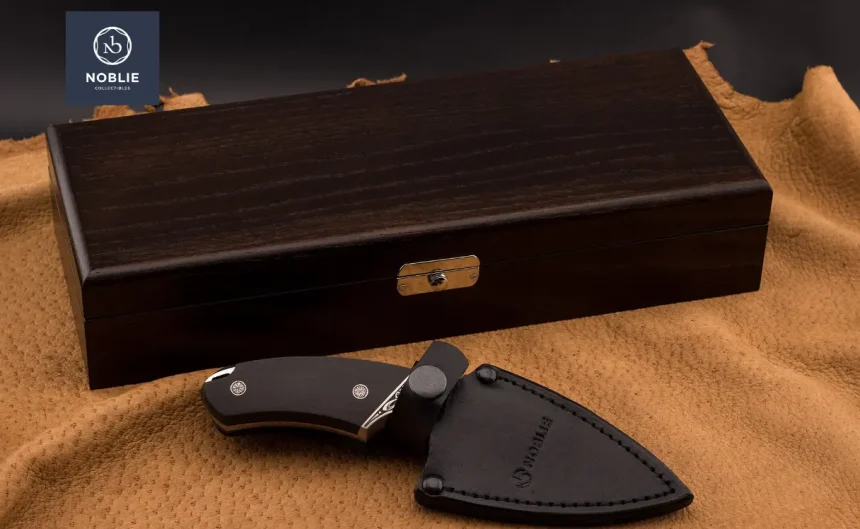
A custom knife represents a serious investment. Proper maintenance extends its lifespan by decades while preserving both function and appearance. This guide covers essential care practices that protect your blade.
Why Custom Knives Need Specialized Care
Custom knives use premium steel alloys and hand-fitted components that respond differently to neglect than mass-produced blades. A high-carbon custom blade develops surface rust within 48 hours if left wet, while moisture trapped in handle joints causes hidden corrosion that weakens structural integrity by 30-40% before visible damage appears. Quality tools from specialists like Noblie online knife store deserve maintenance routines that match their craftsmanship and material quality—this protects your investment and ensures reliable performance for years.
What Steel Type Means for Your Maintenance Schedule
Different steels demand different care frequencies. High-carbon steels (1095, O1, 52100) oxidize within hours and require oil application after every cleaning session. Stainless steels (154CM, S30V, VG-10) resist corrosion better but still need protection after saltwater exposure or weekly during storage. Damascus steel follows high-carbon rules because its pattern etching creates microscopic valleys where moisture collects easily.
| Steel Type | Corrosion Resistance | Oiling Frequency | Special Considerations |
| High-Carbon (1095, O1) | Low | After each use | Rusts in 6-12 hours when wet |
| Stainless (154CM, S30V) | High | Weekly in storage | Still corrodes in salt environments |
| Damascus | Low-Medium | After each use | Etched patterns trap moisture |
Expert tip from Robert Carlson, Master Bladesmith: “Most people over-oil their knives, which attracts dust that acts like sandpaper on the blade. One drop spread thin across the entire surface does more than drowning it in oil. If you can see oil pooling, you’ve used too much.”
The Basic Cleaning Process
Rinse your blade with warm water immediately after use because blood, sap, and food acids start corrosive action within 6 hours. Use a soft cloth with mild dish soap for stubborn residue but never soak the entire knife—water seeps into handle joints causing swelling or delamination in wood, bone, or composite materials.
Dry completely with a lint-free cloth, paying special attention to the blade-handle junction where moisture hides. This takes 90 seconds and prevents 95% of corrosion issues. For folders, clean the pivot mechanism monthly by applying one drop of mineral oil, working it back and forth 10 times, then wiping away excess.
Storage Methods That Prevent Damage
Store knives in dry environments with humidity below 50%. Leather sheaths trap moisture against the blade and their acidic tanning chemicals etch steel over time—they cause more corrosion than they prevent. Better storage options include:
- Hard plastic sheaths with drainage holes allowing air circulation
- Wooden blocks with individual slots keeping blades separated
- Magnetic wall strips in low-humidity rooms with good airflow
- Sealed cases with silica gel packets maintaining 30-40% humidity
Never store knives touching each other because metal-on-metal contact creates microscopic scratches that accumulate into visible damage over time.
How to Sharpen Without Destroying Your Edge
Professional sharpening every 6-12 months maintains optimal geometry. Between services, use a ceramic honing rod weekly by holding it vertical and drawing the blade down at a 20-degree angle for 5-6 passes per side. This realigns the edge without removing metal.
Avoid pull-through sharpeners entirely—they remove excessive material and create inconsistent edge angles. Electric sharpeners generate heat that damages blade heat treatment, reducing hardness by 2-3 HRC points and cutting edge retention by 40%. Home sharpening works best with whetstones starting at 1000 grit and progressing to 3000-6000 grit while maintaining the original edge angle.
Five Mistakes That Destroy Custom Knives
1
Dishwasher Cleaning: People use dishwashers because hot water and strong detergents seem hygienic and convenient. However, temperatures of 140-160°F degrade handle adhesives within 10-15 wash cycles while alkaline detergents aggressively attack steel. A $400 custom knife develops permanent handle damage in three dishwasher cycles. You trade 30 seconds of hand-washing for $150-200 in restoration costs.
2
Prying with Knife Tips: People pry open containers or separate frozen items because the blade is already in hand. Blades hardened to 58-62 HRC are brittle under lateral stress—tips snap at just 15 pounds of sideways force. Tip repairs require grinding back 1/4 to 1/2 inch of blade length, costing $75-125 and permanently altering knife geometry.
3
Long-term Leather Storage: Leather sheaths look traditional and came with the knife, making them seem ideal. But vegetable-tanned leather maintains pH levels of 3.5-4.5 (similar to orange juice) and absorbs moisture from air. Six months of leather storage in 60%+ humidity creates rust pitting that penetrates 0.002-0.003 inches deep—permanent damage that removes 20-30% of blade lifespan.
4
Cutting on Hard Surfaces: Glass cutting boards, ceramic plates, and granite countertops seem clean and convenient. When microscopic blade edges (0.0001-0.0003 inches thick) hit harder surfaces, they roll over or chip. After 50-100 cuts on hard surfaces, a blade needing resharpening every 3-4 months requires it every 2-3 weeks, shortening total blade life by 40-50%.
5
Ignoring Hidden Moisture: People wipe visible blade surfaces but miss water trapped in pivot mechanisms, under handle scales, or in blade-handle junctions. This hidden moisture takes 10-20x longer to evaporate and corrodes unfinished internal surfaces. By the time you notice handle looseness, internal corrosion has compromised structural strength by 30-40%, requiring $100-200 in repairs.
Expert tip from Sarah Mitchell, Knife Restoration Specialist: “I see more damage from well-meaning owners who ‘baby’ their knives incorrectly than from hard users who maintain them properly. A knife used hard but cleaned immediately will outlast a safe queen stored in the wrong environment. Use your tools, just respect them.”
Field Maintenance Essentials
Carry a small kit containing one microfiber cloth, mineral oil, and a portable ceramic hone. After field dressing, rinse the blade before blood dries—dried blood becomes acidic and etches steel within 3-4 hours. Temperature swings from cold outdoors to warm indoors cause condensation within minutes, so wipe immediately and apply light oil before moisture becomes rust.
Saltwater environments accelerate corrosion 5x faster than freshwater. Rinse with fresh water within one hour of saltwater exposure, then oil thoroughly—even stainless steel pits in salt spray within 24 hours without treatment.
Building a Maintenance Routine
Consistency beats perfectionism. After each use, follow this 90-second sequence:
- Rinse with warm water (30 seconds)
- Wipe completely dry (30 seconds)
- Apply thin oil coat to blade (20 seconds)
- Store in proper sheath or case (10 seconds)
This simple routine prevents 95% of common knife damage and takes less time than dealing with rust or resharpening dulled edges.
Expert tip from James Park, Custom Knifemaker: “The knives I make are designed to outlast their owners if maintained properly. I’ve seen my 30-year-old knives come back looking nearly new because the owners followed basic care routines. I’ve also seen five-year-old knives destroyed by neglect. The steel and craftsmanship are identical—the difference is entirely how the owner treated the tool.”
The Long-term Payoff
A well-maintained custom knife functions effectively for 40-60 years of regular use, with the blade gradually shortening roughly 0.5-1 inch from repeated sharpening over its lifetime. This drops cost-per-year below $10 annually compared to $20-30 for repeatedly replacing cheaper production knives designed for 5-10 year lifespans. Beyond economics, a 20-year-old custom knife develops character through use—the patina tells stories while worn handle spots conform exactly to your grip. You cannot buy this relationship with a tool, only develop it through years of consistent care.

