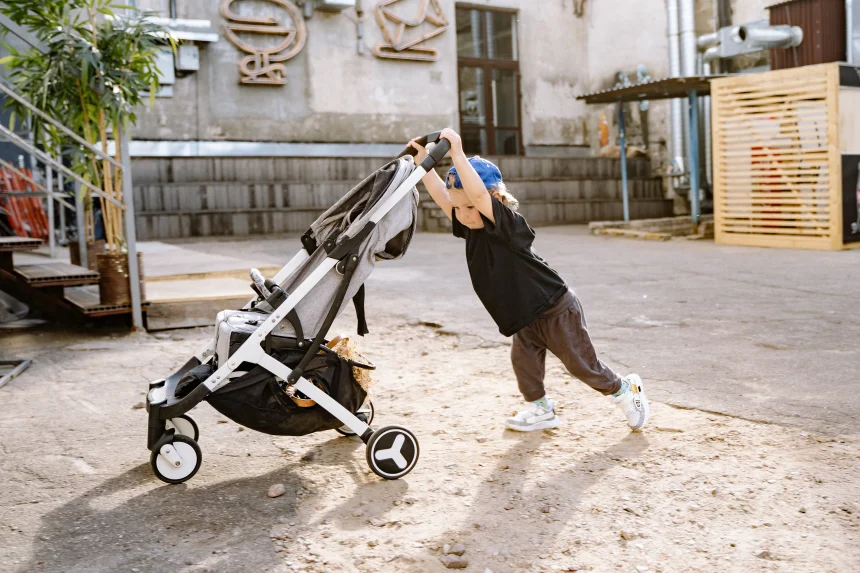
The right pushchair is the one that matches your daily routine, not the one with the longest spec sheet. A family that flies twice a year has different needs from a family expecting a second baby, and a model that works brilliantly for one can be a daily frustration for the other. So before you compare brands or prices, it pays to look at how you’ll actually use it.
Start with your routine, not the showroom
Most parents begin with a full-size pushchair, and for everyday life that often makes sense. It tends to offer a comfortable ride and plenty of storage underneath. The catch is weight and size. A larger frame can be awkward on a packed bus or in a car boot that’s already full.
That’s why it helps to be honest about your week. If you mostly walk the same routes near home, a full-size model will probably serve you well. If your life involves flights or regular train journeys, a compact option deserves a serious look, because the fold is the feature you’ll use most when you’re on the move.
When a compact fold earns its keep
Travelling with a baby means carrying more than you’d like, so anything that folds small and lifts easily makes the trip less stressful. A lightweight travel stroller is designed for exactly this. It packs down quickly and is easier to manage one-handed when your other arm is holding a child.
One note on flying. Some compact folds meet the cabin baggage requirements of certain airlines, but policies differ between carriers and can change. Check with your airline before you travel, so you know at the gate whether the pushchair goes in the cabin or in the hold. That one phone call or quick look at the airline’s website saves an awkward surprise at boarding.
A second child changes the maths
A growing family often outgrows a single pushchair faster than expected. If your toddler still needs a seat when the new baby arrives, pushing one pushchair while carrying another child can quickly become exhausting. In that case a double pram is the practical answer. Both children ride together, so you push with both hands instead of pushing with one and carrying with the other.
When you compare double models, pay attention to the width. A double that fits through your front door and the aisles of your local shops is one you’ll actually use every day. Also check how the seats adjust, because a newborn and a toddler need different positions, and those needs shift as both children grow.
What to check
Whichever direction you lean, a short checklist keeps the decision grounded:
- Fold and weight: can you collapse it and lift it on your own, with a child in your other arm?
- Where it lives: measure your hallway or car boot before you order.
- Age and weight limits: follow the manufacturer’s guidance on when each seat position is suitable for your child.
- Storage space: think about what you carry on a normal day, not just the nappy bag.
That last point matters more than it sounds. A pushchair that can’t hold your usual load means you end up carrying the bags yourself, which is exactly the job it was supposed to take off your hands.
Test the fold before you decide
If you can, try the fold in person or watch a demonstration before committing. A mechanism that looks simple in a video can feel fiddly in real life, and you’ll be doing it several times a day. Once the fold feels natural and the size fits both your home and your transport, you’ve found a pushchair that works with your routine instead of against it. That’s a better guide than any feature list.