There is a moment, usually somewhere between scraping burnt sausages off a supermarket disposable barbecue and watching your neighbour flip steaks on a gleaming gas grill, when you start to wonder whether it might be time to take outdoor cooking a bit more seriously. But is it genuinely worth spending real money on, or is it one of those lifestyle upgrades that sounds brilliant in April and sits gathering dust by September?
The honest case for spending more
Let’s be straightforward about this: a cheap barbecue gets the job done, in the same way that a kettle with a broken lid technically still boils water. The experience, though, is a different matter entirely. When you invest in proper outdoor cooking equipment, you are not just buying a way to heat food. You are buying consistency, control and, frankly, enjoyment.
A well-built grill holds temperature properly, which means your chicken is actually cooked through rather than charred outside and raw in the middle. Your food tastes better, your guests notice, and you stop dreading the whole process.
A quality piece of outdoor cooking kit, maintained properly, will last for many years. When you spread the cost over a decade of summer gatherings, weekend lunches and the occasional winter session, it starts to look far more reasonable than the initial price tag suggests.
What does a proper outdoor cooking setup actually involve
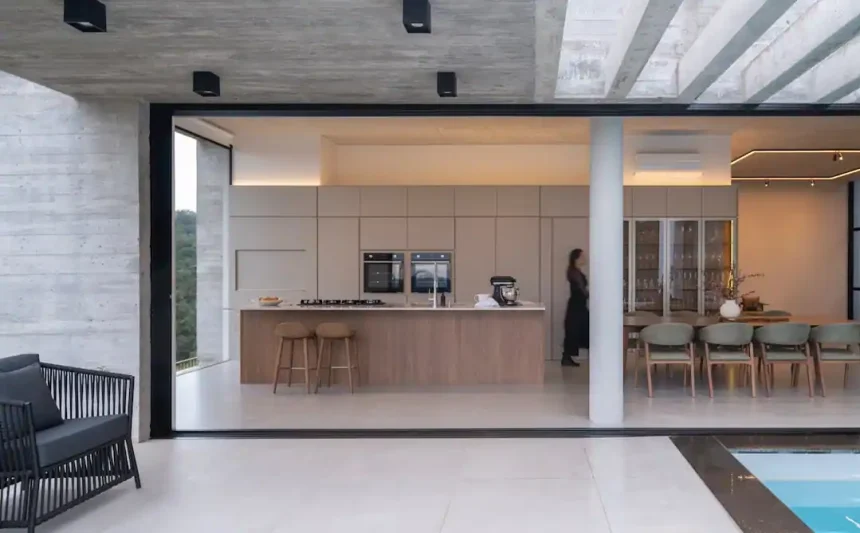
This depends entirely on how far you want to take it. At one end, you might simply invest in a solid freestanding grill or smoker that gives you far more control than a basic barbecue. At the other end, you might find yourself drawn to a fully integrated outdoor kitchen, complete with prep surfaces, storage and everything you need to cook a full meal without stepping back inside.
These setups are particularly popular for people who entertain regularly, or who simply want to keep the heat and the mess outside during summer months. They are not a gimmick. For households that genuinely use their garden as an extension of their living space, a proper outdoor kitchen can transform how that space functions day to day.
The running costs and practicalities
It would be dishonest to pretend there are no ongoing costs. Fuel, whether that is charcoal, wood, gas or pellets, adds up over time. There is also maintenance to consider: cleaning, covering equipment during winter, and occasionally replacing parts. None of this is particularly onerous, but it is worth factoring in before you commit.
That said, cooking at home, even with the cost of quality ingredients, tends to be significantly more affordable than eating out. If outdoor cooking becomes a regular habit rather than an occasional novelty, it can actually shift where your food budget goes in a fairly sensible direction.
Is it just for summer
One of the most common objections is the British weather, and it is a fair one. However, the idea that outdoor cooking is exclusively a June-to-August activity is increasingly outdated. Plenty of enthusiasts cook outside year-round, and with the right equipment it is entirely manageable.
A covered area, a fire pit for warmth and a grill that performs well in lower temperatures make autumn and winter cooking genuinely enjoyable rather than a damp endurance test. If you are considering outdoor cooking with a Roostr, for instance, you will find that the experience holds up well beyond the traditional barbecue season, making the investment feel considerably more justified across the full calendar year.
Who is it actually right for
Outdoor cooking is not the right investment for everyone, and it is worth being honest about that. If you have a small balcony, rarely cook at home and have no particular interest in the process, a high-end setup is probably not going to change your habits.
But if you have outdoor space, enjoy cooking or want to enjoy it more, and regularly have people over, then the case becomes very strong indeed. The key is matching the level of investment to your actual lifestyle rather than your aspirational one. Start with what suits your current habits, and build from there if the enthusiasm grows, because it usually does.
Outdoor cooking, done properly, adds something genuinely useful to your life: better food, more time spent outside, and a reason to use your garden beyond mowing it. The investment pays off not just in the meals themselves, but in the habit it encourages and the way it changes how you think about cooking altogether.