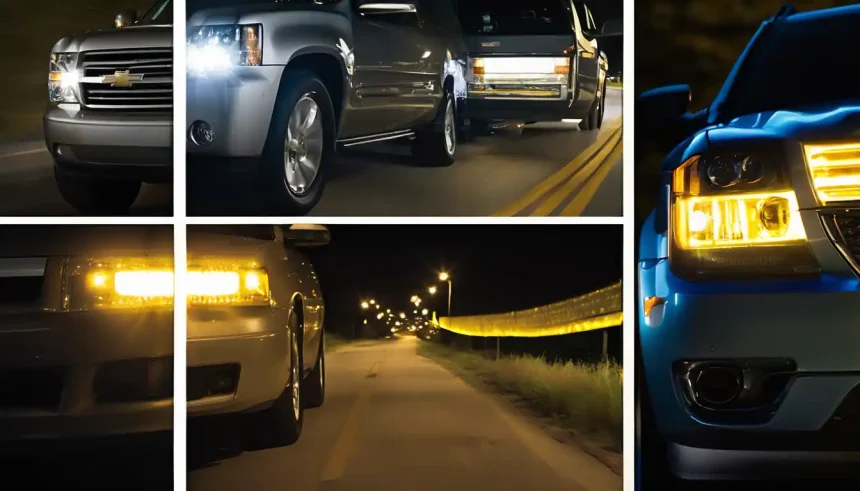
When I upgraded to modern led headlights, it felt like flipping daylight on at midnight—crisper lane edges, reflective signs that “pop,” and far less squinting. In this refreshed guide, I’ve packed actionable insights so you can decide with confidence: are LED headlights the right move for your car, your roads, and your budget?
Why LED Headlights Matter
Switching from halogen to LED is like moving from candlelight to studio lighting. Beyond the instant “wow,” LEDs deliver practical wins in safety, efficiency, and long-term ownership cost.
Key Advantages at a Glance
- Brighter, whiter light: Typically 5,000–6,500K for higher contrast and clearer edges.
- Energy efficiency: Lower power draw reduces strain on alternator and battery.
- Long lifespan: Quality sets often last 15,000–30,000 hours, cutting replacement hassle.
- Instant-on: Full brightness with no warm-up; great for flashing and high-beam use.
- Durability: Solid-state construction resists vibration—ideal for rough or unpaved routes.
Safety Gains You Can Feel
- Earlier hazard detection: More usable light downroad sharpens your reaction window.
- Reduced fatigue: Neutral-white beams reduce eye strain on long commutes.
- Improved wet-weather visibility: Cooler whites enhance contrast on reflective paint and markers.
How LED Headlights Work (Without the Jargon)
LEDs (light-emitting diodes) emit light when current flows through a semiconductor junction. In headlamps, multiple chips are placed and focused to mimic the exact position of a halogen filament so your housing projects a clean, glare-free beam.
The Anatomy of an LED Headlight Bulb
- LED chips: The light source; smaller, high-quality dies better match filament geometry.
- Driver: Regulates current for stable output and limits electrical noise.
- Heat sink/fan: Moves heat away to prevent color shift and early failure.
- Base/adapter: Fits your specific bulb type (H11, 9005, H4, etc.).
Beam Pattern Is Everything
A super-bright bulb with a sloppy pattern creates glare and dark spots. Well-designed LEDs honor the cutoff line, putting light where you need it while sparing oncoming traffic. Look for models tuned for your reflector or projector housing and that offer collar rotation for fine adjustment.
Choosing the Right LED Headlights
Specs on a box don’t tell the whole story. Here’s how I vet options for real-world performance.
Start With Compatibility
- Bulb size: Verify fitment (H7, 9006, 9012) via your manual or a trusted lookup.
- Housing type: Reflector vs. projector designs behave differently; match the LED to your housing.
- CAN bus and error-free: Some vehicles need decoders to prevent flicker or dashboard warnings.
Prioritize Beam Quality Over Lumens
- Lux beats lumens: Marketing lumens can mislead; beam focus and hotspot placement are what you see.
- Chip geometry matters: LEDs that replicate filament size/position produce cleaner cutoffs.
- Adjustability: Rotatable collars help you align chips at 3 and 9 o’clock for optimal distribution.
Color Temperature and Night Comfort
- 4,500–5,500K: Balanced, high-contrast white; best for all-weather driving.
- 6,000–6,500K: Crisp white with a hint of blue; stylish, but can scatter more in heavy rain or snow.
Thermal Design and Reliability
- Passive vs. active cooling: Braided or finned heatsinks are silent and durable; micro-fans move more air but add moving parts.
- Thermal throttling: Smart drivers reduce output when hot to protect LEDs and maintain consistency.
Helpful Features
- Dual-beam support: For H4/9007 types that combine high/low beams.
- Ingress protection: IP65–IP67 helps keep out moisture and dust.
- Warranty and support: A trustworthy vendor matters for long-life components.
Installation: From Box to Beam
Most kits are plug-and-play, but careful setup pays off in performance and courtesy.
Tools and Prep
- Nitrile gloves to avoid oils on optics
- Trim tool or screwdriver for access
- Painter’s tape and a flat wall for aiming
Step-by-Step
- Park on level ground, 25 feet from a wall; mark your current halogen cutoff with tape.
- Disconnect the battery if your manual recommends it.
- Remove the old bulb without touching reflector/projector surfaces.
- Install the LED with chips facing left-right (3 and 9 o’clock) unless instructed otherwise.
- Secure drivers/decoders away from heat or moving parts.
- Test for flicker and verify high/low beam operation before reassembly.
Aiming for Safety and Courtesy
- Adjust to match or sit slightly below your taped cutoff.
- Center the hotspot to the original marks.
- Recheck aim with cargo or passengers to simulate real conditions.
Legal and Warranty Considerations
Rules vary widely by region. Some places allow only OEM-certified LED assemblies. A halogen-to-LED retrofit may be road-legal in some areas and “off-road use only” in others. Electrical modifications can affect vehicle warranties—always check your policy and local laws before installing.
Maintenance and Troubleshooting
Keep Performance High
- Clean lenses regularly; UV haze slashes output. Consider restoration if yellowing appears.
- Clear debris from cooling paths; airflow keeps LEDs bright and healthy.
- Inspect gaskets and caps to prevent condensation.
Common Issues
- Flicker or dashboard warnings: Add a CAN bus decoder or resistor as specified for your vehicle.
- Dark spots or glare: Re-seat the bulb, rotate the collar, or pick a model designed for your housing.
- Overheating: Ensure fans spin freely and avoid tight dust caps that choke airflow.
LED vs. Halogen vs. HID: A Quick Snapshot
LED
- Efficient, long-lasting, instant-on, excellent beam potential with proper optics.
Halogen
- Affordable and warm-toned, but lower output and shorter lifespan.
HID (Xenon)
- Very bright with projectors; has warm-up time and requires ballasts; can glare in reflectors.
Smart Headlights and What’s Next
Matrix LEDs and adaptive systems are trickling into mainstream cars. They shape light dynamically—dimming around oncoming vehicles while keeping shoulders bright. Full retrofits aren’t practical, but choosing well-focused LED bulbs is a meaningful step toward safer nights.
Quick Buying Checklist
- Confirm bulb type and housing (reflector/projector)
- Favor beam quality over headline lumens
- Pick 4,500–5,500K for all-weather driving
- Match cooling design to your housing space
- Plan for CAN bus compatibility if needed
- Aim headlights after installation
Final Thoughts
If night driving feels stressful, led headlights can help restore confidence. Choose bulbs engineered for your housing, install with care, and aim precisely. The payoff is simple: brighter roads, calmer eyes, and safer miles ahead.