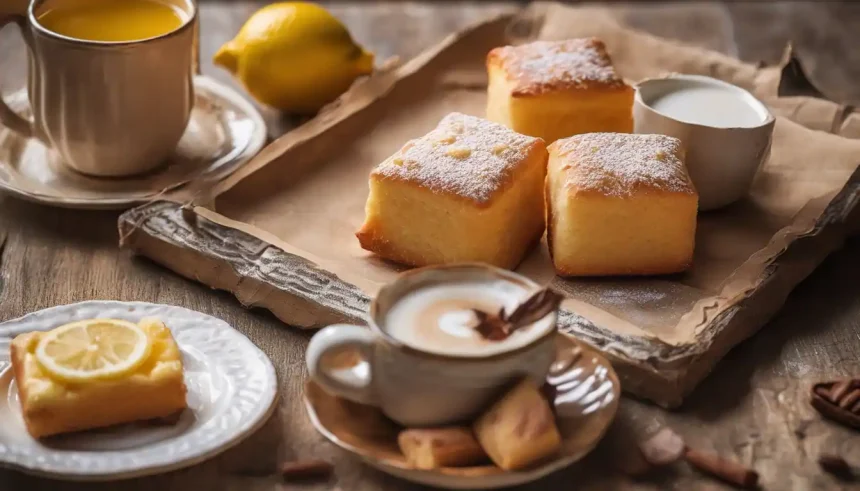
What Is a Mantecada?
Mantecadas are classic Spanish pastries known for their delicate crumb, buttery aroma, and golden, lightly domed tops. Often compared to muffins or cupcakes, they are actually closer to a rich, tender sponge that relies on eggs, sugar, flour, and high-quality fat—traditionally manteca (rendered pork lard) or butter. Their simplicity is their strength: a short list of pantry ingredients, whisked with care, produces a treat that tastes both familiar and unmistakably Iberian.
Mantecadas appear throughout Spain but are most famously associated with Astorga (León), where the distinctive square paper molds—cartuchos—give them their characteristic shape. Today, you’ll find versions made with olive oil or neutral oils, but the signature flavor of a classic mantecada still comes from good butter or lard.
Origins and Regional Variations
The history of mantecadas stretches back to convent kitchens and local bakeries that guarded formulas as closely as family secrets. In Astorga, the mantecada achieved such renown that it obtained Protected Geographical Indication (PGI) status, safeguarding its identity and production standards. Meanwhile, regions across Castilla y León and northern Spain developed their own styles: some lighter and more cake-like, others deeply aromatic with citrus zest or anise.
Beyond Spain, the idea of a mantecada traveled. In Mexico and parts of Latin America, panaderías sell mantecadas as fluffy, muffin-shaped cakes rich with butter and vanilla. Though recipes shift across borders, the core appeal stays the same: a moist, fragrant crumb meant to be torn by hand and shared.
Key Ingredients and Their Roles
- Flour: All-purpose wheat flour builds structure but should be handled gently to keep the crumb tender.
- Eggs: Provide lift, color, and richness. Many traditional recipes separate whites and yolks to whip more air into the batter.
- Sugar: Sweetens and helps create the golden crust, supporting moisture retention.
- Fat: Butter or lard is classic; some modern versions use olive oil for a fruitier profile. Fat defines the aroma and the plush texture.
- Leavening: Baking powder is common in home baking; historically, aeration came from well-beaten eggs.
- Flavorings: Lemon or orange zest, a pinch of salt, sometimes a whisper of vanilla or anise.
Ingredient Quality Tips
- Choose European-style butter (82% fat) for fuller flavor and a moist crumb.
- Fresh eggs at room temperature whip better and emulsify more evenly.
- Zest citrus directly into the sugar to capture aromatic oils.
Texture, Aroma, and the Science Behind the Crumb
The hallmark of a great mantecada is balance: a fine, even crumb with just enough spring to feel light, yet enough richness to feel indulgent. This comes from managing aeration and emulsification.
- Aeration: Beating eggs and sugar traps air bubbles. Baking powder reinforces lift so the batter rises into a tender dome.
- Emulsification: Butter and egg yolks carry fat-soluble flavor compounds and coat flour particles, limiting gluten development. The result is softness without greasiness.
- Moisture: Sugar binds water and slows staling, which is why mantecadas stay pleasant for a couple of days when stored properly.
How to Enjoy Mantecadas
- Breakfast: Serve warm with café con leche or hot chocolate.
- Merienda: Pair with a glass of milk or a light sweet wine.
- Dessert: Split and fill with whipped cream and berries, or drizzle with honey.
- Gifting: Pack in a tin or a paper-lined box—classic, neat, and irresistible.
Serving Notes
- Let them cool slightly before unwrapping so the crumb sets and stays fluffy.
- Dust with a veil of powdered sugar for a festive finish without overwhelming the classic flavor.
A Reliable Home-Baker’s Method
Here’s a straightforward approach that balances tradition with modern convenience.
Equipment
- Mixing bowls, whisk, and spatula
- Hand mixer or stand mixer (optional, but helpful)
- Muffin tin or square paper molds; paper liners
- Scale or measuring cups
Steps at a Glance
- Prep: Heat oven to 180°C/350°F. Line molds; avoid greasing so the paper grips the batter.
- Aerate: Whisk 3 large eggs with 150 g sugar until pale, thick, and tripled in volume.
- Flavor: Beat in zest of 1 lemon and 1 tsp vanilla (optional) with a pinch of salt.
- Fat: Stream in 120 g melted, cooled butter (or use 100 g butter + 20 g neutral oil) while whisking to emulsify.
- Dry mix: Sift 180 g all-purpose flour with 1½ tsp baking powder. Fold gently into the egg mixture.
- Portion: Fill liners about 2/3 full. Rest 10 minutes for a taller dome.
- Bake: 16–20 minutes until golden and a skewer tests clean. Avoid overbaking.
- Cool: Rest in the tin 5 minutes, then move to a rack. Enjoy slightly warm or at room temp.
Pro Tips for Consistency
- Use a scale for accuracy; small shifts in fat or flour change the crumb.
- Don’t overmix after adding flour; a few light streaks are fine.
- Rotate the pan once if your oven browns unevenly.
Nutritional Snapshot
A classic mantecada leans indulgent: richer in fat and sugar than a plain sponge, yet portion-controlled. Using olive oil reduces saturated fat; swapping some white flour for finely ground almond adds flavor and lowers gluten. For a lighter take, cut sugar by 10–15% and increase citrus zest.
Allergen and Dietary Notes
- Contains gluten, eggs, and dairy (unless made with oil).
- For dairy-free versions, use neutral oil and plant-based milk if thinning is needed.
- For gluten-free experiments, try a 1:1 baking blend and add 10–15 g almond flour for tenderness.
Buying and Storing
- Store: Keep in an airtight container at room temperature for 2–3 days. They freeze well for up to 2 months; thaw at room temperature.
- Buy: In Spain, look for “Mantecadas de Astorga” in specialty shops. Elsewhere, high-quality panaderías and Spanish grocers often stock them.
Frequently Asked Questions
Are mantecadas the same as muffins?
Not quite. Muffins are typically oil-based and can be denser, with mix-ins. Mantecadas are closer to a delicate butter cake with a higher egg ratio.
Can I make them without lard?
Absolutely. Butter is classic and widely used; olive oil versions are common too, producing a softer crumb and fruitier aroma.
Why did mine sink in the middle?
Usually from underbaking or overbeating after the flour is added. Make sure the center reaches doneness and fold gently.