
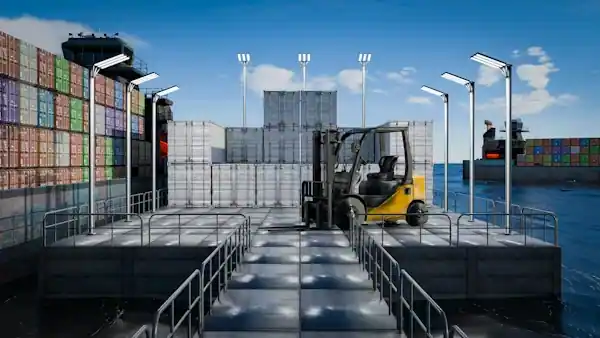
A solar shipping container refers to an off-grid, portable energy supply system placed in a steel shipping container and featuring solar panels, batteries, and inverters. Solar shipping containers produce and store energy without any connection to the grid. In 2026, solar shipping containers become increasingly popular as reliable sources of energy in various industries.
Worldwide, there are still gaps in energy access. According to the data from the International Energy Agency, in 2023, about 675 million people had no access to electricity. This explains why portable solar energy has stopped being a luxury.
What is a solar shipping container and how does it work?
Solar shipping containers work like mobile energy plants. Specialists build a compact energy-producing station enclosed in a strong steel box, which can be moved anywhere.
After setting up, it starts producing energy with solar panels attached to the box.
The following devices can be found inside the system:
- Highly effective solar panels
- Lithium-ion batteries for energy storage
- Inverters that convert electricity to AC power
- Monitoring systems to control energy flow
Developments of companies such as Tesla and BYD made these energy production plants more efficient.
This allows powering farms in Pakistan or energy supply sites in Nigeria in a couple of hours.
Why are solar shipping containers becoming increasingly common in 2026?
The popularity of solar shipping containers illustrates a transition towards the decentralisation of energy.
Thus, in 2024, the United Nations announced that renewable energy production had to be doubled by 2030. Portable energy production plants are essential for this purpose.
Main reasons for the rising popularity of solar shipping containers:
- Fast deployment in comparison with traditional solar stations
- Independence from fuel supply chains
- Low operating expenses
- Mobility and flexibility of use
After the floods in Pakistan, portable solar energy units helped to restore the energy supply in affected territories faster than grid restoration was possible.
Real-world application examples of solar shipping containers
There is a range of uses for such energy supply solutions in practice.
Main uses of solar shipping containers include the following:
- Disaster relief and emergency response services
- Temporary power for construction sites
- Remote clinics, hospitals, and vaccination centres
- Projects related to mining and oil extraction
- Military operations that require silent energy production
In Dubai, solar shipping containers allow to deploy solar power supply for events without constructing additional infrastructure.
Power generation capacity of solar shipping containers
On average, solar shipping containers produce between 5 and 100 kW, depending on their capacity.
Smaller models allow providing energy only for basic processes like light, cooling, and computers. Larger models, however, can provide electricity to run machines or even communities.
The capacity of the battery system affects the number of hours that solar shipping containers work independently. Currently, the vast majority of solar shipping containers provide 8 to 24 hours of energy after sunset.
Are solar shipping containers worth the price?
While the upfront cost is high, the return on investment is clear.
Average prices in 2026:
- Small solar stations cost between $20,000 and $35,000
- Medium stations cost between $40,000 and $70,000
- Large stations cost between $80,000 and $120,000
Why companies invest in solar shipping containers:
- There are no further expenses for fuel
- Less maintenance compared with diesel generator stations
- Longer service life of up to 25 years
- Positive impact on ecology
For remote operations, the recovery period is three to five years, making shipping container solar panels a practical long-term solution.
Solar shipping container vs traditional solar energy station
There are some similarities but several differences between two energy-production plants. Both devices generate energy in a similar way, yet solar shipping containers suit certain situations better.
Benefits of solar shipping containers:
- Ability to relocate the station to another place
- Fast deployment within several hours
- Suitable for off-grid energy supply
Advantages of a traditional energy station:
- Cheaper option for residential purposes
- Easier integration with existing infrastructure
- Supported by government programs
A rooftop station suits stationary housing better.
What should you check before buying one?
While choosing the product, it is crucial to pay attention to certain factors.
Important factors to evaluate:
- Battery capacity for night-time energy production
- Performance of solar panels
- Size of an inverter
- Special cooling systems for hot areas
- Durable construction
If these aspects are overlooked, the device’s potential will not be fully used.
FAQs
What is a solar shipping container?
A solar shipping container refers to a mobile energy-generation unit with solar panels that converts energy into electrical power.
How long does a solar shipping container work?
The lifespan of solar shipping containers reaches 20 to 25 years. Battery life reaches 8 to 12 years.
Can a solar shipping container provide energy for households?
Yes. It can produce energy to cover basic household demands.
How fast is deployment?
Deployment takes a few hours because these devices are delivered assembled.
Can a solar shipping container produce energy at night?
Yes. They utilise accumulated energy in the battery system during nighttime.
Are solar shipping containers good for businesses?
Yes. Many enterprises purchase these kinds of energy plants.
What kind of maintenance do these units need?
Regular cleaning and battery check-up.
Are solar shipping containers ecologically clean?
Yes. They reduce carbon footprint and avoid fuel consumption.
How much energy can they produce per day?
The amount of energy produced depends on the solar panels’ capacity.
What is the most effective area to apply solar shipping containers?
They suit remote locations, disaster zones, and temporary construction sites.
Conclusion
In general, a solar shipping container is an embodiment of technological development.
With increasing energy demand, grid energy supply becomes insufficient to satisfy needs of people. Mobile energy solutions fill the gap with speed and efficiency.
Many countries are investing in renewable energy production and are already enjoying success. Off-grid solar energy stations are developing fast in Africa, South Asia, and other regions.


