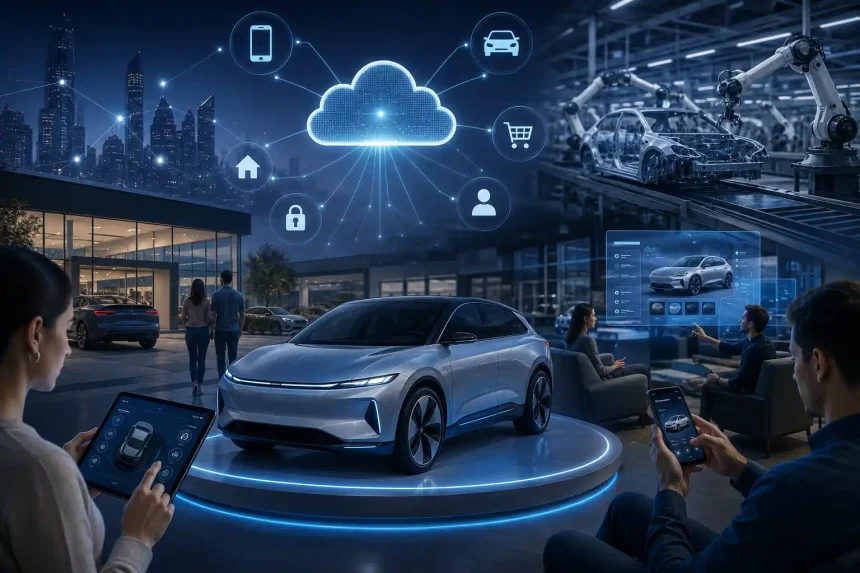
The automotive industry is undergoing a structural shift that goes far beyond the transition to electric vehicles. While electrification dominates headlines, an equally important transformation is happening in how cars are designed, sold, updated, and experienced.
Legacy automakers are increasingly becoming “digital first” organisations — restructuring their entire business models around software ecosystems, direct-to-consumer relationships, and connected services. The car is no longer treated as a finished product at the point of sale. Instead, it is becoming an evolving platform that continues to change throughout its lifecycle.
This shift is redefining what it means to own a vehicle, and challenging decades-old assumptions about manufacturing, retail, and customer engagement.
From Hardware Business to Software Ecosystem
Traditional car manufacturers were historically hardware-focused. Success depended on engineering quality, production efficiency, and dealership networks that moved physical inventory.
That model is now being replaced by a more complex ecosystem approach.
Modern vehicles are increasingly defined by software capabilities: infotainment systems, driver assistance features, performance tuning, navigation services, and even subscription-based upgrades. In many cases, the physical car is now just one part of a wider digital product.
Manufacturers are building ecosystems that allow vehicles to receive updates over time, improving functionality long after purchase. This includes everything from battery optimisation in EVs to enhanced safety features or upgraded entertainment systems.
As a result, automotive companies are beginning to operate more like technology firms than traditional industrial manufacturers.
The Shift Toward Direct-to-Consumer Sales
One of the most visible changes in the industry is the move away from dealership-dominated sales models toward direct-to-consumer (DTC) strategies.
Legacy automakers are increasingly exploring online ordering systems, fixed-price models, and digital configurators that allow customers to design and purchase vehicles without traditional intermediaries.
This approach mirrors trends already established in the technology and consumer electronics sectors, where direct relationships between brand and customer are the norm.
The benefits for manufacturers are significant. Direct sales provide better control over pricing, customer data, and brand experience. They also allow companies to build long-term relationships with customers rather than relying on one-time transactions managed through third parties.
However, this shift is also challenging established dealership networks, which have historically played a central role in automotive retail ecosystems.
Vehicles as Connected Platforms
Modern cars are no longer isolated mechanical systems. They are increasingly connected devices that interact with cloud services, mobile applications, and external infrastructure.
This connectivity enables a wide range of features that extend well beyond traditional driving functionality. Real-time traffic updates, remote diagnostics, over-the-air software updates, predictive maintenance alerts, and personalised user settings are becoming standard expectations in many new vehicles.
For manufacturers, this creates an ongoing relationship with the customer. Instead of ending at the point of sale, engagement continues throughout ownership via software updates and digital services.
It also opens the door to new revenue models, including subscriptions for premium features, in-car entertainment services, and performance upgrades delivered digitally.
The Role of Over-the-Air Updates
Over-the-air (OTA) updates are one of the clearest indicators of the industry’s digital transformation.
Rather than requiring physical servicing or dealership visits, vehicles can now receive software improvements remotely. This capability allows manufacturers to fix issues, enhance performance, and introduce new features without changing the hardware.
In some cases, vehicles are being launched with hardware capabilities that are intentionally unlocked or expanded later via software updates.
This approach fundamentally changes how value is delivered in the automotive industry. Cars are no longer static products; they are dynamic systems that evolve over time.
Data as a Core Automotive Asset
As vehicles become more connected, data has emerged as one of the most valuable assets in the automotive ecosystem.
Manufacturers can now collect and analyse vast amounts of information about driving behaviour, vehicle performance, charging patterns, and user preferences. This data is used to improve product design, enhance safety systems, and optimise user experience.
However, it also raises important questions around privacy, ownership, and transparency.
Consumers are becoming more aware of how their data is used, and manufacturers must balance innovation with trust. Clear communication and responsible data practices are increasingly important in maintaining brand credibility in a digital-first environment.
Personalisation in the Digital Age
One of the most interesting consequences of digital transformation in the automotive sector is the rise of deep personalisation.
Modern vehicles can now be tailored to individual drivers in ways that were previously impossible. Seat positions, climate control, infotainment preferences, driving modes, and interface layouts can all be saved to personal profiles.
In more advanced systems, vehicles can even adapt behaviour based on driving habits or environmental conditions.
This shift reflects a broader cultural trend toward personalised digital experiences across all areas of life. From streaming platforms to smart home devices, consumers increasingly expect technology to adapt to them rather than the other way around.
Within automotive culture, this emphasis on identity and individuality extends beyond software. Even subtle physical details contribute to how drivers express themselves through their vehicles. Elements such as exterior finishes, interior materials, and personal styling choices all play a role in shaping ownership experience. In this context, companies like Number 1 Plates sit within a wider ecosystem of vehicle personalisation, where drivers continue to seek ways to make their cars feel unique within increasingly digital environments.
Subscription Models and Continuous Revenue Streams
Another defining feature of the digital-first automotive model is the rise of subscription-based services.
Instead of relying solely on one-time vehicle sales, manufacturers are exploring ongoing revenue streams through digital features. These can include enhanced navigation systems, advanced driver assistance capabilities, premium entertainment packages, and performance-related upgrades.
This approach reflects a broader shift in global consumer markets, where software-driven products increasingly rely on recurring revenue rather than upfront purchases.
For automakers, this provides more stable long-term income and strengthens customer retention. For consumers, it creates flexibility — although it also raises questions about long-term cost and ownership transparency.
The Blurring Line Between Tech Companies and Automakers
As these changes accelerate, the distinction between automotive manufacturers and technology companies is becoming less clear.
Many leading car brands are now investing heavily in software development teams, cloud infrastructure, and digital service platforms. Some are even forming partnerships or internal divisions that operate more like tech startups than traditional engineering departments.
This convergence is reshaping industry competition. Automakers are no longer competing solely with other car manufacturers, but also with technology companies entering the mobility space.
The result is an increasingly integrated ecosystem where hardware, software, and services are tightly connected.
Conclusion
The rise of the digital-first car manufacturer represents one of the most significant transformations in automotive history.
Legacy automakers are no longer defined solely by their ability to design and build vehicles. They are now evolving into technology-driven organisations focused on ecosystems, software platforms, and long-term digital engagement.
This shift is reshaping everything from how cars are sold and updated to how they are experienced and personalised throughout ownership.
As vehicles continue to become more connected, adaptive, and software-defined, the automotive industry will increasingly resemble the technology sector — where continuous updates, data-driven insights, and digital services define long-term value.
The car is no longer just a machine you buy. It is becoming a platform you subscribe to, interact with, and personalise over time.