
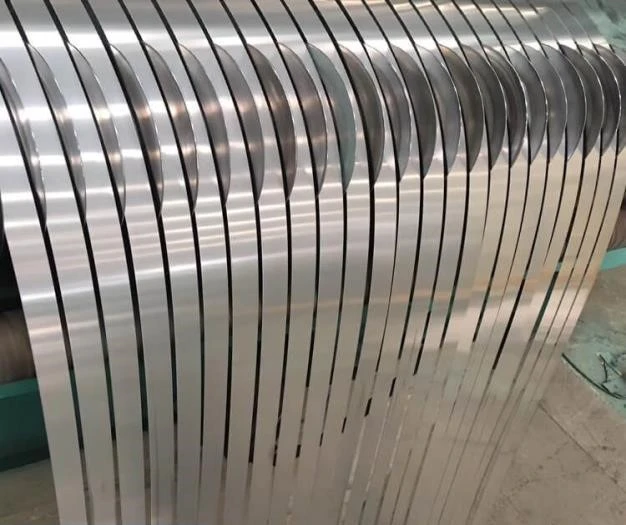
Stainless steel strips are thin, flat pieces made from special steel containing iron, chromium, and other elements. This article explores the properties of these strips, such as their resistance to rust, strength, durability, and flexibility, making them versatile and valuable in numerous industries for various applications.
Properties of Stainless Steel Strips:
Below are some key properties of these strips.
- Resistance To Corrosion
The remarkable advantage of stainless steel strips is their exceptional corrosion resistance. It is achieved through a substantial chromium content, typically above 10.5%, which forms a protective oxide layer known as the passive layer. This barrier effectively shields the underlying metal from oxygen and moisture, even in harsh environments, thereby inhibiting corrosion.
- Exceptional Mechanical Properties
These strips exhibit outstanding mechanical properties, rendering them highly robust and durable. With high tensile strength, impact resistance, and fatigue strength, these strips can withstand substantial loads and resist deformation, even under challenging conditions.
- Heat Resistant
The heat resistance allows them to maintain their structural integrity and mechanical properties across a broad temperature range. Depending on the specific alloy composition, some strips can endure temperatures exceeding 1000°C (1832°F). This exceptional feature makes them well-suited for heat exchangers, furnace parts, and automotive exhaust systems applications.
- Hygiene and Sanitation
The smooth and non-porous surface of these strips makes them highly resistant to bacterial growth, making them a preferred material for applications in food processing, medical equipment, and sanitary environments.
- Water Treatment And Desalination
In water treatment and desalination, stainless steel strips are widely utilized due to their remarkable resistance to corrosion from diverse water chemistries. Their presence in water treatment plants and desalination facilities is crucial in producing safe and high-quality potable water while effectively treating wastewater. It ensures that communities worldwide have access to clean and reliable water supplies.
- Aesthetic Appeal
These strips offer an attractive, modern appearance with a reflective surface. This aesthetic appeal and durability make them popular in architectural applications, interior design, and consumer products. Their versatility spans construction and automotive to medical and aerospace applications, demonstrating their importance in modern engineering and manufacturing. As the world seeks more sustainable solutions, stainless steel’s recyclability and eco-friendliness further cement its position as a preferred material in a greener future.
Types of Stainless Steel Strips:
Following are some popular types of these strips.
- Austenitic Strips (e.g., 304 and 316)
Such strips are the most widely used type due to their excellent corrosion resistance, formability, and weldability. Grade 304 is commonly used for general-purpose applications, while grade 316 offers superior pitting and crevice corrosion resistance, making it suitable for marine environments and chloride-exposed applications.
- Ferritic Strips (e.g., 430)
Ferritic strips contain higher chromium content than carbon steel but lower than austenitic stainless steel. They offer good corrosion resistance in mildly corrosive environments and exhibit magnetic properties. These strips are often used in automotive trim, appliances, and decorative applications.
- Martensitic Strips (e.g., 410 and 420)
These stainless steel foils are known for their high strength and hardness. While they offer moderate corrosion resistance, they excel in applications requiring wear resistance and high mechanical properties. Martensitic strips are commonly used in cutlery, blades, and surgical instruments.
- Duplex Strips (e.g., 2205)
These strips combine the benefits of both austenitic and ferritic stainless steel. They exhibit higher strength than austenitic grades and improved resistance to stress corrosion cracking. Duplex strips are employed in chemical processing, the oil and gas industry, and marine applications.
Applications of Stainless Steel Strips:
Here are some popular applications of these strips.
- Automotive Industry
They are employed in various automotive components, such as exhaust systems, trim, and decorative elements. Their heat resistance, corrosion resistance, and formability make them suitable for challenging automotive environments.
- Manufacturing and Machinery
In manufacturing, these strips produce diverse equipment and machinery, including process equipment, springs, fasteners, and conveyor belts. Their strength and resistance to wear and corrosion make them invaluable in industrial applications.
- Consumer Goods and Appliances
Stainless steel strips are widely used in household appliances, kitchenware, and consumer electronics due to their hygienic properties, aesthetic appeal, and easy maintenance.
Medical and Pharmaceutical, their biocompatibility and corrosion resistance make them indispensable in medical and pharmaceutical applications. Surgical instruments, medical devices, and pharmaceutical equipment often incorporate stainless steel components.
- Bridge and Infrastructure Construction
These strips are increasingly used to construct bridges and other infrastructure projects. Their high strength-to-weight ratio, corrosion resistance, and low maintenance requirements make them ideal for bridge decks, expansion joints, and structural components in challenging environments, such as coastal regions or areas prone to harsh weather conditions.
They ensure the longevity and safety of critical infrastructure, reducing maintenance costs and extending the service life of these vital structures.
- Corrosion-resistant fasteners and fittings
Corrosion-resistant fasteners and fittings are crucial in various industries, including marine, chemical, and offshore sectors, where exposure to corrosive environments is common. Among these components, strips made of stainless steel are extensively utilized for producing screws, nuts, bolts, and washers. Their use ensures the durability and dependability of structures and equipment, contributing to the extended lifespan and performance in harsh conditions.
- Electronics and Electrical Components
The electrical conductivity of certain stainless steel foils makes them suitable for electronics and electrical applications. These strips produce connectors, springs, and components for electronic devices requiring electrical performance and corrosion resistance.
- Aerospace and Oil Industry
These strips are utilized in aerospace and aviation applications due to their lightweight, high strength-to-weight ratio, and resistance to extreme temperatures and harsh environments. These strips find use in aircraft structural components, landing gear, engine parts, and aircraft interiors.
The oil and gas sector relies on these strips for various applications, such as downhole tubing, pipelines, and subsea components.
Concluding Lines:
From construction to medical equipment, these strips play a vital role in various industries, offering exceptional corrosion resistance, strength, and aesthetic appeal. As technology advances, stainless steel strips are expected to find even more innovative applications, further solidifying their position as a key material in modern engineering and manufacturing.
