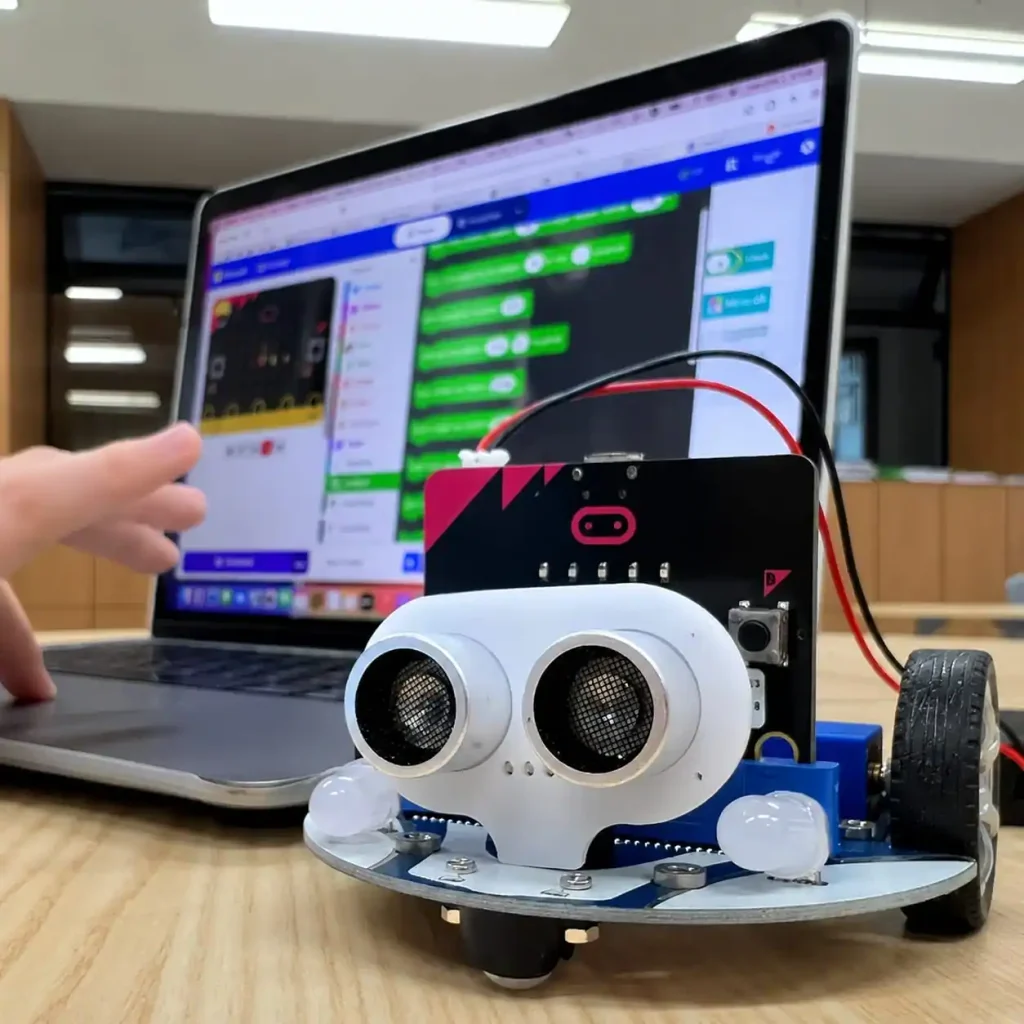
Walk into a modern classroom and you may find something that would have seemed unusual a few years ago: students building small robots, testing sensors, changing lines of code, and working together to solve a problem. This is no longer limited to specialist technology programs. Educational robotics is gradually becoming part of everyday learning as schools look for practical ways to make lessons more engaging, interactive, and meaningful.
The appeal is easy to understand. Robotics gives students something they can see and interact with. Instead of learning a concept only from a textbook, they can build something, test it, watch it fail, and figure out how to make it work.
Learning by Building and Experimenting
One of the strongest benefits of robotics in education is the opportunity for hands-on learning. Students are naturally curious, and a physical project gives that curiosity a clear direction.
With educational robotics kits, a lesson can become an activity rather than a lecture. Students might build a simple vehicle, program it to follow a path, or use a sensor to detect an object. Each project introduces a practical problem that needs to be solved.
Well-designed educational robotics kits can also support different levels of ability. A beginner can start with a basic build, while another student can experiment with more complicated programming or additional components. This flexibility allows teachers to adapt activities without requiring completely different technology for every student.
Bringing STEM Subjects Together
Robotics is particularly valuable because it connects several areas of learning. Mathematics, science, engineering, and programming can all become part of the same project.
For example, a student designing a robot may need to calculate distance, understand how a motor works, and write instructions that tell the machine what to do. This makes STEM robotics more than just a technology activity. It becomes a practical way to show students how different subjects connect outside the classroom.
Schools can use educational robotics kits to create projects around these connections. Instead of teaching every concept separately, teachers can give students a challenge and allow them to apply several skills at once. This project-based approach can make technical subjects easier to understand because students can immediately see how their knowledge is being used.
Making Coding Less Intimidating
Programming can be difficult for students when it is introduced only through a computer screen. Robotics changes that experience because every programming decision can produce a visible result.
This is where micro:bit robotics kits can be particularly useful. Students can write simple programs and immediately see how those instructions affect a physical device. A light can turn on, a motor can move, or a sensor can trigger an action.
Because micro bit robotics kits can support relatively simple projects as well as more advanced experiments, they can suit different levels of experience. Teachers can introduce basic programming first and gradually increase the difficulty as students become more confident.
For students who are new to coding, micro:bit robotics kits can make programming feel less abstract. Instead of writing code simply because they have been asked to, students can write instructions with a clear purpose and see the results in the physical world.
Why Robotics Is Becoming Easier for Schools to Adopt
Educational robotics is becoming easier for schools to adopt because the technology itself has become more accessible. Platforms such as micro:bit allow students to begin with block-based programming before moving toward more advanced coding. Reusable sensors, motors, controllers, and other components also allow teachers to build multiple activities around the same hardware.
Ready-made projects and classroom resources are another important factor. Teachers do not always need to design every robotics activity from scratch. Modern classroom robotics platforms can provide structured starting points, reducing the amount of technical preparation required before a lesson.
The reusable nature of many systems can also make robotics more practical for schools. A single set of components may be used for programming exercises, sensor experiments, engineering challenges, and creative projects. Educational robotics kits can therefore become part of several lessons instead of being used for only one activity.
Accessibility is also improving for students. Micro:bit robotics kits can provide a relatively approachable introduction to programming and electronics, allowing learners to begin with simple tasks before progressing toward more complex projects.
Together, accessible hardware, beginner-friendly programming, reusable components, and classroom resources are helping robotics move from a specialist activity toward a more practical learning tool for everyday education.
Teaching Students How to Handle Failure
One of the most valuable lessons in robotics is that the first attempt does not always work. A robot may turn too early, move too slowly, or respond incorrectly to a sensor.
That is not necessarily a problem. It is part of the learning process.
When students work with educational robotics kits, they have to identify what went wrong and decide what to change. This encourages patience, logical thinking, and problem-solving rather than the expectation of getting everything right immediately.
Group projects can make this experience even more useful. Students can divide responsibilities, discuss different ideas, and test several solutions before reaching a result. They learn that failure can provide useful information and that improvement often comes through repeated testing.
From Classroom Activity to Everyday Skill
The value of robotics in education goes beyond building robots. Students can develop skills that are useful in many areas, including communication, teamwork, creativity, logical thinking, and structured problem-solving.
Micro:bit robotics kits provide a practical environment in which students can develop these skills while working with electronics and programming. Instead of learning technical concepts in isolation, they can combine different skills to complete a real project.
As technology becomes a larger part of everyday life, schools are looking for ways to prepare students for a world where digital and physical systems increasingly work together. STEM robotics offers one way to bridge that gap.
Educational robotics kits can support this approach by giving students opportunities to turn ideas into working projects. Similarly, micro:bit robotics kits can help learners experiment with code, sensors, motors, and electronic components in a practical setting.
Choosing the Right Robotics Tools for Students
The growing availability of robotics kits for students gives schools more flexibility when introducing hands-on technology. However, the right tools depend on students’ age, experience, curriculum goals, classroom space, and the type of projects teachers want to create.
Beginners may benefit from simple systems that use visual programming and straightforward components. More experienced students may want greater control over sensors, motors, coding, and electronic systems.
Schools can also choose educational robotics kits that can be reused across different lessons. This makes it easier to introduce robotics into computing, science, mathematics, engineering, and technology classes rather than treating it as a one-time activity.
For programming-focused lessons, micro:bit robotics kits can provide another flexible option. Students can start with basic instructions and gradually explore more advanced programming concepts as their confidence grows.
The Future of Robotics in Education
The growth of robotics in classrooms reflects a broader change in education. Students are increasingly being encouraged not only to learn information but also to apply it, experiment with it, and solve practical problems.
Robotics provides a natural environment for this type of learning. Students can turn an idea into a working project, discover why something does not work, and improve it through experimentation. Teachers can use the same technology to connect multiple subjects and create lessons that encourage active participation.
As hardware becomes more accessible and classroom resources become easier to use, robotics is becoming increasingly practical for schools. Educational robotics kits can support this transition by combining hands-on activities with programming, engineering, and creative problem-solving.
At the same time, micro:bit robotics kits give students an accessible way to explore the connection between software and physical technology. They can experiment, test ideas, make mistakes, and improve their projects while developing skills that extend beyond robotics itself.
That combination of accessibility, practical learning, and cross-subject applications is what makes educational robotics increasingly relevant in today’s classroom. More importantly, it explains why robotics is moving from a specialized activity toward a mainstream learning tool.